
Catalogue Search | MBRL


Are you sure you want to remove the book from the shelf?

{{itemTitle}}
3,380
result(s) for
"Williams, Melissa S."
Sort by:


Toleration, power and the right to justification
Rainer Forst's Toleration in Conflict (published in English 2013) is the most important historical and philosophical analysis of toleration of the past several decades. Reconstructing the entire history of the concept, it provides a forceful account of the tensions and dilemmas that pervade the discourse of toleration. In his lead essay for this volume, Forst revisits his work on toleration and situates it in relation to both the concept of political liberty and his wider project of a critical theory of justification. Interlocutors Teresa M. Bejan, John Horton, Chandran Kukathas, Daniel Weinstock, Melissa S. Williams, Patchen Markell and David Owen then critically examine Forst's reconstruction of toleration, his account of political liberty and the form of critical theory that he articulates in his work on such political concepts. The volume concludes with Forst’s reply to his critics.
eBook

A Democratic Case for Comparative Political Theory
Globalization generates new structures of human interdependence and vulnerability while also posing challenges for models of democracy rooted in territorially bounded states. The diverse phenomena of globalization have stimulated two relatively new branches of political theory: theoretical accounts of the possibilities of democracy beyond the state; and comparative political theory, which aims at bringing non-Western political thought into conversation with the Western traditions that remain dominant in the political theory academy. This article links these two theoretical responses to globalization by showing how comparative political theory can contribute to the emergence of new global \"publics\" around the common fates that globalization forges across borders. Building on the pragmatist foundations of deliberative democratic theory, it makes a democratic case for comparative political theory as an architecture of translation that helps deliberative publics grow across boundaries of culture.
Journal Article

Transitional justice
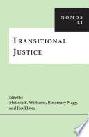
Criminaltribunals, truth commissions, reparations, apologies and memorializations arethe characteristic instruments in the transitional justice toolkit that can helpsocieties transition from authoritarianism to democracy, from civil war topeace, and from state-sponsored extra-legal violence to a rights-respectingrule of law. Over the last several decades, their growing use has establishedtransitional justice as a body of both theory and practice whose guiding normsand structures encompasses the range of institutional mechanisms by whichsocieties address the wrongs committed by past regimes in order to lay thefoundation for more legitimate political and legal order. In TransitionalJustice, a group of leadingscholars in philosophy, law, and political science settles some of the keytheoretical debates over the meaning of transitional justice while opening upnew ones. By engaging both theorists and empirical social scientists in debatesover central categories of analysis in the study of transitional justice, italso illuminates the challenges of making strong empirical claims about theimpact of transitional institutions. Contributors:Gary J. Bass, David Cohen, David Dyzenhaus, Pablo de Greiff, Leigh-AshleyLipscomb, Monika Nalepa, Eric A. Posner, Debra Satz, GopalSreenivasan, AdrianVermeule, and Jeremy Webber.
eBook

The effects of feeding benzoic acid and/or active dry yeast (Saccharomyces cerevisiae) on fatty acid composition, sensory attributes, and retail shelf-life of beef longissimus thoracis
Abstract
Fifty-nine Angus-cross steers (492 ± SD 36 kg) were arranged in a randomized complete block design and assigned to the following dietary treatments for the final 106 days of the finishing phase: no supplementation (CON), 0.5% benzoic acid (ACD), 3 g/steer/d active dry Saccharomyces cerevisiae (YST), or both [0.5% benzoic acid and 3 g/steer/d S. cerevisiae (AY)]. Steers were slaughtered at a commercial facility where longissimus thoracis (IMPS #107 Beef Rib) samples were retrieved and evaluated for fatty acid composition, sensory attributes, and shelf-life during a simulated retail display period. Data (N = 57) were analyzed using dietary treatment as a fixed effect, blocking weight at the beginning of the study as a random effect, and steer as the experimental unit. Muscle pH and proximate composition (moisture and intramuscular lipid) for longissimus samples were not different (P ≥ 0.39) among dietary treatments. Most fatty acid profile values and calculations were not different among dietary treatments (P ≥ 0.10); however, the n-6:n-3 ratio differed (P = 0.01), with ACD samples having lower n-6:n-3 compared with CON and YST samples while AY samples were intermediate and not different from other dietary treatments. The trained sensory panel did not detect differences among dietary treatments (P ≥ 0.23) for juiciness, beef flavor intensity, or off-flavor intensity; however, they did score AY samples as chewier than ACD samples with CON and YST samples intermediate and not different from other dietary treatments. Yet, tenderness was not different when scored by trained panelists (P = 0.10) or measured instrumentally (P = 0.21). Total color change tended to differ (P = 0.09) during the 12-d simulated retail display period with AY samples experiencing less color change compared with YST samples, while CON and ACD samples were intermediate and not different from other dietary treatments. Lipid oxidation (as measured with TBARS) tended to differ (P = 0.08) following the 12-d simulated retail display period with ACD and AY samples experiencing lower levels of oxidation compared with CON, while YST samples were intermediate and not different from other dietary treatments. Overall, these results suggest there were no negative impacts on meat quality when finishing steers were supplemented with either benzoic acid or S. cerevisiae, and there may even be advantages for fatty acid composition and oxidative stability when steers were supplemented with benzoic acid.
Journal Article
The effects of feeding benzoic acid and/or live active yeast ( Saccharomyces cerevisiae ) on beef cattle performance, feeding behavior, and carcass characteristics
Fifty-nine Angus-cross finishing steers were used to evaluate benzoic acid, active dry yeast (Saccharomyces cerevisiae), or a combination of benzoic acid and active dry yeast when supplemented in a high-grain finishing diet on live animal performance, feeding behavior, and carcass characteristics. Steers were fed a high-grain diet for the final 106 d of finishing. Treatments were as follows: no additional supplementation (CON), 0.5% benzoic acid (ACD), 3 g per head per day active dry S. cerevisiae (YST), or both 0.5% benzoic acid and 3 g/head per day S. cerevisiae (AY). Steers were weighed every 14 d, and ultrasound was performed for rib and rump fat thickness at the beginning (day 1), middle (day 57), and end (day 99) of the experiment. Insert feeding stations were used to collect individual feeding behavior data and DMI daily throughout. Blood samples were collected on days 21 and 22 and days 99–101 to assess plane of nutrition and metabolism. Ruminal fluid samples were collected by oral gavage 4 wk prior to slaughter. Carcass characteristics were examined at a federally inspected slaughter facility. Data were analyzed using PROC GLIMMIX of SAS with initial body weight (BW) as a covariate. Benzoic acid supplementation increased (P = 0.002) overall dry matter intake (DMI) compared to YST and CON steers, which may be due to a faster eating rate (P ≤ 0.008). Animal performance parameters (BW, average daily gain, feed conversion, and ultrasound fat depth) were not different (P ≥ 0.11) among treatment groups. Aspartate aminotransferase concentration was greatest (P ≤ 0.01) for YST steers, which may have been reflected in numerically greater liver abscesses. Carcass traits did not differ (P ≥ 0.33) among treatment groups. Ruminal pH was greater (P = 0.006) for ACD steers than AY steers (pH of 6.16 vs. 5.66, respectively), which indicated that there may be an interactive effect between benzoic acid and active dry yeast. To summarize, steers fed a high-grain finishing diet supplemented with benzoic acid, active dry yeast, or both benzoic acid and active dry yeast had similar growth performance and carcass characteristics compared to those without supplementation. However, the addition of benzoic acid alone increased DMI, variation in DMI, eating rate, and ruminal pH. Future studies are warranted to further investigate the impacts of benzoic acid on the ruminal environment of feedlot cattle.
Journal Article
The effects of feeding benzoic acid and/or active dry yeast on beef cattle performance, feeding behavior, and carcass characteristics
Fifty-nine Angus-cross finishing steers were used to evaluate benzoic acid, active dry yeast (Saccharomyces cerevisiae), or a combination of benzoic acid and active dry yeast when supplemented in a high-grain finishing diet on live animal performance, feeding behavior, and carcass characteristics. Steers were fed a high-grain diet for the final 106 d of finishing. Treatments were as follows: no additional supplementation (CON), 0.5% benzoic acid (ACD), 3 g per head per day active dry S. cerevisiae (YST), or both 0.5% benzoic acid and 3 g/head per day S. cerevisiae (AY). Steers were weighed every 14 d, and ultrasound was performed for rib and rump fat thickness at the beginning (day 1), middle (day 57), and end (day 99) of the experiment. Insentec feeding stations were used to collect individual feeding behavior data and dry matter intake (DMI) daily throughout. Blood samples were collected on days 21 and 22 and days 99-101 to assess plane of nutrition and metabolism. Ruminal fluid samples were collected by oral gavage 4 wk prior to slaughter. Carcass characteristics were examined at a federally inspected slaughter facility. Data were analyzed using PROC GLIMMIX of SAS with initial body weight (BW) as a covariate. Benzoic acid supplementation increased (P = 0.002) overall DMI compared to YST and CON steers. Animal performance parameters (BW, average daily gain, feed conversion, and ultrasound fat depth) were not different (P [greater than or equal to] 0.11) among treatment groups. Aspartate aminotransferase concentration was greatest (P < 0.01) for YST steers, which may have been reflected in numerically greater liver abscesses. Carcass traits did not differ (P [greater than or equal to] 0.33) among treatment groups. Ruminal pH was greater (P = 0.006) for ACD steers than AY steers (pH of 6.16 vs. 5.66, respectively), which indicated that there may be an interactive effect between benzoic acid and active dry yeast. To summarize, steers fed a high-grain finishing diet supplemented with benzoic acid, active dry yeast, or both benzoic acid and active dry yeast had similar growth performance and carcass characteristics compared to those without supplementation. However, the addition of benzoic acid alone increased DMI, variation in DMI, and ruminal pH. Future studies are warranted to further investigate the impacts of benzoic acid on the ruminal environment of feedlot cattle. Keywords: benzoic acid, carcass characteristics, feedlot performance, feeding behavior, Saccharomyces cerevisiae
Journal Article


Beyond the Empirical-Normative Divide: The Democratic Theory of Jane Mansbridge
Jane Mansbridge's intellectual career is marked by field-shifting contributions to democratic theory, feminist scholarship, political science methodology, and the empirical study of social movements and direct democracy. Her work has fundamentally challenged existing paradigms in both normative political theory and empirical political science and launched new lines of scholarly inquiry on the most basic questions of democratic equality, deliberation, collective action, and political representation. Her three best-known books—Beyond Adversary Democracy (1980), Why We Lost the ERA (1986) and Beyond Self-Interest (1990a)—have become part of the political science canon and remain staples on graduate course syllabi decades after their publication. The importance of Mansbridge's work has been recognized by her colleagues through a trifecta of major APSA awards: the Gladys M. Kammerer Award (1987), the Victoria Schuck Award (1988), and, most recently, the James Madison Award and Lecture (2011).
Journal Article