
Catalogue Search | MBRL


Are you sure you want to remove the book from the shelf?

{{itemTitle}}
16
result(s) for
"Williams, Nicola, author"
Sort by:

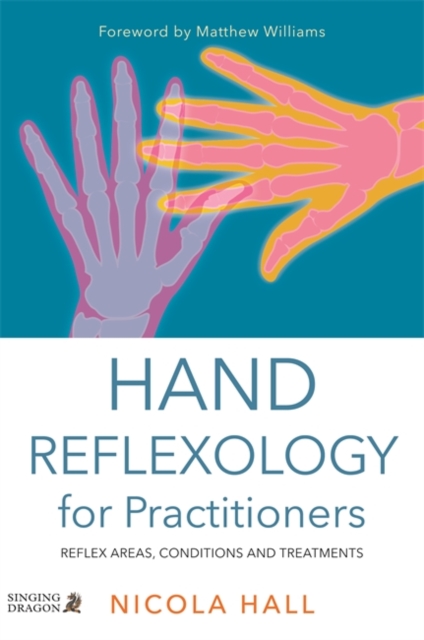
Hand Reflexology for Practitioners
Definitive and in-depth, this book presents essential information for excellent hand reflexology practice. Covering history and theory, the anatomy of the hand, detailed descriptions of each reflex area and techniques for practice, this book will deepen understanding of hand reflexology and how it can be used to treat a wide range of conditions.
eBook


Inside Australia's Anti-Terrorism Laws and Trials
Most tellingly, the book asks whether seeing these anti-terror laws as normal is a danger in itself.
eBook

Florence & Tuscany
Lonely Planet Florence & Tuscany is your passport to the most relevant, up-to-date advice on what to see and skip, and what hidden discoveries await you. Gaze upon Renaissance masterpieces at Florence's Uffizi Gallery, hunt for truffles in the hilltop town of San Minato, or climb San Gimignano's medieval towers.
Book
Words and symbols: language and communication in therapy
What lies behind the language we use as counsellors and psychotherapists?How does language fit into a therapeutic context?Can we truly say what we mean, and hear what is said, in the consulting room?This book takes apart, lays out and repositions the most basic of therapeutic tools - the language used to communicate between therapist and client. It begins with a summary of the different schools of thought on language acquisition from infancy onwards. It addresses ways in which philosophical and social contexts may impact on the thoughts and words available for speech. Following this it focuses on the detail of the words spoken in a consulting room, and considers dialogue in the arts therapies, where speech may not be the primary tool for understanding. The book also examines what happens when words fail, how symbols are essential for communication, and whether the emphasis on words in the talking therapies has limited the range of communication in the consulting room. An example of this limitation is offered in an extended discussion of gender and language.The book addresses counsellors and psychotherapists from all major theoretical orientations, from psychodynamic therapies through to humanistic and existential approaches, maintaining an overview that is relevant to an integrative position.Written for students of counselling and psychotherapy as well as practitioners who want to develop their skills and awareness,Words and Symbolsengages the reader in understanding the essence of therapeutic communication.
eBook

Paris : top sights, authentic experiences
\"Lonely Planet's Best of Paris is your passport to the most relevant, up-to-date advice on what to see and skip, and what hidden discoveries await you. Promenade down the Champs Elysees, lose yourself in the Louvre and work your way through a feast of food and wine - all with your trusted travel companion. Discover the best of Paris and begin your journey now!\"--Provided by publisher.
Book
Counter-Terrorism and Beyond
This book considers the increasing trend towards a ‘culture of control’ in democratic countries. The post-9/11 counter-terrorism laws in nations such as the USA, the UK, Canada and Australia provide a stark demonstration of this trend. These laws share a focus on the pre-emption of crime, restrictions on the right to liberty of non-suspects, limited public access to information, and increased community surveillance. The laws derogate, in many respects, from the ordinary principles of the criminal justice system and fundamental human rights while also harnessing public institutions in the broader project of prevention and control.
Distinctively, the contributors to this volume focus on the impact of these laws outside of the counter-terrorism context. The book draws together a range of experts in both public and criminal law, from Australia and overseas, to examine the effect of counter-terrorism laws on public institutions within democracies more broadly. Issues considered include changes to the role and functions of the courts, the expansion of executive discretion, the seepage of extraordinary powers and pre-emptive measures into other areas of the criminal law, and the interaction and overlap between intelligence and law enforcement agencies.
Counter-Terrorism and Beyond: The Culture of Law and Justice After 9/11 will be of interest to students and scholars of criminal law, criminology, comparative criminal justice, terrorism and national security, public law, human rights, governance and public policy.
Part 1: Introduction 1. The Emergence of a ‘Culture of Control’, Andrew Lynch, Nicola McGarrity and George Williams Part 2: Prevention and Pre-Emption, Evidence and Intelligence 2. Counter-Terrorism: The Law and Policing of Pre-Emption, Jude McCulloch and Sharon Pickering 3. The Counter-Terrorism Purposes of an Australian Preventative Detention Order, Claire Macken 4. The Eroding Distinction Between Intelligence and Evidence in Terrorism Investigations, Kent Roach Part 3: Community Surveillance and the Creation of a Culture of Suspicion 5. Constitutional Criminal Procedure and Civil Rights in the Shadow of the ‘War on Terror’: A Look at Recent United States Decisions and the Rhetoric of Terrorism, Charles Weisselberg 6. Suspicionless Searches and the Prevention of Terrorism, John Ip 7. A Passport to Punishment: Administrative Measures of Control for National Security Purposes, Susan Harris Rimmer Part 4: The Normalisation of Extraordinary Measures 8. When Extraordinary Measures Become Normal: Pre-Emption in Counter-Terrorism and Other Laws, Nicola McGarrity and George Williams 9. The Anti-Terror Creep: Law and Order, the States and the High Court of Australia, Gabrielle Appleby and John Williams Part 5: The Flow of Information in Liberal Democracies 10. Proxies for the Authorities? Using Media Information in the Investigation and Prosecution of Terrorism Offences, Lawrence McNamara 11. The Show Must Go On: The Drama of Dr Mohamed Haneef and the Theatre of Counter-Terrorism, Mark Rix Part 6: Judicial Review and the Parliamentary Process: How Best to Protect Human Rights? 12. Extra-Constitutionalism, Dr Mohamed Haneef and Controlling Executive Power in Times of Emergency, Fergal Davis
Nicola McGarrity is the Director of the Terrorism and Law Project at the Gilbert + Tobin Centre of Public Law and a Research Fellow in the Faculty of Law, University of New South Wales, Australia.
Andrew Lynch is the Director of the Gilbert + Tobin Centre of Public Law and an Associate Professor in the Faculty of Law, University of New South Wales, Australia.
George Williams is the Anthony Mason Professor of Law and Foundation Director of the Gilbert + Tobin Centre of Public Law in the Faculty of Law, University of New South Wales, Australia, and an Australian Research Council Laureate Fellow.
eBook

