
Catalogue Search | MBRL


Are you sure you want to remove the book from the shelf?

{{itemTitle}}
3
result(s) for
"Willoquet-Maricondi, Paula, 1960-"
Sort by:


Framing the World
The essays in this collection make a contribution to the greening of film studies and expand the scope of ecocriticism as a discipline traditionally rooted in literary studies. In addition to highlighting particular films as productive tools for raising awareness and educating us about environmental issues,Framing the World: Explorations in Ecocriticism and Filmencourages its readers to become more ecologically minded viewers, sensitive to the ways in which films reflect, shape, reinforce, and challenge our perceptions of nature, of human/nature relations, and of environmental issues.
The contributors to this volume offer in-depth analyses of a broad range of films, including fictional and documentary, Hollywood and independent, domestic and foreign, experimental and indigenous. Drawing from disciplines including film theory, ecocriticism, philosophy, rhetoric, environmental justice, and American and Indigenous studies, Framing the World offers new and original approaches to the ecocritical study of cinema. The twelve essays are gathered in four parts, focusing on ecocinema as activist cinema; the representation of environmental justice issues in Hollywood, independent, and foreign films; the representation of animals, ecosystems, and natural and human-made landscapes in live action and animation; and ecological themes in the films of two eco-auteurs, Kiyoshi Kurosawa and Peter Greenaway. Willoquet-Maricondi's introduction provides an overview of the field of ecocriticism and offers both philosophical and theoretical foundations for the ecocritical study of films.
Contributors
Beth Berila, St. Cloud State University * Lynne Dickson Bruckner, Chatham College * Elizabeth Henry, University of Denver * Joseph K. Heumann, Eastern Illinois University * Harri Kilpi, University of East Anglia * Jennifer Machiorlatti, Western Michigan University * Mark Minster, Rose-Hulman Institute of Technology * Robin L. Murray, Eastern Illinois University * Tim Palmer, University of North Carolina, Wilmington * Cory Shaman, Arkansas Tech University * Rachel Stein, Siena College * Paula Willoquet-Maricondi, Marist College
eBook
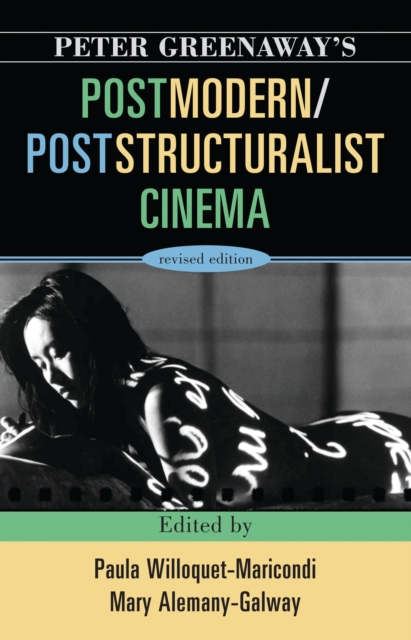
Peter Greenaway's Postmodern / Poststructuralist Cinema
Since the 1960s, British multi-media artist Peter Greenaway has shocked and intrigued audiences with his avant-garde approach to filmmaking and other artistic ventures. From early experimental films to provocative features, Greenaway has deployed strategies associated with structuralist cinema, only to challenge or critique the very limits of that cinema and of film in general.
In this collection of essays, scholars from a variety of disciplines explore various postmodern and poststructuralist aspects of Greenaway's films, starting with his early shorts and delving into his feature-length works, including The Draughtman's Contract, The Belly of an Architect, A Zed and Two Noughts, The Cook, the Thief, His Wife and Her Lover, The Baby of Mâcon, and The Pillow Book. Other artistic productions, including his paintings and installations are also discussed. These essays examine the filmmaker's position within British and avant-garde cinema and his interest in constructing and deconstructing representational systems.
In the years since the first edition of this book, Greenaway has enjoyed continued success in creating hybridized media projects for the stage and screen, as evidenced by additional essays for this revised edition. A new chapter addresses how Dutch political events and Dutch art have been crucial in shaping Greenaway's aesthetic, focusing on The Draughtsman's Contract, the 1991 opera Writing to Vermeer, and Nightwatching, the audio-visual installation and 2007 film of the same name, which were inspired by Rembrandt's Night Watch. Also new to this collection is an essay that examines Greenaway's most ambitious endeavor to date, The Tulse Luper Suitcases, which exists as four feature films, multiple websites, an online game, several books and installations, and a number of theatrical events.
Peter Greenaway's Postmodern/Poststructuralist Cinema, Revised Edition explores the cultural, historical, and philosophical implication
eBook