
Catalogue Search | MBRL


Are you sure you want to remove the book from the shelf?

{{itemTitle}}
63
result(s) for
"Winch, Sarah"
Sort by:
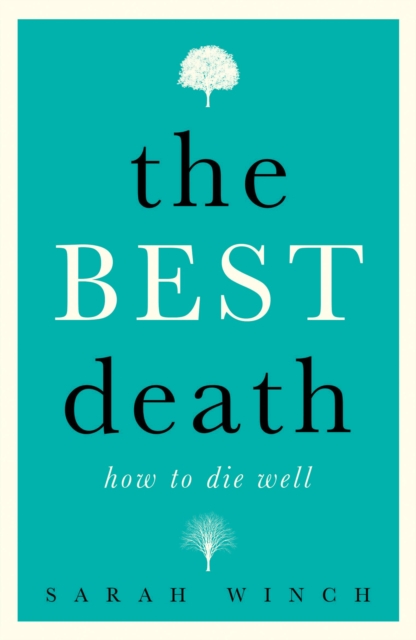
The Best Death
If you or someone you love has been diagnosed with a terminal illness, how do you plan for the best death possible? In April 2008 Sarah Winch's husband, Lincoln, died from kidney cancer that was diagnosed only four months earlier. He was 48. Sarah and Lincoln prepared as best they could for his death. Her 30 years as a registered nurse and ethicist, specifically focused on end-of-life care, did not fully prepare Sarah for Lincoln's death, but it did help them plan for the best death possible. This book advocates for taking control of the final stages of life. It opens up the conversation around death and encourages us to become more informed about how we want to die. This is an intimate, compassionate and practical guide, from someone with uniquely relevant personal and professional experience.
eBook

Moral stress, moral climate and moral sensitivity among psychiatric professionals
The aim of the present study was to investigate the association between work-related moral stress, moral climate and moral sensitivity in mental health nursing. By means of the three scales Hospital Ethical Climate Survey, Moral Sensitivity Questionnaire and Work-Related Moral Stress, 49 participants’ experiences were assessed. The results of linear regression analysis indicated that moral stress was determined to a degree by the work place’s moral climate as well as by two aspects of the mental health staff’s moral sensitivity. The nurses’ experience of ‘moral burden’ or ‘moral support’ increased or decreased their experience of moral stress. Their work-related moral stress was determined by the job-associated moral climate and two aspects of moral sensitivity. Our findings showed an association between three concepts: moral sensitivity, moral climate and moral stress. Despite being a small study, the findings seem relevant for future research leading to theory development and conceptual clarity. We suggest that more attention be given to methodological issues and developing designs that allow for comparative research in other disciplines, as well as in-depth knowledge of moral agency.
Journal Article

Factors associated with non-beneficial treatments in end of life hospital admissions: a multicentre retrospective cohort study in Australia
ObjectiveTo quantitatively assess the factors associated with non-beneficial treatments (NBTs) in hospital admissions at the end of life.DesignRetrospective multicentre cohort study.SettingThree large, metropolitan tertiary hospitals in Australia.Participants831 adult patients who died as inpatients following admission to the study hospitals over a 6-month period in 2012.Main outcome measuresOdds ratios (ORs) of NBT derived from logistic regression models.ResultsOverall, 103 (12.4%) admissions involved NBTs. Admissions that involved conflict within a patient’s family (OR 8.9, 95% CI 4.1 to 18.9) or conflict within the medical team (OR 6.5, 95% CI 2.4 to 17.8) had the strongest associations with NBTs in the all subsets regression model. A positive association was observed in older patients, with each 10-year increment in age increasing the likelihood of NBT by approximately 50% (OR 1.5, 95% CI 1.2 to 1.9). There was also a statistically significant hospital effect.ConclusionsThis paper presents the first statistical modelling results to assess the factors associated with NBT in hospital, beyond an intensive care setting. Our findings highlight potential areas for intervention to reduce the likelihood of NBTs.
Journal Article

Recognizing the Dialectic of Compassionate Care in the Workplace: Feedback From Nurse Educators
Compassionate care and compassion fatigue affects managers, clinicians, and patients and is gaining international recognition. Using the café methodology as a structure and nurse educators as participants, a compassion dialectic between the psychological intent of the nurse to be compassionate and a system designed on maximizing throughput, with the least inputs possible is identified. Our findings indicate that the café in itself is not sufficient to enable experienced educators to take responsibility for compassionate care, but the café methodology opens the space for the important steps of naming the problem, recognizing its dialectical nature, deflecting blame for compassion fatigue away from individuals, and balancing the responsibility for compassion across the spectrum of elements that enable care to take place.
2015;46(5):228–232.
J Contin Educ Nurs.
2015;46(5):228–232.
Journal Article
Understanding Compassion Literacy in Nursing Through a Clinical Compassion Cafe
This article presents a method of reconnecting and reaffirming with nurses the importance of compassion in health care by using a clinical compassion cafe, which describes nine steps that provide a forum to reaffirm clinicians’ core values. This process has the potential to engage clinical staff in a different modality removed from the usual didactic approaches.
2014;45(11):484–486.
J Contin Educ Nurs.
2014;45(11):484–486.
Journal Article
Introducing the Safety Score Audit for Staff Member and Patient Safety
In July 2013, the Public Citizen report Health Care Workers Unprotected concluded that insufcient inspections and standards leave safety risks for the health care workforce unaddressed.1 The report revealed that in 2011, health care workers in the United States had seven times the national rate of musculoskeletal disorders compared with workers in the private sector. The injury incident rate from assaults and violent acts was also seven times higher for health care workers than in the private sector workplace.1 According to the Centers for Disease Control and Prevention (CDC), health care injuries are on the rise; this is particularly alarming when rates are decreasing in other high-risk industries such as agriculture and construction.2
Journal Article

Reasons doctors provide futile treatment at the end of life: a qualitative study
ObjectiveFutile treatment, which by definition cannot benefit a patient, is undesirable. This research investigated why doctors believe that treatment that they consider to be futile is sometimes provided at the end of a patient's life.DesignSemistructured in-depth interviews.SettingThree large tertiary public hospitals in Brisbane, Australia.Participants96 doctors from emergency, intensive care, palliative care, oncology, renal medicine, internal medicine, respiratory medicine, surgery, cardiology, geriatric medicine and medical administration departments. Participants were recruited using purposive maximum variation sampling.ResultsDoctors attributed the provision of futile treatment to a wide range of inter-related factors. One was the characteristics of treating doctors, including their orientation towards curative treatment, discomfort or inexperience with death and dying, concerns about legal risk and poor communication skills. Second, the attributes of the patient and family, including their requests or demands for further treatment, prognostic uncertainty and lack of information about patient wishes. Third, there were hospital factors including a high degree of specialisation, the availability of routine tests and interventions, and organisational barriers to diverting a patient from a curative to a palliative pathway. Doctors nominated family or patient request and doctors being locked into a curative role as the main reasons for futile care.ConclusionsDoctors believe that a range of factors contribute to the provision of futile treatment. A combination of strategies is necessary to reduce futile treatment, including better training for doctors who treat patients at the end of life, educating the community about the limits of medicine and the need to plan for death and dying, and structural reform at the hospital level.
Journal Article
Doctors’ perceptions of how resource limitations relate to futility in end-of-life decision making: a qualitative analysis
ObjectiveTo increase knowledge of how doctors perceive futile treatments and scarcity of resources at the end of life. In particular, their perceptions about whether and how resource limitations influence end-of-life decision making. This study builds on previous work that found some doctors include resource limitations in their understanding of the concept of futility.SettingThree tertiary hospitals in metropolitan Brisbane, Australia.DesignQualitative study using in-depth, semistructured, face-to-face interviews. Ninety-six doctors were interviewed in 11 medical specialties. Transcripts of the interviews were analysed using thematic analysis.ResultsDoctors’ perceptions of whether resource limitations were relevant to their practice varied, and doctors were more comfortable with explicit rather than implicit rationing. Several doctors incorporated resource limitations into their definition of futility. For some, availability of resources was one factor of many in assessing futility, secondary to patient considerations, but a few doctors indicated that the concept of futility concealed rationing. Doctors experienced moral distress due to the resource implications of providing futile treatment and the lack of administrative supports for bedside rationing.ConclusionsDoctors’ ability to distinguish between futility and rationing would be enhanced through regulatory support for explicit rationing and strategies to support doctors’ role in rationing at the bedside. Medical policies should address the distinction between resource limitations and futility to promote legitimacy in end-of-life decision making.
Journal Article
Incidence, duration and cost of futile treatment in end-of-life hospital admissions to three Australian public-sector tertiary hospitals: a retrospective multicentre cohort study
ObjectivesTo estimate the incidence, duration and cost of futile treatment for end-of-life hospital admissions.DesignRetrospective multicentre cohort study involving a clinical audit of hospital admissions.SettingThree Australian public-sector tertiary hospitals.ParticipantsAdult patients who died while admitted to one of the study hospitals over a 6-month period in 2012.Main outcome measuresIncidences of futile treatment among end-of-life admissions; length of stay in both ward and intensive care settings for the duration that patients received futile treatments; health system costs associated with futile treatments; monetary valuation of bed days associated with futile treatment.ResultsThe incidence rate of futile treatment in end-of-life admissions was 12.1% across the three study hospitals (range 6.0%–19.6%). For admissions involving futile treatment, the mean length of stay following the onset of futile treatment was 15 days, with 5.25 of these days in the intensive care unit. The cost associated with futile bed days was estimated to be $AA12.4 million for the three study hospitals using health system costs, and $A988 000 when using a decision maker’s willingness to pay for bed days. This was extrapolated to an annual national health system cost of $A153.1 million and a decision maker’s willingness to pay of $A12.3 million.ConclusionsThe incidence rate and cost of futile treatment in end-of-life admissions varied between hospitals. The overall impact was substantial in terms of both the bed days and cost incurred. An increased awareness of these economic costs may generate support for interventions designed to reduce futile treatments. We did not include emotional hardship or pain and suffering, which represent additional costs.
Journal Article
The Role of the Nurse Educator in Sustaining Compassion in the Workplace: A Case Study From an Intensive Care Unit
Intensive care unit (ICU) nurses are frequently exposed to emotional and stressful situations in the workplace, which has changed little over the decades. Compassion fatigue is caused by sustained exposure to situations that conflict with one's values and beliefs in the ICU, eroding clinical team relationships and ultimately the quality and safety of patient care. Continuing education in the intensive care setting is a priority, as ICU nurses need to remain abreast of the rapid developments in high-acuity care delivery; however, attention also needs to be directed to nurses' emotional well-being. Nurse educators are well positioned to create and sustain open dialogue that contributes to group cohesion and assists nurses' well-being. J Contin Educ Nurs. 2018;49(5):221–224.
Journal Article