
Catalogue Search | MBRL


Are you sure you want to remove the book from the shelf?

{{itemTitle}}
13
result(s) for
"Windeatt, Scott"
Sort by:

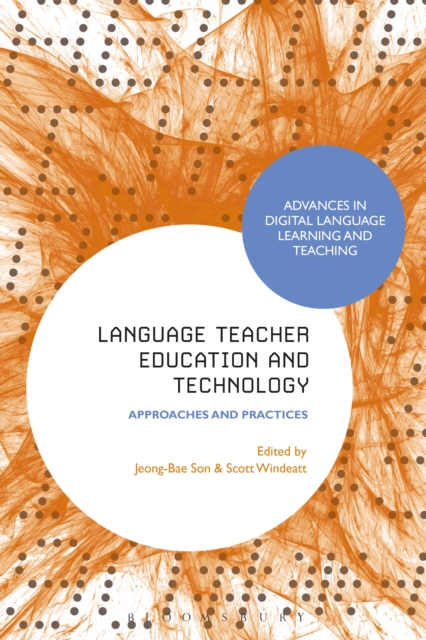
Language Teacher Education and Technology
Language teachers’ competencies in computer-assisted language learning (CALL) are a crucial factor affecting their own implementation of CALL. However, there is still a concern that many language teachers are not adequately prepared to make effective use of CALL or to identify and evaluate potential CALL solutions. This can be the result of many different factors and raises the question of how to train teachers to develop their CALL knowledge and skills to a greater degree. The discussion of approaches to training language teachers in the use of technology adopted in areas of Australia, the UK and the US provides valuable insights for those already involved in this area, and inspiration for those who have some interest in carrying out this kind of training, but as yet have little or no experience. This book explores the current status of CALL teacher education and discusses issues and challenges CALL teacher educators face in their own contexts. Specifically, it looks at postgraduate CALL courses offered at different universities to find ways of improving CALL teacher training. It represents the first overview of a topic that is relevant to most postgraduate courses in Applied Linguistics or TESOL across the globe. The use of technology for language learning and teaching is increasingly common but, as is so often the case, training for teachers in how to use that technology remains limited, to a large extent by lack of expertise among trainers.
eBook
Usability Testing for an Open Educational Resource to Teach Language and Culture
This study focused on procedures for creating, testing, and developing a set of reusable online resources for use in English for academic purposes programmes. The aim of the materials was to help migrants and refugees develop the linguistic and cultural skills, knowledge, and understanding they would need to engage, interact, and collaborate effectively in a multicultural context. Development of the materials involved an iterative process using a three-stage approach:1. Expert review: Experts in relevant fields worked through the first version of the materials and provided critical feedback, which guided initial revisions.2. Usability testing groups: Small groups of target users (students and teachers) used the revised materials in workshop settings, and data were gathered from observations, interviews, and written comments.3. Wider evaluation: Larger-scale use and evaluation of the materials (which is ongoing, beyond the scope of this paper).This article reports on the second stage.
Journal Article


The impact of computer-based feedback on students’ written work
While research in second language writing suggests that instructor feedback can have a positive influence on students’ written work, the provision of such feedback on a regular basis can be problematic, especially with larger student numbers. A number of computer programs that claim to provide both automatic computer-based holistic scores and computer-based feedback (CBF) on written work are available and therefore have the potential to deal with this issue. Criterion is one such tool that claims to be able to provide automated feedback at word, sentence, paragraph and text level, but there is still a need for more research into the practical value of providing feedback on L2 writing. Quantitative and qualitative data about feedback practice was collected from 31 instructors and 549 Egyptian trainee EFL teachers using pre-treatment questionnaires, interviews and focus groups. 24 of the trainees then received computer-based feedback using Criterion on two drafts of essays submitted on each of 4 topics. Data recorded by the software suggested a positive effect on the quality of students’ second drafts and subsequent submissions, and post-treatment questionnaires, interviews and focus groups showed a positive effect on the students’ attitudes towards feedback.
Journal Article

