
Catalogue Search | MBRL


Are you sure you want to remove the book from the shelf?

{{itemTitle}}
160
result(s) for
"Winner, Ellen"
Sort by:


Practicing a Musical Instrument in Childhood is Associated with Enhanced Verbal Ability and Nonverbal Reasoning
In this study we investigated the association between instrumental music training in childhood and outcomes closely related to music training as well as those more distantly related.
Children who received at least three years (M = 4.6 years) of instrumental music training outperformed their control counterparts on two outcomes closely related to music (auditory discrimination abilities and fine motor skills) and on two outcomes distantly related to music (vocabulary and nonverbal reasoning skills). Duration of training also predicted these outcomes. Contrary to previous research, instrumental music training was not associated with heightened spatial skills, phonemic awareness, or mathematical abilities.
While these results are correlational only, the strong predictive effect of training duration suggests that instrumental music training may enhance auditory discrimination, fine motor skills, vocabulary, and nonverbal reasoning. Alternative explanations for these results are discussed.
Journal Article


Determining the markers of a preference for imaginary worlds fiction calls for comparisons across kinds of fiction readers and forms of exploration
The authors do not compare readers who prefer imaginary world fiction to readers with other reading preferences, failing to rule out the hypothesis that their findings apply to all readers. The authors also do not test their hypotheses against plausible alternative ones, several of which are suggested here.
Journal Article
Sight-over-sound judgments of music performances are replicable effects with limited interpretability
Virtuosi impress audiences with their musical expressivity and with their theatrical flair. How do listeners use this auditory and visual information to judge performance quality? Both musicians and laypeople report a belief that sound should trump sight in the judgment of music performance, but surprisingly, their actual judgments reflect the opposite pattern. In a recent study, when presented with 6-second videos of music competition performers, listeners accurately guessed the winners only when the videos were muted. Here, we successfully replicate this finding in a highly-powered sample but then demonstrate that the sight-over-sound effect holds only under limited conditions. When using different videos from comparable performances, in a forced-choice task, listeners' judgments were at or below chance. And when differences in performance quality were made clearer, listeners' judgments were most accurate when they could hear the music-without audio, performance was at chance. Sight therefore does not necessarily trump sound in the judgment of music performance.
Journal Article


How Art Works: A Conversation between Philosophy and Psychology 1
For centuries, aesthetics was effectively a branch of philosophy. The questions asked were philosophical ones that could be answered by reason and did not call for empirical evidence--questions such as: What is art? What is beauty? What makes a work of art great? However, some issues examined by philosophers of aesthetics were psychological in nature, and are thus open to empirical investigation--as for example Aristotle's theory of the cathartic effect of tragic drama, or Kant's claim that aesthetic pleasure differs from other kinds of pleasure in being disinterested and not motivating us to act. An entirely different approach to the psychology of aesthetics originated in Leipzig, Germany in the latter part of the 19th century with Gustav Theodor Fechner, one of the first experimental psychologists.
Journal Article
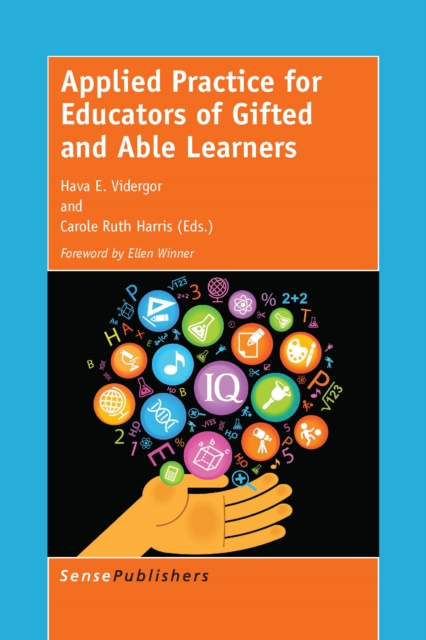
Applied Practice for Educators of Gifted and Able Learners
This book is a comprehensive study and guide for the classroom teacher, the gifted program coordinator, and the graduate student, who are challenged daily to provide for individual children who differ markedly but come under the umbrella of giftedness. It serves as a wellspring that derives from theory while it offers practical application of theoretical construct in a wide variety of international settings from leaders in the field who demonstrate implementation of proven and field-tested techniques and alternative scenarios to accommodate every classroom situation.
eBook

Seeing the Mind Behind the Art: People Can Distinguish Abstract Expressionist Paintings From Highly Similar Paintings by Children, Chimps, Monkeys, and Elephants
Museumgoers often scoff that costly abstract expressionist paintings could have been made by a child and have mistaken paintings by chimpanzees for professional art. To test whether people really conflate paintings by professionals with paintings by children and animals, we showed art and nonart students paired images, one by an abstract expressionist and one by a child or animal, and asked which they liked more and which they judged as better. The first set of pairs was presented without labels; the second set had labels (e.g., \"artist,\" \"child\") that were either correct or reversed. Participants preferred professional paintings and judged them as better than the nonprofessional paintings even when the labels were reversed. Art students preferred professional works more often than did nonart students, but the two groups' judgments did not differ. Participants in both groups were more likely to justify their selections of professional than of nonprofessional works in terms of artists' intentions. The world of abstract art is more accessible than people realize.
Journal Article