
Catalogue Search | MBRL


Are you sure you want to remove the book from the shelf?

{{itemTitle}}
119
result(s) for
"Winnifred Fallers Sullivan"
Sort by:


Varieties of Religious Establishment
Advocacy for religious freedom has become a global project while religion, and the management of religion, has become of increasing interest to scholars across a wider range of disciplines. Rather than adopting the common assumption that religious freedom is simply incompletely realized, the authors in this book suggest that the starting point for understanding religion in public life today should be religious establishment. In the hyper-globalized world of the politics of religious freedom today, a focus on establishments brings into view the cultural assumptions, cosmologies, anthropologies, and institutions which structure religion and religious diversity. Leading international scholars from a diverse range of disciplines explore how countries today live with religious difference and consider how considering establishments reveals the limitations of universal, multicultural, and interfaith models of religious freedom. Examining the various forms religion takes in Tunisia, Canada, Taiwan, South Africa, and the USA, amongst others, this book argues that legal protections for religious freedom can only be understood in a context of socially and culturally specific constraints.
eBook
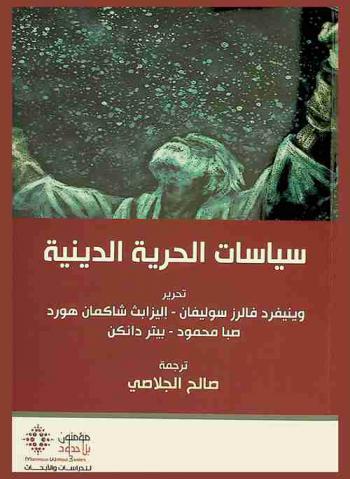


After Secular Law
Many today place great hope in law as a vehicle for the transformation of society and accept that law is autonomous, universal, and above all, secular. Yet recent scholarship has called into question the simplistic narrative of a separation between law and religion and blurred the boundaries between these two categories, enabling new accounts of their relation that do not necessarily either collapse them together or return law to a religious foundation.
This work gives special attention to the secularism of law, exploring how law became secular, the phenomenology of the legal secular, and the challenges that lingering religious formations and other aspects of globalization pose for modern law's self-understanding. Bringing together scholars with a variety of perspectives and orientations, it provides a deeper understanding of the interconnections between law and religion and the unexpected histories and anthropologies of legal secularism in a globalizing modernity.
eBook

The religious expert in American courts
This article examines how academic experts contribute to the discussion of court cases concerning the defense of religious freedom in the US Based on a study of relevant cases in which the scope of the first amendment has been debated, and relying on her own experience as an expert in some of these court cases, the author addresses the question of who is legitimate to define what counts or not as religious. She also studies the ambivalent relation of the American public to academic expertise. While some consider the role of experts as necessary to the formation of fair decisions, others view it as an obstacle to the expression of people's will. Cet article étudie comment les experts universitaires contribuent au règlement des affaires portées devant les tribunaux américains concernant la protection de la liberté religieuse. À partir de certains cas significatifs où les limites et la portée du premier amendement ont été débattus, et en s'appuyant sur des éléments tirés de son expérience d'experte sollicitée par les tribunaux, l'auteure traite de la question de savoir qui est légitime et habilité à définir ce qui est religieux ou non religieux. Elle étudie également le rapport ambivalent du public américain avec l'expertise, à la fois considérée comme garantie d'une décision éclairée et comme potentiellement contraire à la volonté populaire. Este artículo examina la contribución de los expertos universitarios a la regulación de los asuntos Ilevados ante los tribunales americanos en relación con la protección de la libertad religiosa. A partir de un estudio de ciertos casos significativos donde los límites y el alcance de la primera enmienda han sido debatidos, y apoyándose igualmente sobre elementos tomados de su experiencia de experta solicitada por los tribunales, la autora trata la cuestión del saber que es legítimo e idóneo para definir aquello que cuenta como religioso o no religioso. Ella estudia también la relación ambivalente del público americano en relación con las pericias, a la vez consideradas como garantía de una decisión ilustrada y como siendo potencialmente contraria a la voluntad popular.
Journal Article

Commentary on \Siting Pluralism\
There are some things we seem to need to learn over and over and over. Among them are the ways in which modern legal efforts to expel the sacred—or, perhaps more pointedly, as Neena Mahadev shows in her article, interventions to end it—condemn us to its constant reproduction. State secularism results not in the evacuation of the sacred but in an almost neurotic picking at the scab of the wound—and the continuous management of what Hussein Agrama (2012: 186) has called the “problem-space of secularism.” The four articles collected here are exemplary in their fine-grained analysis of this reality, both of the often pathetic inadequacy of regulatory efforts and, even more interestingly, of the glimpses we have of religious life lived in the in-between spaces of formal policing efforts, whether of church or state. The spatial gesture uniting this collection—siting pluralism—proves particularly potent. Sometimes imagined as uncompromisingly singular (i.e., spatial ‘locative’ religion as opposed to utopian portable religion) and at other times as spatial in a plural, less exclusive sense, the spaces/places of these articles are teeming with contradiction and multiplicity.
Journal Article
Shakeela Hassan: Narrating Religious Freedom in the Twenty-First Century
This essay explores the story of the religious life of one Muslim laywoman in
order to thicken and nuance dominant narrations of religion and religious
freedom in the US. Dr. Shakeela Hassan came to the US from Hyderabad in 1956 to
continue her medical training. Settling in Chicago, she became a close friend to
Clara and Elijah Muhammad as well as, after her retirement, an active promoter
of interfaith understanding through sound and musical performance. The authors
argue that her vision of peaceable coexistence among religious communities is
profoundly indebted both to her South Asian experiences as well as to her deep
admiration for the work of the two Muhammads.
Este ensayo explora la historia de la vida religiosa de una musulmana laica con
el fin de ampliar y matizar las narraciones dominantes sobre la religión y la
libertad religiosa en los Estados Unidos. La Dra. Shakeela Hassan llega a los
Estados Unidos desde Hyderabad en 1956 para continuar su formación médica. Al
establecerse en Chicago, entabla una amistad cercana con Clara y Elijah Muhammad
y, tras su jubilación, se transforma en una activa promotora del entendimiento
interreligioso a través del sonido y la interpretación musical. Los autores de
este ensayo arguyen que su visión acerca de la coexistencia pacífica entre
comunidades religiosas se debe tanto a sus experiencias en el sur de Asia como a
su profunda admiración por el trabajo de Clara y Elijah Muhammad.
Journal Article
SHAKEELA HASSAN: NARRATING RELIGIOUS FREEDOM IN THE TWENTY-FIRST CENTURY
Este ensayo explora la historia de la vida religiosa de una musulmana laica con el fin de ampliar y matizar las narraciones dominantes sobre la religión y la libertad religiosa en los Estados Unidos. La Dra. Shakeela Hassan llega a los Estados Unidos desde Hyderabad en 1956 para continuar su formación médica. Al establecerse en Chicago, entabla una amistad cercana con Clara y Elijah Muhammad y, tras su jubilación, se transforma en una activa promotora del entendimiento interreligioso a través del sonido y la interpretación musical. Los autores de este ensayo arguyen que su visión acerca de la coexistencia pacífica entre comunidades religiosas se debe tanto a sus experiencias en el sur de Asia como a su profunda admiración por el trabajo de Clara y Elijah Muhammad.
Journal Article

We Are All Religious Now. Again
In this essay I set current reappraisals of the secular, of secularism, and of secularization, in the context of the ways in which law regulates religion in the U.S. today. Religion under the rule of law as it is practiced in the United States. Virtually all Americans today, however orthodox their asserted religious identities, Protestant or Catholic or Jewish or Muslim, claim the right to associate themselves with religious communities -- and religious ideas and practices -- as they see fit, to define the terms of any such an association, to change their religious identities and associations at will, and to \"mix and match\" religious traditions. That right is understood to be authorized by political, legal, and theological narratives and texts and is changing the legal phenomenology of religion in the U.S. Adapted from the source document.
Journal Article