
Catalogue Search | MBRL


Are you sure you want to remove the book from the shelf?

{{itemTitle}}
5,756
result(s) for
"Winning, A."
Sort by:


Post-traumatic stress disorder and cardiometabolic disease: improving causal inference to inform practice
Post-traumatic stress disorder (PTSD) has been declared ‘a life sentence’ based on evidence that the disorder leads to a host of physical health problems. Some of the strongest empirical research – in terms of methodology and findings – has shown that PTSD predicts higher risk of cardiometabolic diseases, specifically cardiovascular disease (CVD) and type 2 diabetes (T2D). Despite mounting evidence, PTSD is not currently acknowledged as a risk factor by cardiovascular or endocrinological medicine. This view is unlikely to change absent compelling evidence that PTSD causally contributes to cardiometabolic disease. This review suggests that with developments in methods for epidemiological research and the rapidly expanding knowledge of the behavioral and biological effects of PTSD the field is poised to provide more definitive answers to questions of causality. First, we discuss methods to improve causal inference using the observational data most often used in studies of PTSD and health, with particular reference to issues of temporality and confounding. Second, we consider recent work linking PTSD with specific behaviors and biological processes, and evaluate whether these may plausibly serve as mechanisms by which PTSD leads to cardiometabolic disease. Third, we evaluate how looking more comprehensively into the PTSD phenotype provides insight into whether specific aspects of PTSD phenomenology are particularly relevant to cardiometabolic disease. Finally, we discuss new areas of research that are feasible and could enhance understanding of the PTSD–cardiometabolic relationship, such as testing whether treatment of PTSD can halt or even reverse the cardiometabolic risk factors causally related to CVD and T2D.
Journal Article

التنين الصيني وسباق التكنولوجيا
يؤكد هذا الكتاب على أنه لم يعد هناك مجال للشك في أن الصين قد أصبحت أشرس منافسي الولايات المتحدة الأمريكية رائدة الاختراعات التكنولوجية وإتاحة فرص الاستثمار في العالم ويعد بزوغ نجم الصين كعملاق تكنولوجي واحدا من أكثر الموضوعات إثارة وأهمية في مجال الأعمال والاقتصاد وقد قدمت مؤلفة هذا الكتاب ريبيكا فانين للقراء خدمة جليلة لا تقدر بثمن من خلال عرضها المفصل لأسباب وعوامل النمو التكنولوجي المذهل الذي أحرزته الصين في القرن الحادي والعشرين.
BOOK
Post-traumatic stress disorder symptoms and risk of hypertension over 22 years in a large cohort of younger and middle-aged women
Post-traumatic stress disorder (PTSD) has been linked to hypertension, but most research on PTSD and hypertension is cross-sectional, and potential mediators have not been clearly identified. Moreover, PTSD is twice as common in women as in men, but understanding of the PTSD-hypertension relationship in women is limited. We examined trauma exposure and PTSD symptoms in relation to incident hypertension over 22 years in 47 514 civilian women in the Nurses' Health Study II.
We used proportional hazards models to estimate hazard ratios (HRs) and 95% confidence intervals (CIs) for new-onset hypertension (N = 15 837).
PTSD symptoms assessed with a screen were modestly associated with incident hypertension in a dose-response fashion after adjusting for potential confounders. Compared to women with no trauma exposure, women with 6-7 PTSD symptoms had the highest risk of developing hypertension (HR 1.20, 95% CI 1.12-1.30), followed by women with 4-5 symptoms (HR 1.17, 95% CI 1.10-1.25), women with 1-3 symptoms (HR 1.12, 95% CI 1.06-1.18), and trauma-exposed women with no symptoms (HR 1.04, 95% CI 1.00-1.09). Findings were maintained, although attenuated, adjusting for hypertension-relevant medications, medical risk factors, and health behaviors. Higher body mass index and antidepressant use accounted for 30% and 21% of the PTSD symptom-hypertension association, respectively.
Screening for hypertension and reducing unhealthy lifestyle factors, particularly obesity, in women with PTSD may hold promise for offsetting cardiovascular risk.
Journal Article
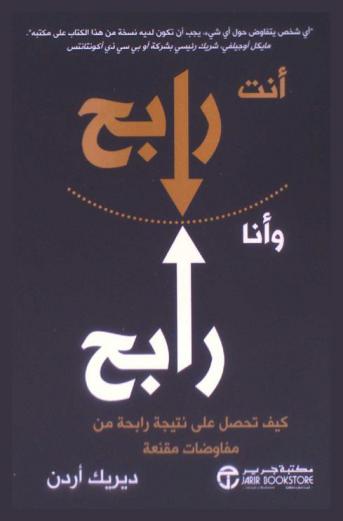
أنت رابح وأنا رابح : كيف تحصل على نتيجة رابحة من مفاوضات مقنعة
أنت رابح وأنا رابح : كيف تحصل على نتيجة رابحة من مفاوضات مقنعة تأليف ديريك أردن و كذلك ترجمة مكتبة جرير باستخدام 11 خطوة عملية وعالية الفاعلية فيما يخص التفاوض، يمكنك اجتياز جميع العقبات التي تحول بينك وبين التوصل إلى نتائج متفق عليها من الجميع.
Book
Post-traumatic stress disorder symptom duration and remission in relation to cardiovascular disease risk among a large cohort of women
Prior studies suggest that post-traumatic stress disorder (PTSD) is associated with elevated cardiovascular disease (CVD) risk, but effects of duration and remission of PTSD symptoms have rarely been evaluated.
We examined the association of time-updated PTSD symptom severity, remission and duration with incident CVD risk (552 confirmed myocardial infarctions or strokes) over 20 years in 49 859 women in the Nurses' Health Study II. Among women who reported trauma on the Brief Trauma Questionnaire, PTSD symptoms, assessed by a screener, were classified by symptom severity and chronicity: (a) no symptoms, (b) 1-3 ongoing, (c) 4-5 ongoing, (d) 6-7 ongoing, (e) 1-3 remitted, (f) 4-7 remitted symptoms. Inverse probability weighting was used to estimate marginal structural logistic regression models, adjusting for time-varying and time-invariant confounders.
Compared with women with no trauma exposure, women with trauma/no PTSD [odds ratio (OR) 1.30, 95% confidence interval (CI) 1.03-1.65] and women with trauma/6-7 symptoms (OR 1.69, 95% CI 1.08-2.63) had elevated risk of CVD; women with remitted symptoms did not have elevated CVD risk. Among women exposed to trauma, every 5 additional years of PTSD symptomology was associated with 9% higher CVD incidence compared with women with trauma/no PTSD.
The findings suggest that alleviating PTSD symptoms shortly after onset may attenuate CVD risk.
Journal Article

Reference values and prediction equations for normal lung function in a non-smoking white urban population
Prediction equations for normal lung function have been derived from tests on 179 healthy, non-smoking, white urban dwellers. The subjects, 96 women (height 1.46-1.77 m) and 83 men (height 1.61-1.96 m) aged 18-86 years, underwent measurements of spirometric flow and volume, multi-breath helium dilution lung volumes, and single breath carbon monoxide transfer factor and the single breath nitrogen washout test. Regression analysis using height, age, and weight as independent variables was used to provide predicted values for both sexes. Correlation coefficients were similar to those found in previous studies but normal ranges for spirometic measurements were narrower than in many previous studies, and spirometric flow and volume measurements were higher than those obtained in studies that included cigarette smokers, reflecting our more stringent criteria for selecting subjects and the newer standardised technical methods adopted. Multi-breath helium dilution values for total lung capacity were similar to those found in previous studies but the inspiratory vital capacity was larger and the residual volume reduced. Values for carbon monoxide transfer factor and the single breath nitrogen washout did not differ significantly from existing values. A complete set of lung function reference values and prediction equations for both sexes has been derived from a single population. The exclusion of cigarette smokers and subjects with respiratory symptoms has produced values that should have a greater sensitivity in the detection of mild lung disease.
Journal Article
Interpretation of negative results in fine needle aspiration of discrete pulmonary lesions
A retrospective analysis was carried out on a consecutive series of 181 percutaneous fine needle aspiration biopsies of discrete pulmonary lesions, in which the outcome was established in 95%. In primary bronchial carcinoma the technique had a sensitivity of 86%. There was no relationship between the size, location, or radiological appearance of the lesion and the incidence of false negative results. The principal reason for failure to diagnose malignancy was inadequacy of the material provided for cytological examination. For metastatic neoplasms of non-bronchial origin the procedure had a sensitivity of 42% and a significantly greater false negative rate than for primary bronchial malignancy. For the entire series 72 (40%) of the procedures failed to produce a definite diagnosis, 29 (40%) of these cases subsequently proving to be malignant. A positive diagnosis was established in only 16% of patients with benign conditions. Review of published reports and consideration of the role of this and other biopsy techniques in the investigation of discrete pulmonary lesions lead to the conclusion that needle aspiration biopsy seems particularly appropriate in the investigation of inoperable patients with probable bronchial carcinoma in whom sputum cytology and bronchoscopy do not yield a diagnosis.
Journal Article

Fatal bronchospasm after oral ingestion of isphagula
We report the case of a 40-year-old asthmatic who suffered fatal bronchospasm following oral injestion of a laxative containing isphagula.
Journal Article