
Catalogue Search | MBRL


Are you sure you want to remove the book from the shelf?

{{itemTitle}}
482
result(s) for
"Winston, Brian"
Sort by:

A right to offend
\"Over the past two decades, there have been a series of events that have brought into question the concept and practice of free expression. In this new book, Winston provides an account of the current state of freedom of expression in the western world. He analyses all the most pertinent cases of conflict during the last two decades - including the fatwa against Salman Rushdie, the incident of the Danish cartoons and offended celebrities - examining cultural, legal and journalistic aspects of each case. A Right to Offend offers us a deeper understanding of the increasingly threatening environment in which free speech operates and is defended, as well as how it informs and is central to journalism practice and media freedom more generally. It is important reading for all those interested in freedom of expression in the twenty-first century.\"--Publisher's website.
Book

Visual Hallucinations in Serotonergic Psychedelics and Lewy Body Diseases
Abstract
Background and Hypothesis
Visual hallucinations (VH) are a core symptom of both Lewy body diseases (LBDs; eg, Parkinson’s disease and dementia with Lewy bodies) and serotonergic psychedelics (SPs; eg, psilocybin and mescaline). While these conditions differ in etiology, overlapping phenomenology, and neural mechanisms suggest shared pathways. This review explores similarities and differences in VH between LBDs and SPs, focusing on phenomenology, cortical function, and serotonergic modulation.
Study Design
This narrative review synthesizes findings from neurology, cognitive neuroscience, and systems neuroscience to compare VH in LBDs and SPs. The literature includes studies with both human subjects and animal models that examine cortical activity patterns, neuromodulatory mechanisms, and VH phenomenology.
Study Results
Both LBDs and SPs exhibit distinct visual aberrations, ranging from minor metamorphopsias to complex hallucinations. Some features in LBDs resemble those induced by SPs (eg, illusory motion and entity encounters), suggesting shared neural mechanisms. Neuroimaging studies indicate a common pattern of hyperactive associative cortex and hypoactive sensory cortex. At the neuromodulator level, SP-induced VH involves serotonin 2A and 1A receptor (5-HT2AR and 5-HT1AR) modulation, while in LBDs, 5-HT2A receptor upregulation correlates with increased VH, and its inhibition (eg, with pimavanserin) reduces VH. Two shared cortical signatures are highlighted: reduced visual evoked responses and shifts toward visual excitation.
Conclusions
Examining cortical and neuromodulatory similarities between LBD- and SP-induced VH may elucidate the link between sensory degradation, excitation, and hallucinogenesis. Future research should employ real-time neuroimaging of discrete hallucinatory episodes to identify shared mechanisms and develop targeted interventions for LBD hallucinations.
Journal Article


Sex differences in cued fear responses and parvalbumin cell density in the hippocampus following repetitive concussive brain injuries in C57BL/6J mice
There is strong evidence to suggest a link between repeated head trauma and cognitive and emotional disorders, and Repetitive concussive brain injuries (rCBI) may also be a risk factor for depression and anxiety disorders. Animal models of brain injury afford the opportunity for controlled study of the effects of injury on functional outcomes. In this study, male and cycling female C57BL/6J mice sustained rCBI (3x) at 24-hr intervals and were tested in a context and cued fear conditioning paradigm, open field (OF), elevated zero maze and tail suspension test. All mice with rCBI showed less freezing behavior than sham control mice during the fear conditioning context test. Injured male, but not female mice also froze less in response to the auditory cue (tone). Injured mice were hyperactive in an OF environment and spent more time in the open quadrants of the elevated zero maze, suggesting decreased anxiety, but there were no differences between injured mice and sham-controls in depressive-like activity on the tail suspension test. Pathologically, injured mice showed increased astrogliosis in the injured cortex and white matter tracts (optic tracts and corpus callosum). There were no changes in the number of parvalbumin-positive interneurons in the cortex or amygdala, but injured male mice had fewer parvalbumin-positive neurons in the hippocampus. Parvalbumin-reactive interneurons of the hippocampus have been previously demonstrated to be involved in hippocampal-cortical interactions required for memory consolidation, and it is possible memory changes in the fear-conditioning paradigm following rCBI are the result of more subtle imbalances in excitation and inhibition both within the amygdala and hippocampus, and between more widespread brain regions that are injured following a diffuse brain injury.
Journal Article

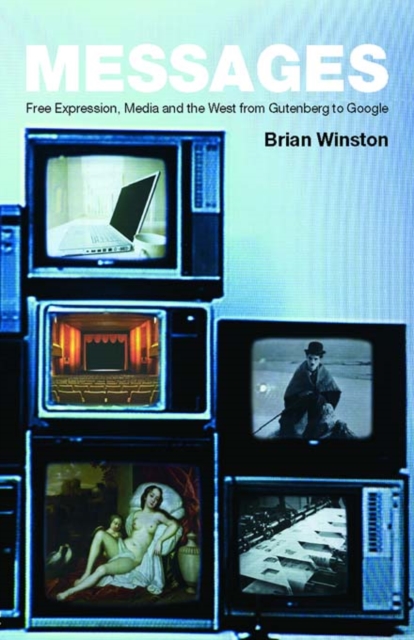
Messages
Easy to read, and highly topical, Messages writes a history of mass communication in Europe and its outreaches, as a search for the origins of media forms from print and stage, to photography, film and broadcasting.
Arguing that the development of the mass media has been an essential engine driving the western concept of an individual, Brian Winston examines how the right of free expression is under attack, and how the roots of media expression need to be recalled to make a case for the media's importance for the protection of individual liberty.
Relating to the US constitution, and key laws in the UK which form the foundation of our society, this is a highly useful book for students of media, communication, history, and journalism.
eBook

Media Technology and Society
Challenging the popular myth of a present-day 'information revolution', Media Technology and Society is essential reading for anyone interested in the social impact of technological change. Winston argues that the development of new media forms, from the telegraph and the telephone to computers, satellite and virtual reality, is the product of a constant play-off between social necessity and suppression: the unwritten law by which new technologies are introduced into society only insofar as their disruptive potential is limited.
eBook

\Le Rapport de face A face\ in Digital Documentary
\"Do no harm\" remains the foundation for the ethics-a system of morality applied to behavior-of the documentary filmmaker into the digital era. But digital affordances do impact, although far from transformatively, on the ethical position of all three parties involved in the act of documenting- the filmer, the filmed and the spectator. To assess the extent of this a Levenasian framework is deployed to suggest that the central site of ethical behavior relates to the face-to-face interaction (le raport de face à face) of the filmmaker and those being filmed (les autres). The spectator constitutes a more distant third party (la troisième personage). For this figure, the ethics of watching digital images remain unchanged except that the increased possibility of digital image manipulation requires an increase of awareness. For the filmer-the filmmaker-too, the duty of care is also unchanged-grounded in the principle that no harm should be offered to either 'l'autre or la troisième personage. This constraint on free expression persists especially because of the increased temptations afforded by the ease of digital image manipulation. These need generally to be resisted in the name of image integrity best expressed through a self-impose ethics of tact. For those filmed, the digital can be far more transformative. Its accessibility affords the filmed the possibility of an escape from their-all too often, social victim-position. They can now meld with the filmer and take in all the duty of care that requires.
Journal Article

A Handshake or a Kiss
George Stoney, the pied piper of community-based video and progressive documentary, taught at New York University from 1970 nearly to the moment of his death at 96 in 2012. An indefatigable figure in popularizing video as a political force, Stoney had a particular combination of optimism and pragmatism that's in short supply these days. Fortunately, he left behind an enormous archive to provide inspiration. Here, Winston generously shares his initial discoveries, providing a sense of Stoney's early formation and his unwavering belief that ordinary folks have the ability to shape their own image. He includes samples of Stoney's own hand-typed letters and memos, preserved on carbon copies, for a true time-travel experience.
Journal Article

An English approach to national identity and cultural image discourse system: from Shakespeare to the 20th century
The difficulties of representing national identity and cultural image in the mass media are universal. Are there, therefore, any universal general principles and techniques for the construction of hegemonically-robust cultural messages? It is suggested that there might be. Using the transmission of mass media messages in England during World War II as a case study of one such technique, an approach is outlined. In this instance, a certain presumption of hostility and negativity to cultural communications that attempt to reinforce national identity is addressed by a nuanced approach allowing measures of ‘realistic’ negativity to ensure positive response.
Journal Article