
Catalogue Search | MBRL


Are you sure you want to remove the book from the shelf?

{{itemTitle}}
7
result(s) for
"Winston, Brian, author"
Sort by:


Media Technology and Society
Challenging the popular myth of a present-day 'information revolution', Media Technology and Society is essential reading for anyone interested in the social impact of technological change. Winston argues that the development of new media forms, from the telegraph and the telephone to computers, satellite and virtual reality, is the product of a constant play-off between social necessity and suppression: the unwritten law by which new technologies are introduced into society only insofar as their disruptive potential is limited.
eBook
Messages
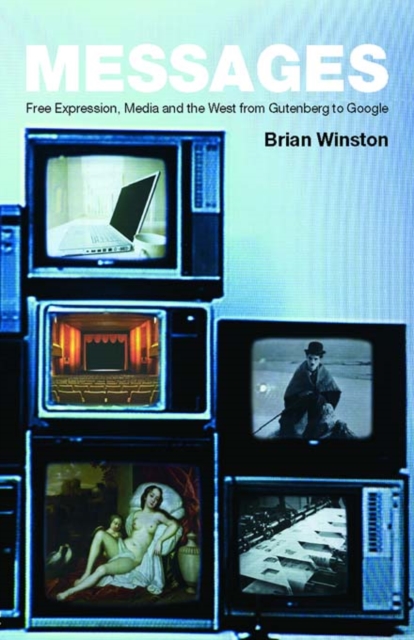
Easy to read, and highly topical, Messages writes a history of mass communication in Europe and its outreaches, as a search for the origins of media forms from print and stage, to photography, film and broadcasting.
Arguing that the development of the mass media has been an essential engine driving the western concept of an individual, Brian Winston examines how the right of free expression is under attack, and how the roots of media expression need to be recalled to make a case for the media's importance for the protection of individual liberty.
Relating to the US constitution, and key laws in the UK which form the foundation of our society, this is a highly useful book for students of media, communication, history, and journalism.
eBook

BUSINESS FORUM: THE BARRIERS TO INNOVATION; The Built-In Bias Against HDTV
For those alarmed about America's supposed loss of competitiveness, digital audio tape - a technology that makes nearly distortion-free home recording possible - is the latest example of how the United States has lost its lead. But history shows that new technology often displaces existing technology slowly and with difficulty. This is just as true for digital audio tape as it was for the telegraph, radio and televison. Marconi's celebrated radio transmission of the morse letter ''S'' from Cornwall to Newfoundland in 1901 caused dismay to the Anglo-American Telegraph Company. In 1937, both the British and the Germans were using equipment that was essentially RCA's to run what were then considered to be extensive TV services. But in the United States, the F.C.C., in a conscious effort to control RCA's dominance over television's patents, was unwilling to allow the exploitation of the same technology. One monster monopoly, the American Telephone and Telegraph Company, was felt to be enough - or rather too much by the regulators of the time. As a result, the introduction of commercial television was delayed in the United States by more than a decade.
Newspaper Article

Excavations at King's Low and Queen's Low
Two barrows in the parish of Tixall, north of Stafford, were excavated between 1986-1994. The results are important because little excavation of round barrows has been carried out in this area of North Staffordshire and these add considerably to the local corpus of knowledge concerning Early Bronze Age burial practices.
eBook
Inventive minds : Marvin Minsky on education
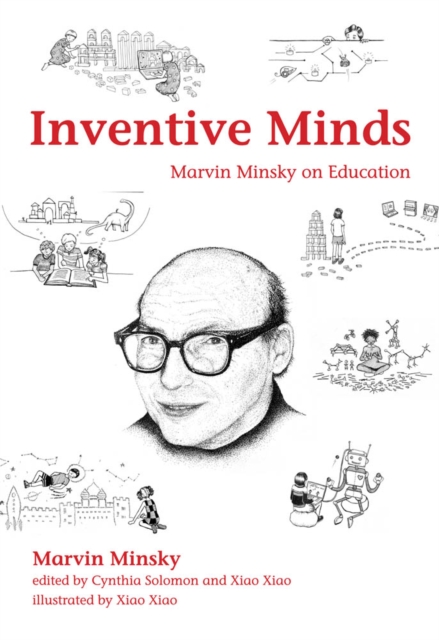
Six essays by artificial intelligence pioneer Marvin Minsky on how education can foster inventiveness, paired with commentary by Minsky's former colleagues and students. Marvin Minsky was a pioneering researcher in artificial intelligence whose work led to both theoretical and practical advances. His work was motivated not only by technological advancement but also by the desire to understand the workings of our own minds. Minsky's insights about the mind provide fresh perspectives on education and how children learn. This book collects for the first time six essays by Minsky on children, learning, and the potential of computers in school to enrich children's development. In these essays Minsky discusses the shortcomings of conventional education (particularly in mathematics) and considers alternative approaches; reflects on the role of mentors; describes higher-level strategies for thinking across domains; and suggests projects for children to pursue. Each essay is paired with commentary by one of Minsky's former colleagues or students, which identifies Minsky's key ideas and connects his writings to current research. Minsky once observed that in traditional teaching, “instead of promoting inventiveness, we focus on preventing mistakes.” These essays offer Minsky's unique insights into how education can foster inventiveness. Commentary by Hal Abelson, Walter Bender, Alan Kay, Margaret Minsky, Brian Silverman, Gary Stager, Mike Travers, Patrick Henry Winston
eBook

Dissident Voices
‘Wayne’s study offers an impressive range of readings and critical methodologies within a collection of exceptional coherence... Dissident Voices is consistently compulsive reading and a must for all students and specialists in the field of recent and contemporary television culture.’ Professor Madeleine MacMurraugh-Kavanagh, University of Reading
Two decades of institutional and structural changes in television broadcasting have both informed and reflected profound shifts in British culture. How have programme makers themselves approached the tensions and anxieties of the last twenty years?
Dissident Voices examines the ways in which certain forms and genres have registered a period of cultural upheaval and to what extent they have developed a more reflexive and a more critical television culture. This collection covers a broad range of issues including class, gender and sexuality, the monarchy, identity and nationhood. It examines their representation in a variety of dramas and genres, including police procedurals, documentaries, game shows, sitcoms and satire. The contributors challenge the notion of television as a bland purveyor of the status quo, presenting it as a complex and potentially subversive medium. Television culture is portrayed here as still resistant to the total control of either markets or ideologies. In an age of political consensus, it is an important and popular site where anxiety about and dissent from current social trends frequently surface.
eBook