
Catalogue Search | MBRL


Are you sure you want to remove the book from the shelf?

{{itemTitle}}
214
result(s) for
"Winston, Mark L"
Sort by:


Wild Bee Abundance and Seed Production in Conventional, Organic, and Genetically Modified Canola
The ecological impacts of agriculture are of concern, especially with genetically modified and other intensive, modern cropping systems, yet little is known about effects on wild bee populations and subsequent implications for pollination. Pollination deficit (the difference between potential and actual pollination) and bee abundance were measured in organic, conventional, and herbicide-resistant, genetically modified (GM) canola fields (Brassica napus and B. rapa) in northern Alberta, Canada, in the summer of 2002. Bee abundance data were collected using pan traps and standardized sweep netting, and pollination deficit was assessed by comparing the number of seeds per fruit from open-pollinated and supplementally pollinated flowers. There was no pollination deficit in organic fields, a moderate pollination deficit in conventional fields, and the greatest pollination deficit in GM fields. Bee abundance was greatest in organic fields, followed by conventional fields, and lowest in GM fields. Overall, there was a strong, positive relationship between bee abundance at sampling locations and reduced pollination deficits. Seed set in B. napus increased with greater bee abundance. Because B. rapa is an obligate outcrossing species, the lack of pollination deficit in the organic (B. rapa) fields likely was due to the high bee abundance rather than a lower dependence of B. rapa on pollinators than B. napus canola. Our study illustrates the importance of wild bees to agricultural production and suggests that some agroecosystems may better sustain wild bee abundance, resulting in greater seed production. Further research on why some cropping systems, such as genetically modified, herbicide-resistant canola, have low wild bee abundance would be useful for management of agroecosystems to promote sustainability of food production.
Journal Article

Pheromone communication in the honeybee (Apis mellifera L.)
Recent studies have demonstrated a remarkable and unexpected complexity in social insect pheromone communication, particularly for honeybees (Apis mellifera L.). The intricate interactions characteristic of social insects demand a complex language, based on specialized chemical signals that provide a syntax that is deeper in complexity and richer in nuance than previously imagined. Here, we discuss this rapidly evolving field for honeybees, the only social insect for which any primer pheromones have been identified. Novel research has demonstrated the importance of complexity, synergy, context, and dose, mediated through spatial and temporal pheromone distribution, and has revealed an unprecedented wealth of identified semiochemicals and functions. These new results demand fresh terminology, and we propose adding “colony pheromone” and “passenger pheromone” to the current terms sociochemical, releaser, and primer pheromone to better encompass our growing understanding of chemical communication in social insects.
Journal Article

New components of the honey bee (Apis mellifera L.) queen retinue pheromone
The honey bee queen produces pheromones that function in both releaser and primer roles such as attracting a retinue of workers around her, attracting drones on mating flights, preventing workers from reproducing at the individual (worker egg-laying) and colony (swarming) level, and regulating several other aspects of colony functioning. The queen mandibular pheromone (QMP), consisting of five synergistic components, is the only pheromone chemically identified in the honey bee (Apis mellifera L.) queen, but this pheromone does not fully duplicate the pheromonal activity of a full queen extract. To identify the remaining unknown compounds for retinue attraction, honey bee colonies were selectively bred to have low response to synthetic QMP and high response to a queen extract in a laboratory retinue bioassay. Workers from these colonies were then used in the bioassay to guide the isolation and identification of the remaining active components. Four new compounds were identified from several glandular sources that account for the majority of the difference in retinue attraction between synthetic QMP and queen extract: methyl (Z)-octadec-9-enoate (methyl oleate), (E)-3-(4-hydroxy-3-methoxyphenyl)-prop-2-en-1-ol (coniferyl alcohol), hexadecan-1-ol, and (Z9,Z12,Z15)-octadeca-9,12,15-trienoic acid (linolenic acid). These compounds were inactive alone or in combination, and they only elicited attraction in the presence of QMP. There was still unidentified activity remaining in the queen extract. The queen therefore produces a synergistic, multiglandular pheromone blend of at least nine compounds for retinue attraction, the most complex pheromone blend known for inducing a single behavior in any organism.
Journal Article

Travels in the genetically modified zone
With genetically modified crops we have entered uncharted territory--where visions of the triumph of biotechnology in agriculture vie with dire views of medical and environmental disaster. As he seeks a middle ground where concerns about genetic engineering can be rationally discussed and resolved, Winston gives us a full and balanced view of the forces at play in the chaotic debate over agricultural biotechnology.
eBook

Caste-selective pheromone biosynthesis in honeybees
Queen and worker honeybees (Apis mellifera L.) produce a caste-related blend of functionalized 8- and 10-carbon fatty acids in their mandibular glands. The biological functions of these compounds march the queen's reproductive and the worker's nonreproductive roles in the colony. Studies with deuterated substrates revealed that the biosynthesis of these acids begins with stearic acid, which is hydroxylated at the 17th or 18th position. The 18 carbon hydroxy acid chains are shortened, and the resulting 10-carbon hydroxy acids are oxidized in a caste-selective manner, thereby determining many of the functional differences between queens and workers
Journal Article

Worker honey bee ovary development: seasonal variation and the influence of larval and adult nutrition
We examined the effect of larval and adult nutrition on worker honey bee (Apis mellifera L.) ovary development. Workers were fed high or low-pollen diets as larvae, and high or low-protein diets as adults. Workers fed low-protein diets at both life stages had the lowest levels of ovary development, followed by those fed high-protein diets as larvae and low- quality diets as adults, and then those fed diets poor in protein as larvae but high as adults. Workers fed high-protein diets at both life stages had the highest levels of ovary development. The increases in ovary development due to improved dietary protein in the larval and adult life stages were additive. Adult diet also had an effect on body mass. The results demonstrate that both carry-over of larval reserves and nutrients acquired in the adult life stage are important to ovary development in worker honey bees. Carry-over from larval development, however, appears to be less important to adult fecundity than is adult nutrition. Seasonal trends in worker ovary development and mass were examined throughout the brood rearing season. Worker ovary development was lowest in spring, highest in mid-summer, and intermediate in fall.
Journal Article

Bee diversity and abundance in an urban setting
We assessed bee diversity and abundance in urban areas of Vancouver, British Columbia, Canada, to determine how urban environments can support bees. Habitats examined were community and botanical gardens, urban wild areas, Naturescape flower beds and backyards, and traditional flower beds and backyards. A total of 56 bee species (Hymenoptera), including species of the genera Andrena Fabr. (Andrenidae), Bombus Latr. (Apidae), Osmia Panzer and Megachile Latr. (Megachilidae), and Halictus Latr. and Dialictus Pauly (Halictidae), were collected. Abundance exhibited strong seasonal variation. Wild bees were most abundant during late spring, whereas honey bees peaked at the end of the summer. The most abundant species seen was the managed honey bee Apis mellifera L. (Apidae), followed by wild Bombus flavifrons Cresson. Community and botanical gardens, and plants such as cotoneaster (Cotoneaster Medik. sp.) and blackberry (Rubus discolor Weihe & Nees) (Rosaceae), centaurea (Centaurea L. sp.; Asteraceae), buttercup (Ranunculus L. sp.; Ranunculaceae), and foxglove (Digitalis L. sp.; Scrophulariaceae), had the highest abundance of bees, while bee populations in wild areas were the most diverse. Weeds such as dandelions (Taraxacum officinale G.H. Weber ex Wiggers; Asteraceae) dominated these wild areas and had one of the highest diversities of bee visitors. Traditional flower beds with tulips (Tulipa L. sp.; Liliaceae) and petunias (Petunia Juss. sp.; Solanaceae) had relatively poor diversity and abundance of bees throughout the year. Our study suggests that urban areas have the potential to be important pollinator reservoirs, especially if both bloom and habitat heterogeneity are maintained and enhanced through sustainable urban planning. Nous avons estimé la diversité et l'abondance d'abeilles dans différents biotopes urbains de la ville de Vancouver, Colombie-Britannique, Canada, afin de déterminer comment les environnements urbains peuvent supporter les abeilles. Les habitats examinés incluent les jardins potagers et botaniques, les environs urbains sauvages, les parterres et les arrière-cours dits Naturescape, et les parterres et les arrière-cours traditionnels. Nous avons ressemblé un total de 56 espèces d'abeilles (Hymenoptera) dont Andrena Fabr. (Andrenidae), Bombus Latr. (Apidae), Osmia Panzer et Megachile Latr. (Megachilidae), Halictus Latr. et Dialictus Pauly (Halictidae). L'abondance a présenté une forte variation saisonnière. Les abeilles féeriques étaient considérablement plus abondantes pendant la dernière moitié du printemps, tandis que les abeilles d'élevage étaient plus abondantes pendant la dernière moitié de l'été. L'espèce la plus abondante était l'abeille d'élevage, Apis mellifera L. (Apidae), suivie de l'espèce féerique Bombus flavifrons Cresson. Les jardins potagers et botaniques des plantes telles que Cotoneaster Medik sp. et Rubus discolor Wehie & Ness (Rosaceae), Centaurea L. sp. (Asteraceae), Ranunculus L. sp. (Ranunculaceae), et Digitalis L. sp. (Scrophulariaceae) ont présenté la plus élevée abondance d'abeilles alors que les environs urbains sauvages ont exhibé les plus diverses populations d'abeilles. « Mauvaise herbes », comme les Taraxacum officinale G.H. Weber ex Wiggers (Asteraceae), dominaient ces habitats et présentaient la diversité d'abeilles visiteuses las plus élevée. Les parterres traditionnels, avec fleures telles que les Tulipa L. sp. (Liliaceae) et les Petunia Juss. sp. (Solanaceae), présentaient une diversité d'abeilles relativement pauvre tout au cour de l'an. Notre étude suggère que les zones urbaines ont du potentiel comme important réservoir de pollinisation, surtout quand et l'hétérogénéité d'habitat et hétérogénéité de fleures sont maintenues et accrues à travers le développement urbain durable.
Journal Article
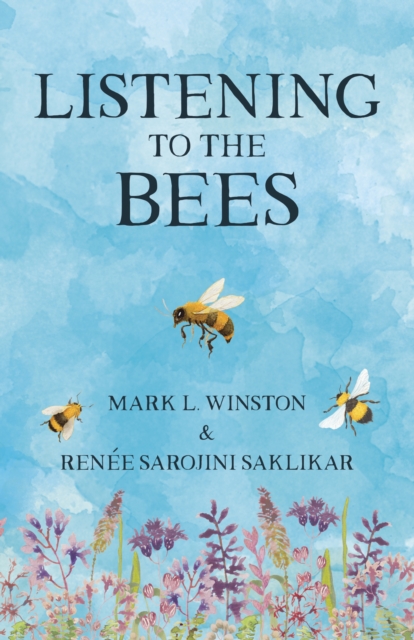
Listening to the Bees
Listening to the Bees is a collaborative exploration by two writers to illuminate the most profound human questions: Who are we?Who do we want to be in the world?Through the distinct but complementary lenses of science and poetry, Mark Winston and Renée Saklikar reflect on the tension of being an individual living in a society, and.
eBook

Effect of pollen load size and source (self, outcross) on seed and fruit production in highbush blueberry cv. 'Bluecrop' (VACCINIUM CORYMBOSUM; Ericaceae)
Reproductive fitness of a plant is ultimately determined by both number and quality of seed offspring. This is determined by sexual selection of pollen microspores and ovules during pollination and fertilization. These processes may include pollen competition and seed abortion, which reduce the number of microspores and ovules available for final seed production. Thus, even an excess of pollen microspores to ovules does not result in fertile seeds equal to ovule number. We investigated pollen requirements of highbush blueberry (Vaccinium corymbosum cultivar `Bluecrop') for maximal seed production and how fertile seed number translates into fruit quality, since fruit quality would ultimately determine the dispersal of its offspring. We demonstrate that individual blueberry flowers with a mean of 106 ovules reach their maximum fruit set and mass and minimum time to ripen when 125 outcross pollen tetrads pollinate a flower, compared to 10 or 25. Three hundred tetrads resulted in the increase of fertile seeds, but did not result in a further increase of fruit mass or fruit set, or decrease in time to ripen. We also examined the effect of pure and mixed loads of self and outcross pollen (25 and 125 tetrads), and found no differences in fertile seed number, fruit mass, or percentage fruit set when pollen loads were either 25 self or outcross pollen tetrads, although number of days to ripen was significantly shorter by 8 d with 25 outcross tetrads. When the pollen load of 125 tetrads consisted of self or a 50:50 mixture of self and outcross pollen, fruit mass, days to ripen, and percentage fruit set were not different from loads of 125 outcross pollen. In addition, a pollen load of 25 outcross tetrads resulted in fertile seed number and fruit quality in between that of 25 self, and 125 self, 125 mixed, or 125 outcross tetrads. Large, small, and flat seed types were identified, and only large seeds (length = 1.7 mm) were fertile. These results improve our understanding of pollen load size and source requirements of a crop plant and the limits to pollen transfer when translated to fruit growth.
Journal Article