
Catalogue Search | MBRL


Are you sure you want to remove the book from the shelf?

{{itemTitle}}
339
result(s) for
"Winter, Anne"
Sort by:

Bad dreams
Despite her preference for books over friends, Melanie gradually becomes involved with a new classmate and determined to find the reason for her strange behavior.

Migration, settlement and belonging in Europe, 1500-1930s
The issues around settlement, belonging, and poor relief have for too long been understood largely from the perspective of England and Wales. This volume offers a pan-European survey that encompasses Switzerland, Prussia, Belgium, the Netherlands, and Britain. It explores how the conception of belonging changed over time and space from the 1500s onwards, how communities dealt with the welfare expectations of an increasingly mobile population that migrated both within and between states, the welfare rights that were attached to those who \"belonged,\" and how ordinary people secured access to welfare resources. What emerged was a sophisticated European settlement system, which on the one hand structured itself to limit the claims of the poor, and yet on the other was peculiarly sensitive to their demands and negotiations.
eBook
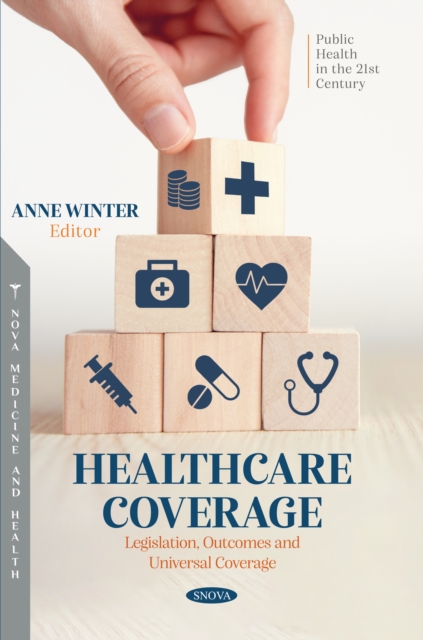
Healthcare Coverage: Legislation, Outcomes and Universal Coverage
More than 27 million people in the United States are uninsured, and even for some who do have insurance, it is not enough to insulate them from the significant cost of getting healthcare. Chapter 1 examines seven bills to improve Americans' healthcare and coverage. Chapter 2 looks at a proposal to transition our healthcare system to a national single-payer model where no patient is denied necessary medical care.
eBook


A Perfect Storm: Impact of Genomic Variation and Serial Vaccination on Low Influenza Vaccine Effectiveness During the 2014–2015 Season
Background. The 2014–2015 influenza season was distinguished by an epidemic of antigenically-drifted A(H3N2) viruses and vaccine components identical to 2013–2014. We report 2014–2015 vaccine effectiveness (VE) from Canada and explore contributing agent–host factors. Methods. VE against laboratory-confirmed influenza was derived using a test-negative design among outpatients with influenza-like illness. Sequencing identified amino acid mutations at key antigenic sites of the viral hemagglutinin protein. Results. Overall, 815/1930 (42%) patients tested influenza-positive: 590 (72%) influenza A and 226 (28%) influenza B. Most influenza A viruses with known subtype were A(H3N2) (570/577; 99%); 409/460 (89%) sequenced viruses belonged to genetic clade 3C.2a and 39/460 (8%) to clade 3C.3b. Dominant clade 3C.2a viruses bore the pivotal mutations F159Y (a cluster-transition position) and K160T (a predicted gain of glycosylation) compared to the mismatched clade 3C.1 vaccine. VE against A(H3N2) was −17% (95% confidence interval [CI], −50% to 9%) overall with clade-specific VE of −13% (95% CI, −51% to 15%) for clade 3C.2a but 52% (95% CI, −17% to 80%) for clade 3C.3b. VE against A(H3N2) was 53% (95% CI, 10% to 75%) for patients vaccinated in 2014–2015 only, significantly lower at −32% (95% CI, −75% to 0%) if also vaccinated in 2013–2014 and −54% (95% CI, −108% to −14%) if vaccinated each year since 2012–2013. VE against clade-mismatched B(Yamagata) viruses was 42% (95% CI, 10% to 62%) with less-pronounced reduction from prior vaccination compared to A(H3N2). Conclusions. Variation in the viral genome and negative effects of serial vaccination likely contributed to poor influenza vaccine performance in 2014–2015.
Journal Article

Serial Vaccination and the Antigenic Distance Hypothesis: Effects on Influenza Vaccine Effectiveness During A(H3N2) Epidemics in Canada, 2010–2011 to 2014–2015
Background. The antigenic distance hypothesis (ADH) predicts that negative interference from prior season's influenza vaccine (v1) on the current season's vaccine (v2) protection may occur when the antigenic distance is small between v1 and v2 (v1 ≈ v2) but large between v1 and the current epidemic (e) strain (v1 ≠ e). Methods. Vaccine effectiveness (VE) against medically attended, laboratory-confirmed influenza A(H3N2) illness was estimated by test-negative design during 3 A(H3N2) epidemics (2010–2011, 2012–2013, 2014–2015) in Canada. Vaccine effectiveness was derived with covariate adjustment across v2 and/or v1 categories relative to no vaccine receipt among outpatients aged ≥9 years. Prior vaccination effects were interpreted within the ADH framework. Results. Prior vaccination effects varied significantly by season, consistent with the ADH. There was no interference by v1 in 2010–2011 when v1 ≠ v2 and v1 ≠ e, with comparable VE for v2 alone or v2 + v1: 34% (95% confidence interval [CI] = −51% to 71%) versus 34% (95% CI = −5% to 58%). Negative interference by v1 was suggested in 2012–2013 with nonsignificant reduction in VE when v1 ≈ v2 and v1 ≠ e: 49% (95% CI = −47% to 83%) versus 28% (95% CI = −12% to 54%). Negative effects of prior vaccination were pronounced and statistically significant in 2014–2015 when v1 ≡ v2 and v1 ≠ e: 65% (95% CI = 25% to 83%) versus −33% (95% CI = −78% to 1%). Conclusions. Effects of repeat influenza vaccination were consistent with the ADH and may have contributed to findings of low VE across recent A(H3N2) epidemics since 2010 in Canada.
Journal Article

Low 2012–13 Influenza Vaccine Effectiveness Associated with Mutation in the Egg-Adapted H3N2 Vaccine Strain Not Antigenic Drift in Circulating Viruses
Influenza vaccine effectiveness (VE) is generally interpreted in the context of vaccine match/mismatch to circulating strains with evolutionary drift in the latter invoked to explain reduced protection. During the 2012-13 season, however, detailed genotypic and phenotypic characterization shows that low VE was instead related to mutations in the egg-adapted H3N2 vaccine strain rather than antigenic drift in circulating viruses.
Component-specific VE against medically-attended, PCR-confirmed influenza was estimated in Canada by test-negative case-control design. Influenza A viruses were characterized genotypically by amino acid (AA) sequencing of established haemagglutinin (HA) antigenic sites and phenotypically through haemagglutination inhibition (HI) assay. H3N2 viruses were characterized in relation to the WHO-recommended, cell-passaged vaccine prototype (A/Victoria/361/2011) as well as the egg-adapted strain as per actually used in vaccine production. Among the total of 1501 participants, influenza virus was detected in 652 (43%). Nearly two-thirds of viruses typed/subtyped were A(H3N2) (394/626; 63%); the remainder were A(H1N1)pdm09 (79/626; 13%), B/Yamagata (98/626; 16%) or B/Victoria (54/626; 9%). Suboptimal VE of 50% (95%CI: 33-63%) overall was driven by predominant H3N2 activity for which VE was 41% (95%CI: 17-59%). All H3N2 field isolates were HI-characterized as well-matched to the WHO-recommended A/Victoria/361/2011 prototype whereas all but one were antigenically distinct from the egg-adapted strain as per actually used in vaccine production. The egg-adapted strain was itself antigenically distinct from the WHO-recommended prototype, and bore three AA mutations at antigenic sites B [H156Q, G186V] and D [S219Y]. Conversely, circulating viruses were identical to the WHO-recommended prototype at these positions with other genetic variation that did not affect antigenicity. VE was 59% (95%CI:16-80%) against A(H1N1)pdm09, 67% (95%CI: 30-85%) against B/Yamagata (vaccine-lineage) and 75% (95%CI: 29-91%) against B/Victoria (non-vaccine-lineage) viruses.
These findings underscore the need to monitor vaccine viruses as well as circulating strains to explain vaccine performance. Evolutionary drift in circulating viruses cannot be regulated, but influential mutations introduced as part of egg-based vaccine production may be amenable to improvements.
Journal Article

Valerian and postoperative sleep: a retrospective cohort analysis of gynecological, urologic, and general surgical patients
Abstract
Study Objectives
Postoperative sleep disturbances appear to be a common complication after surgery being treated with sleep-promoting medication such as valerian, but robust data and evidence of medicinal approaches are lacking.
Methods
We performed a retrospective cohort analysis of all 21 168 urological, gynecological, and general surgical patients of the University Medical Center Freiburg, Germany, who underwent surgery between 2015 and 2020. Target parameters were the usage of sleep-promoting medication to estimate the occurrence of postoperative sleep disturbances as well as the kind of sleep medication with a special focus on herbal medication such as valerian.
Results
Drug-treated sleep disturbances occurred in 15% (n = 3083) of the patients. Valerian was the second most applied drug (n = 814, 26.4%) after classic benzodiazepines (n = 1 138, 36.9%). The majority of patients got valerian as monotherapy. Age, length of stay, and comorbidities were associated with demand for sleep medication in general (p < .001). Valerian monotherapy was more common in women (OR 1.53, 95% CI: 1.33–1.77, p < .001), elderly patients (OR 1.50, 95% CI: 1.29–1.75, p < .001), and patients with prolonged hospital stay (OR 2.23, 95% CI: 1.91–2.61, p < .001).
Conclusions
Valerian plays an important role in the treatment of postoperative sleep disturbances clinically, and it appears to be a promising therapeutic approach especially in women, older and sicker patients, and those with prolonged hospital stay. Further research has to clarify the efficacy of valerian postoperatively.
Clinical trial registration
DRKS00027903, https://www.drks.de/drks_web/navigate.do?navigationId=trial.HTML&TRIAL_ID=DRKS00027903
Journal Article
Beyond Antigenic Match
Vaccine effectiveness estimates for 2015–2016 seasonal influenza vaccine are reported from Canada. Findings suggest that agent-host and immuno-epidemiologic factors beyond antigenic match—including viral genomic variation, birth (immunological) cohort effects, repeat vaccination, and potential within-season waning immunity—may influence vaccine performance.
Abstract
Background
Vaccine effectiveness (VE) estimates for 2015–2016 seasonal influenza vaccine are reported from Canada’s Sentinel Practitioner Surveillance Network (SPSN). This season was characterized by a delayed 2009 pandemic influenza A(H1N1) virus (A[H1N1]pdm09) epidemic and concurrent influenza B(Victoria) virus activity. Potential influences on VE beyond antigenic match are explored, including viral genomic variation, birth cohort effects, prior vaccination, and epidemic period.
Methods
VE was estimated by a test-negative design comparing the adjusted odds ratio for influenza test positivity among vaccinated compared to unvaccinated participants. Vaccine-virus relatedness was assessed by gene sequencing and hemagglutination inhibition assay.
Results
Analyses included 596 influenza A(H1N1)pdm09 and 305 B(Victoria) cases and 926 test-negative controls. A(H1N1)pdm09 viruses were considered antigenically related to vaccine (unchanged since 2009), despite phylogenetic clustering within emerging clade 6B.1. The adjusted VE against A(H1N1)pdm09 was 43% (95% confidence interval [CI], 25%–57%). Compared to other age groups, VE against A(H1N1)pdm09 was lower for adults born during 1957–1976 (25%; 95% CI, −16%–51%). The VE against A(H1N1)pdm09 was also lower for participants consecutively vaccinated during both the current and prior seasons (41%; 95% CI, 18%–57%) than for those vaccinated during the current season only (75%; 95% CI, 45%–88%), and the VE among participants presenting in March–April 2016 (19%; 95% CI, −15%–44%) was lower than that among those presenting during January–February 2016 (62%; 95% CI, 44%–74%). The adjusted VE for B(Victoria) viruses was 54% (95% CI, 32%–68%), despite lineage-level mismatch to B(Yamagata) vaccine. The further variation in VE as observed for A(H1N1)pdm09 was not observed for B(Victoria).
Conclusions
Influenza VE findings may require consideration of other agent-host and immuno-epidemiologic influences on vaccine performance beyond antigenic match, including viral genomic variation, repeat vaccination, birth (immunological) cohort effects, and potential within-season waning of vaccine protection.
Journal Article