
Catalogue Search | MBRL


Are you sure you want to remove the book from the shelf?

{{itemTitle}}
114
result(s) for
"Wolverton, Lisa"
Sort by:


Hastening Toward Prague
This is the first comprehensive study in English of Czech society and politics in the High Middle Ages. It paints a vivid portrait of a flourishing Christian community in the decades between 1050 and 1200. Bohemia's social and political landscape remained remarkably cohesive, centered on a throne in Prague, the Premyslid duke who occupied it, a society of property-owning freemen, and the ascendant Catholic church. In decades fraught with political violence, these provided a focal point for Czech identity and political order. In this, the Czechs' heavenly patron, Saint Vaclav, and the German emperor beyond their borders too had a role to play.An impressive, systematic dissection of a medieval polity, Hastening Toward Prague is based on a close rereading of written and material artifacts from the eleventh and twelfth centuries. Arguing against a view that puts state or nation formation at heart, Wolverton examines interactions among dukes, emperors, freemen, and the church on their own terms, asking what powers the dukes of Bohemia possessed and how they were exercised within a broader political community. Evaluating not only the foundations and practice of ducal lordship but also the form and progress of resistance to it, she argues in particular that violence was not a sign of political instability but should be interpreted as reflecting a dynamic economy of checks and balances in a fluid, mature political system. This also reveals the values and strategies that sustained the Czech Lands as a community. The study honors the complexity and dynamism of the medieval exercise of power.
eBook


The Elbian Region as Predatory Landscape, 900–1200 CE: Enslavement, Slaughter, and Settler Colonialism
Wolverton draws our attention to north-central Europe and the competition between Germanic and Slavic groups— Christian and non-Christian—along the Elbe frontier. She asks how enslavement and captivity continued to shape the lives of communities along the Elbe after the mid-tenth century, when scholarship has traditionally seen the large-scale enslavement of Slavs, often for sale to Islamic markets, as ending. Acknowledging the difficulty of recovering the history of people rendered invisible by enslavement, Wolverton demonstrates that Latin annals and chronicles written between ca. 900 and ca. 1200 do provide compelling evidence that “medieval individuals, even whole communities, on both sides of the Elbe and beyond, were caught in a web of war, pillage, captivity, and enslavement.” In a region where warfare and raiding were endemic, captivity and slavery remained so as well, regardless of declining eastern demand for slaves from the region. Indeed, Wolverton argues, we miss crucial aspects of the historical development of Central Europe if we ignore the “steep human cost of enslavement, the scale of suffering across the region, the grief, alienation, loss of personhood, the effect on communities, even the destruction of whole cultures” that accompanied the movement of Germanic settlers into Slavic lands.
Journal Article


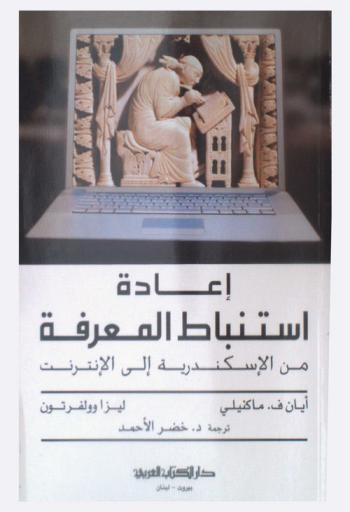
إعادة استنباط المعرفة من الإسكندرية إلى الإنترنت
يسرد الكتاب تاريخ مؤسسات المعرفة. إنه يصنف بتسلسل زمني المؤسسات الست التي هيمنت على الحياة الفكرية الغربية منذ الأزمنة القديمة، وهي: المكتبة، الدير، الجامعة، دولة الآداب، فروع المعرفة، والمختبر. هذا كتاب فكري إستثنائي يخرج عن المألوف في بنيته وأسلوبه، وهو مقدمة رائعة للمؤسسات الرئيسية التي صاغت المعرفة في الغرب، ينقلنا عرضه المحكم، الذي يتسم بالأناقة والظرف، عبر نقاط مفصلية للتغير المؤسساتي والتحول الثقافي، من الحقبة الكلاسيكية إلى عصرنا الراهن، فنتوصل إلى فهم كامل للتغيرات الواسعة التي انتهت إلى عالم المعرفة الحالي. يبدأ المؤلفان كتابهما بأخذنا إلى ساحات أثينا الديمقراطية، حيث اتخذت المعرفة الصيغة الشفهية، لأن الكتابة كانت تعد وسيلة من مرتبة أدنى للوصول إلى الحقيقة؛ وقد حدث تحول المعرفة إلى الأسلوب الكتابي في عهد أرسطوطاليس وتلميذه الإسكندر، وصار هذا الأسلوب يمثل المركز الكبير للعلم الهيليني في الإسكندرية، وكان لمكتبة الإسكندرية أثر فعال في حفظ نسخ موثوقة لملاحم هوميروس، وفي الترجمة اليونانية للعهد القديم الذي كان مكتوبا بالعبرية، وبعد أن أصبحت المعرفة اليونانية قابلة للنقل، حملتها إمبراطورية الإسكندر إلى العالم غير اليوناني. بعد إنهيار الإمبراطورية الرومانية، برز الدير بصفته المؤسسة الرئيسية للمعرفة، وإستطاع صون الثقافة المكتوبة، وإيجاد أطر عمل لفهم الوقت وترتيبه، وقد أفرز إنبعاث المدن والتجارة في أواخر العصور الوسطى مؤسسات من الطلبة والمدرسين، سميت جامعات، كانت هذه المؤسسات العلمية قلاعا للمعرفة المكتوبة تولي في توسيع الكلمة المحكية ومناقشة النصوص إهتماما خاصا. وقد أسهمت المراسلات الكثيفة التي كانت تجري في دولة الأدب.
Book

Christianity and Culture in the Middle Ages
This volume celebrates the remarkable scholarly career of
medieval historian John Van Engen with eighteen exceptional essays
contributed by Van Engen's colleagues and former doctoral students,
a group that includes some of the best established scholars of the
Middle Ages as well as leading younger ones. Together, their work
reflects the wide-ranging but coherent body of John Van Engen's own
scholarship.
In a section on Christianization, Ruth Mazo Karras explores
medieval marriage, Lisa Wolverton offers a new model of the
Christianization of Bohemia, R. I. Moore examines the
historiography of the Cathars, and Christine Caldwell Ames links
the inquisition with medieval and modern concepts of popular
religion. Under the rubric of twelfth-century culture, Maureen C.
Miller uses eleventh-century Roman frescoes to rethink reform,
Jonathan R. Lyon unpacks Otto of Freising's notions of advocacy and
tyranny, Rachel Koopmans traces testimonial letters associated with
the cult of Thomas Becket, Dyan Elliot deliberates on the
importance of what she calls counterfactual, or alternative,
realities in twelfth-century thought and literature, and Giles
Constable traces manifestations of the cross in monastic life.
Three essays study Jews and Christians in society. Susan
Einbinder probes the connections between martyrdom, politics, and
poetry in thirteenth-century Castile, William Chester Jordan traces
anti-Judaism in the Christina Psalter, and David C. Mengel
highlights the significance of urban space for Jews in
fourteenth-century Prague and Nuremberg. Lastly, contributors
explore topics in late medieval religious life, a special focus of
Van Engen's scholarship. Walter Simons edits and analyzes a letter
defending beguines in the Low Countries, William J. Courtenay
traces the effects on pastoral care of papal provisions to
university scholars, and James D. Mixson reinterprets the
fifteenth-century treatise Firefly . An essay by Marcela K.
Perett looks at vernacular anti-Hussite treatises, Daniel Hobbins
employs a fifteenth-century Italian story about Antichrist to
consider hearsay, belief and doubt, and Roy Hammerling contemplates
Martin Luther's understanding of himself as a beggar.
eBook

The Haskins Society Journal 23
This volume of the Haskins Society Journal furthers the Society's commitment to historical and interdisciplinary research on the early and central Middle Ages, especially in the Anglo-Saxon, Anglo-Norman, and Angevin worlds but also on the continent. The topics of the essays it contains range from the curious place of Francia in the historiography of medieval Europe to strategies of royal land distribution in tenth-century Anglo-Saxon England to the representation of men and masculinity in the works of Anglo-Norman historians. Essays on the place of polemical literature in Frutolf of Michelsberg's Chronicle, exploration of the relationship between chivalry and crusading in Baudry of Bourgeuil's History, and Cosmas of Prague's manipulation of historical memory in the service of ecclesiastical privilege and priority each extend the volume's engagement with medieval historiography, employing rich continental examples to do so. Investigations of comital personnel in Anjou and Henry II's management of royal forests and his foresters shed new light on the evolving nature of secular governance in the twelfth centuries and challenge and refine important aspects of our view of medieval rule in this period. The volume ends with a wide-ranging reflection on the continuing importance of the art object itself in medieval history and visual studies. Contributors: H.F. Doherty, Kathryn Dutton, Kirsten Fenton, Paul Fouracre, Herbert Kessler, Ryan Lavelle, Thomas J.H. McCarthy, Lisa Wolverton, Simon Yarrow.
eBook
