
Catalogue Search | MBRL


Are you sure you want to remove the book from the shelf?

{{itemTitle}}
220
result(s) for
"Wong, Matt"
Sort by:

Wolverine and the X-Men. Volume 7
\"Welcome to Hellfire Academy, where there's little chance you'll survive the experience! The most villainous school you've ever seen has its grand opening as a furious Wolverine and Rachel Summers intensify their search for missing Jean Grey School students Glob Herma, Idie, Broo and Quentin Quire. With teachers like Mystique, Sauron, Mondo, Wendigo and Master Pandemonium, there's no limit to the terrible things the kidnapped students can learn. Can Wolverine and the X-Men find them before they're turned into villains? Wolverine corrals the Bamfs into his plans--and the X-Men discover that Krakoa, the island that walks like a man, can fight like one too! And the landscape of the Jean Grey School is redefined when Wolverine and the X-Men face Mystique, Sabretooth and the Hellfire Club!\"--Cover.
BOOK

Reducing misdiagnoses and cognitive errors using virtual patients and automated feedback in a clinical reasoning curriculum
Introduction
Diagnostic errors remain prevalent across all specialties, driven largely by deficits in clinical reasoning (CR). Although CR is a core competency, most medical schools lack structured pre-clerkship CR training. Virtual patients (VPs) with automated feedback offer scalable, simulation-based training to improve diagnostic skills and reduce faculty workload. The aim of this study was to assess whether a CR curriculum using VPs with automated scoring and deliberate practice improves diagnostic accuracy and CR.
Methods
We conducted a multi-site observational study across five North American medical schools. First- and second-year students completed up to 20 diagnostic VP cases on TeachingMedicine.com, each with automated scoring to inform individualized feedback. We analyzed 1.55 million datapoints from 12,400 cases completed by 1,066 students to assess differences in CR performance between correctly and incorrectly diagnosed cases, associations between CR components and diagnostic accuracy, and learning gains over time.
Results
Misdiagnoses occurred in 20.1% of cases. Correct diagnoses were associated with higher diagnostic justification (DxJ) scores (+ 50%), better test ordering (+ 51%), and fewer cognitive errors (–89%). Multivariate analysis identified DxJ and cognitive errors as the strongest predictors of diagnostic accuracy. With repeated practice, students improved DxJ by 72%, test ordering by 40%, and reduced misdiagnoses threefold and cognitive errors by half, with no plateau observed after 20 cases. By end of pre-clerkship, first-year students who completed 20 cases outperformed second-year students who completed 10 in all CR metrics. All results were statistically significant with
p
< 0.0001.
Conclusions
This curriculum shows that CR skills are highly trainable through deliberate practice. Improved DxJ and reduced cognitive errors are strongly associated with lower misdiagnosis rates. In contrast to a common misperception, training CR diagnostic skills is successful when started in the beginning of 1st year medical school prior to students’ acquisition of significant medical knowledge.
Journal Article

Building a Social Movement of Science to Implement Best Practices across Integrated Systems of Care
The Best Practice Spotlight Organization® (BPSO®) Program - spearheaded by the Registered Nurses' Association of Ontario (RNAO) - has fostered a social movement of science to implement evidence-based Best Practice Guidelines (BPGs) across health care organizations since 2003. Now in place at 1,600 health organizations, the program has mobilized more than 150,000 BPSO Champions worldwide to drive continuous quality improvement in care delivery, yielding impactful outcomes for staff, patients, organizations and health systems. In 2019, the BPSO program expanded to include integrated systems of care - starting with four Ontario Health Teams (OHTs) as founding partners - implementing two priority RNAO best practice guidelines: Person- and Family-Centered Care (2015) and Transitions in Care and Services (2023). Approach: East Toronto Health Partners (ETHP) Ontario Health Team (OHT) was selected as one of the inaugural BPSO OHT candidates, uniting organizations from primary care, home care, rehabilitation, community service sectors and acute care. Cross-sectoral teams, including patient and caregiver partners, collaboratively reviewed BPG recommendations and identified key joint projects to improve care outcomes. ETHP developed e-learning modules and resource toolkits to support these efforts, enhancing communication and continuity of care within the OHT, particularly during care transitions. The BPSO OHT committee structure was pivotal to its success. The steering committee established relationships across partners' professional practice departments, supported by the OHT's operational and governance frameworks. This structure evolved to include strong community leadership, with community members co-leading BPSO OHT committees and championing evidence-based care initiatives. RNAO's four-year framework, tailored to meet OHT needs, provides tools for engaging champions, selecting guidelines, identifying practice gaps, coaching, and tracking key performance indicators. This structured approach, guided by RNAO's Leading Change Toolkit (fourth edition) ensured alignment among partners and equipped them with the essential tools for successful BPG implementation. Results: The BPSO OHT initiative enabled ETHP to shift from quality programs operating \"within\" organizations to an integrated improvement approach \"across\" organizations. Frontline providers from several disciplines and sectors have become champions for both evidence-based practice and integrated care. ETHP also undertook three RNAO Advanced Clinical Practice Fellowships, where early-career fellows - mentored by OHT nursing leaders - conducted a qualitative study on care journeys using RNAO's quality improvement methodology. These fellowships deepened fellows' understanding of integrated care, generating insights that benefit the broader community and the OHT. ETHP's 2024 \"designation\" as a BPSO OHT, after completing RNAO's established milestones over a four-year \"\"pre-designation\"\" period, positions ETHP to offer mentorship to other OHTs in earlier stages of their journey. Implications: The BPSO OHT program advances collaborative approaches to evidence-based care across integrated systems of care by powering frontline providers as champions. The initiative demonstrates that effective implementation of best practices requires adherence to guidelines, along with a commitment to collective action and shared accountability across systems of care. ETHP's experience as a BPSO OHT can guide future efforts to enhance integrated care, promote a culture of continuous improvement, and strengthen resilience in healthcare teams. Collaborative strategies will be crucial for sustaining our workforce and addressing complex population needs.
Journal Article

Renal mucinous cystadenoma in the context of lynch syndrome and colonic neuroendocrine neoplasm: a case report
Renal mucinous cystadenoma (RMC) is an exceptionally rare finding with a poorly understood pathogenesis. Links between RMC and other malignancies are not well described, nor are there known associations with familial cancer disorders. We present the first case of RMC associated with Lynch syndrome (LS) and neuroendocrine neoplasm. A 56-year-old woman presented with iron deficiency leading to a diagnosis of a colonic mixed neuroendocrine-non-neuroendocrine carcinoma. After initial surgery, she experienced local recurrences at 6 and 12 months, treated with resection and adjuvant chemotherapy. Tumours displayed deficient MMR proteins with BRAF positivity, and germline testing confirmed LS. Surveillance subsequently revealed a complex cyst arising from a horseshoe kidney, for which she underwent a partial nephrectomy. Histopathology confirmed this to be renal mucinous cystadenoma arising from the pelvicalyceal system. This case underscores the need for further investigation into RMC pathogenesis and its potential association with LS.
Journal Article

Point-of-Care Testing Biosafety Decisions: An Investigation Summary Illustrating Current Decision-Making Process in Ontario, Canada
Abstract
Background
Point-of-care testing (POCT) is increasingly being used in healthcare, including hospitals, and POCT-style tests are also used within some laboratories. The principles of biosafety, including risk assessment and containment of biohazardous agents, can be utilized as a foundation to establish policies and procedures guiding safe performance of POCT. However, specific biosafety guidelines for POCT are generally lacking, particularly for those performed outside laboratories by healthcare workers. This study aims to explore POCT biosafety program decision-making infrastructure and oversight in Ontario.
Content
The Institute of Quality Management in Healthcare distributed a survey to 249 laboratories in Ontario. There were 11 questions on POCT biosafety practices.
Summary
The survey had a high response rate of 88.7%. How POCT biosafety decisions were made was variable among respondents. For POCT-style tests conducted within laboratories, the biosafety officer (BSO) and/or the microbiologist were involved in biosafety decisions in 95% of microbiology labs or 55% of other labs. Only 27% of the respondents reported that biosafety decisions were made by BSOs and/or microbiologists when POCT was conducted outside the laboratory. When POCT is performed outside the laboratory, biosafety decisions were made largely by Infection Prevention and Control (IPAC) and POCT laboratory staff. Similarly, training and auditing of staff who perform POCT were mainly done by IPAC and POCT laboratory staff. The survey showed that a wide variety of POCT was being conducted for COVID-19 patients during the pandemic.
Journal Article
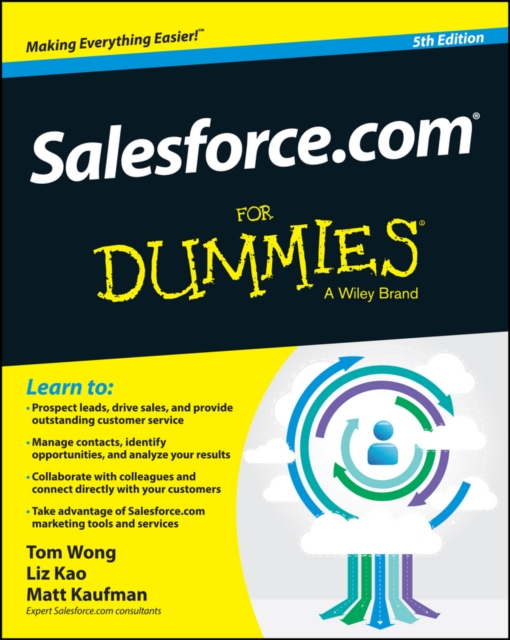
Salesforce.com For Dummies
Your fun and easy introduction to Salesforce.com and its latest tools The frontrunner in the customer relationship management (CRM) market, Salesforce.com has a rapidly expanding influence over the way companies across the globe interact with their clientele. Salesforce.com For Dummies lends you an edge in building those relationships and managing your company?s sales, marketing, customer service, and support operations. With this accessible guide, you will learn how to organize contacts, schedule business appointments, use forecasting tools to predict upcoming sales, make accurate projects based on past performance, and more. Covers the latest enhancements to Salesforce.com, the world?s most popular customer relationship management software, and explains how to choose the right configuration to suit your business needs Written by Salesforce.com insiders with years of expertise in CRM services Details how to personalize your system, prospect leads, manage accounts and partners, develop contacts, track products, calculate forecasts, drive demand, utilize service and support, share insights with Chatter, enhance your online marketing, and more Close deals faster, gain real-time visibility into sales, and collaborate instantly with help from Salesforce.com For Dummies.
eBook
