
Catalogue Search | MBRL


Are you sure you want to remove the book from the shelf?

{{itemTitle}}
393
result(s) for
"Wooldridge, Adrian"
Sort by:

Masters of management : how the business gurus and their ideas have changed the world--for better and for worse
\"A complete update of the 1996 bestselling THE WITCH DOCTORS, a penetrating and engaging history of management theory that sorts the wisdom from the dross, and the wise men from the charlatans\"-- Provided by publisher.
BOOK
Economist video. What to expect from King Charles III
King Charles III has very large shoes to fill. How will he change the British royal family?
Streaming Video
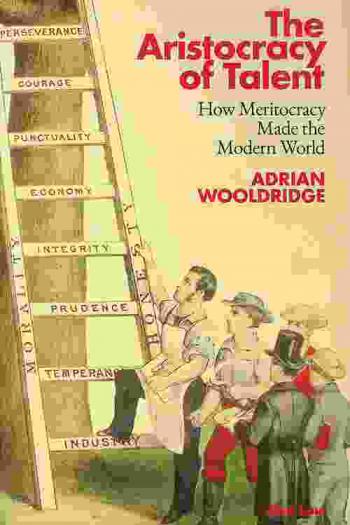
The aristocracy of talent : how meritocracy made the modern world
\"Meritocracy: the idea that people should be advanced according to their talents rather than their status at birth. For much of history this was a revolutionary thought, but by the end of the twentieth century it had become the world's ruling ideology. How did this happen, and why is meritocracy now under attack from both right and left? Adrian Wooldridge traces the history of meritocracy forged by the politicians and officials who introduced the revolutionary principle of open competition, the psychologists who devised methods for measuring natural mental abilities and the educationalists who built ladders of educational opportunity. He looks outside western cultures and shows what transformative effects it has had everywhere it has been adopted, especially once women were brought into the meritocractic system. Wooldridge also shows how meritocracy has now become corrupted and argues that the recent stalling of social mobility is the result of failure to complete the meritocratic revolution. Rather than abandoning meritocracy, he says, we should call for its renewal\"--Publisher's description
Economist video. Why Britain's election won't end the political chaos
Britons are heading to the polls for the fourth time in five years. How has Britain gone from having one of the most stable political systems in the world to being derided as a political basket-case — and why won't the chaos end anytime soon?
Streaming Video


The Great Disruption
The Great Disruption is a collection drawn from Adrian Wooldridge's influential Schumpeter columns in The Economist addressing the causes and profound consequences of the unprecedented disruption of business over the past five years. The Great Disruption has many causes. The internet is spreading faster than any previous technology. Emerging markets are challenging the west's dominance of innovation as well as manufacturing. Clever management techniques such as frugal innovation\" are forcing companies to rethink pricing. Robots are advancing from the factory floor into the service sector. But these developments are all combining together to shake business lifeand indeed life in generalto its foundations. The Great Disruption is producing a new class of winners, many of whom are still unfamiliar: Asian has more female billionaires and CEOs than Europe, for example. It is also producing a growing class of losers: old-fashioned universities that want to continue to operate in the world of talk and chalk; companies that refuse to acknowledge that competition is now at warp speed; and business people who think that we still live in the world of company man. It is forcing everybody to adapt or die: workers realise that they will have to jump from job to joband indeed from career to careerand institutions realise that they need to remain adaptable and flexible. The Great Disruption is all the more testing because it coincides with the Great Stagnation. The financial crisis has not only reduced most people's living standards in the west. It has also revealed that the boom years of 2000-20007 were built on credit: individuals and governments were borrowing money to pay for lifestyles that no longer had any real justification. Employees are having to cope with unprecedented change at a time when they are also seeing their incomes flat or declining.
Companies are having to respond to revolutionary innovations even as they are seeing their overall markets contract. We are all having to run faster in order to stay in the same place. This book begins with a long introduction explaining the thesis of the book and setting it in a broad historical context. It will also introduce readers to Joseph Schumpeter and explain why his ideas about creative destruction are particularly valuable today.
eBook

God is Back
The secularisation thesis holds that religion and modernity are incompatible: the more modern society becomes the more people will either neglect religion or consign it to the sidelines. This is wrong. Religion continues to play a vital role in public life and international relations. The most successful religions are the hottest religions such as Pentecostalism and fundamentalist Islam.
Journal Article

The dynamics of corporate identity: A review of a process model
This paper seeks to understand the founding of the five main constructs of corporate identity proposed by Schmidt. Wider literature review has revealed some elements that need further consideration regarding their inclusion in the corporate identity model. Subsequently, a model is proposed. The BP Amoco company is used as an illustrative case to illuminate the proposed model's intended explanatory power and value.
Journal Article

RATIONAL ACTORS: Secular Fallacies
Religion is today on display everywhere- in the overflowing megachurches of American suburbs, in the revival of beards and veils in Islamic communities, in the daily headlines of every newspaper. The conflict over Israel began mostly as a secular one: many of the founders of the Jewish state were secular Zionists, and Yasir Arafat's Palestine Liberation Organization was a national liberation movement whose membership included Christians and atheists. The Center for Strategic and International Studies has found that some diplomats refuse to engage with religious issues because they fear \"being personally attacked-via litigation or public opprobrium- for possibly violating the Establishment Clause.\"
Journal Article

Employees Are Winning the Return-to-Office Debate Because They're Right
Companies need to think hard about how to use new technology to reinforce social bonds and transmit corporate culture.
Trade Publication Article