
Catalogue Search | MBRL


Are you sure you want to remove the book from the shelf?

{{itemTitle}}
21
result(s) for
"Woolfson, Michael M. (Michael Mark)"
Sort by:

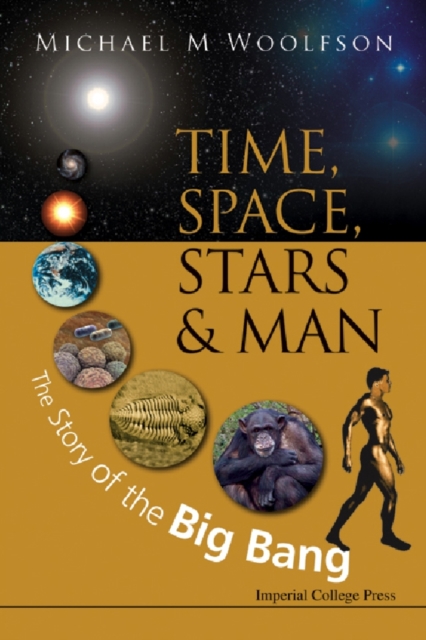
Time, space, stars & man
Most well-read, but non-scientific, people will have heard of the term “Big Bang” as a description of the origin of the Universe. They will recognize that DNA identifies individuals and will know that the origin of life is one of the great unsolved scientific mysteries. This book brings together all of that material. Starting with the creation of space and time — known as the Big Bang — the book traces causally related steps through the formation of matter, of stars and planets, the Earth itself, the evolution of the Earth's surface and atmosphere, and then through to the beginnings of life and the evolution of man. The material is presented in such a way that a non-scientist can comprehend it, without using formulae or equations but still preserving the integrity of the involved science. This book does not solve the mysteries of what initiated the Big Bang or how life evolved from inanimate matter, but it does make clear the nature of those problems. The reader will be left with a sense of wonderment that he or she actually exists!
eBook


Everyday probability and statistics
Probability and statistics impinge on the life of the average person in a variety of ways — as is suggested by the title of this book. Very often information is provided that is factually accurate but intended to give a biased view. This book presents the important results of probability and statistics without making heavy mathematical demands on the reader. It should enable an intelligent reader to properly assess statistical information and to understand that the same information can be presented in different ways.
eBook

Everyday probability and statistics : health, elections, gambling and war
\"Probability and statistics impinge on the life of the average person in a variety of ways--as is suggested by the title of this book. Very often, information is provided that is factually accurate but intended to present a biased view. This book presents the important results of probability and statistics without making heavy mathematical demands on the reader. It should enable an intelligent reader to properly assess statistical information and to understand that the same information can be presented in different ways. In this second edition, the author presents a new chapter exploring science and society including the way that scientists communicate with the public on current topics such as global warming. The book also investigates pensions and pension policy, and how they are influenced by changing actuarial tables\"--P. [4] of cover.
Book
Everyday probability and statistics
Probability and statistics impinge on the life of the average person in a variety of ways - as is suggested by the title of this book. Very often, information is provided that is factually accurate but intended to present a biased view. This book presents the important results of probability and statistics without making heavy mathematical demands on the reader. It should enable an intelligent reader to properly assess statistical information and to understand that the same information can be presented in different ways.
eBook

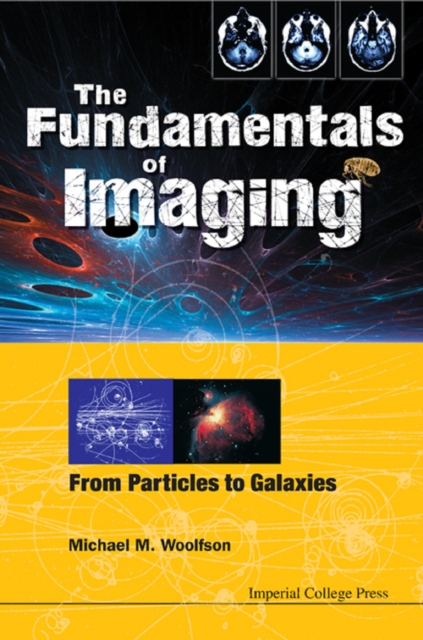
The fundamentals of imaging
It is through images that we understand the form and function of material objects, from the fundamental particles that are the constituents of matter to galaxies that are the constituents of the Universe. Imaging must be thought of in a flexible way as varying from just the detection of objects — a blip on a screen representing an aircraft or a vapour trail representing the passage of an exotic particle — to displaying the fine detail in the eye of an insect or the arrangement of atoms within or on the surface of a solid. The range of imaging tools, both in the type of wave phenomena used and in the devices that utilize them, is vast.
eBook
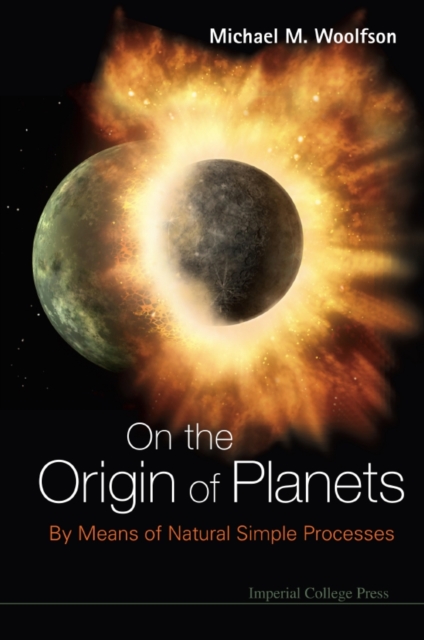
On the origin of planets
The book begins with a historical review of four major theories for the origin of the Solar System in particular, or of planets in general, which highlight the major problems that need to be solved by any plausible theory. In many theories, including that which form the major theme of this book, the formation of planets and stars is intimately linked, so four chapters are devoted to the processes that can be described as the birth, life and death of stars.
eBook
Time, Space, Stars And Man: The Story Of The Big Bang
Most well-read, but non-scientific, people will have heard of the term \"Big Bang\" as a description of the origin of the Universe. They will recognize that DNA identifies individuals and will know that the origin of life is one of the great unsolved scientific mysteries. This book brings together all of that material. Starting with the creation of space and time — known as the Big Bang — the book traces causally related steps through the formation of matter, of stars and planets, the Earth itself, the evolution of the Earth's surface and atmosphere, and then through to the beginnings of life and the evolution of man. The material is presented in such a way that a non-scientist can comprehend it, without using formulae or equations but still preserving the integrity of the involved science. This book does not solve the mysteries of what initiated the Big Bang or how life evolved from inanimate matter, but it does make clear the nature of those problems. The reader will be left with a sense of wonderment that he or she actually exists!
eBook