
Catalogue Search | MBRL


Are you sure you want to remove the book from the shelf?

{{itemTitle}}
111
result(s) for
"Woolley, Tom"
Sort by:

Low impact building : housing using renewable materials
\"Low Impact Building: Housing using Renewable Materials is about changing the way we build houses to reduce their 'carbon' footprint and to minimise environmental damage. One of the ways this can be done is by reducing the energy and environmental impact of the materials and resources used to construct buildings by choosing alternative products and systems. In particular, we need to recognise the potential for using natural and renewable construction materials as a way to reduce both carbon emissions but also build in a more benign and healthy way. This book is an account of some attempts to introduce this into mainstream house construction and the problems and obstacles that need to be overcome to gain wider acceptance of genuinely environmental construction methods.\"-- From publisher description.
Book

The SWiFT trial (Study of Whole Blood in Frontline Trauma)—the clinical and cost effectiveness of pre-hospital whole blood versus standard care in patients with life-threatening traumatic haemorrhage: study protocol for a multi-centre randomised controlled trial
Background
Early blood transfusion improves survival in patients with life-threatening bleeding, but the optimal transfusion strategy in the pre-hospital setting has yet to be established. Although there is some evidence of benefit with the use of whole blood, there have been no randomised controlled trials exploring the clinical and cost effectiveness of pre-hospital administration of whole blood versus component therapy for trauma patients with life-threatening bleeding. The aim of this trial is to determine whether pre-hospital leukocyte-depleted whole blood transfusion is better than standard care (blood component transfusion) in reducing the proportion of participants who experience death or massive transfusion at 24 h.
Methods
This is a multi-centre, superiority, open-label, randomised controlled trial with internal pilot and within-trial cost-effectiveness analysis. Patients of any age will be eligible if they have suffered major traumatic haemorrhage and are attended by a participating air ambulance service. The primary outcome is the proportion of participants with traumatic haemorrhage who have died (all-cause mortality) or received massive transfusion in the first 24 h from randomisation. A number of secondary clinical, process, and safety endpoints will be collected and analysed. Cost (provision of whole blood, hospital, health, and wider care resource use) and outcome data will be synthesised to present incremental cost-effectiveness ratios for the trial primary outcome and cost per quality-adjusted life year at 90 days after injury. We plan to recruit 848 participants (a two-sided test with 85% power, 5% type I error, 1-1 allocation, and one interim analysis would require 602 participants—after allowing for 25% of participants in traumatic cardiac arrest and an additional 5% drop out, the sample size is 848).
Discussion
The SWiFT trial will recruit 848 participants across at least ten air ambulances services in the UK. It will investigate the clinical and cost-effectiveness of whole blood transfusion versus component therapy in the management of patients with life-threatening bleeding in the pre-hospital setting.
Trial registration
ISRCTN: 23657907; EudraCT: 2021-006876-18; IRAS Number: 300414; REC: 22/SC/0072, 21 Dec 2021.
Journal Article

South Africa
Discover what it's like to grow up in South Africa with this fascinating, nonfiction Level 2 Ready-to-Read, part of a series all about kids just like you in countries around the world!
Book

Resuscitation and coagulation in the severely injured trauma patient
Developments in the resuscitation of the severely injured trauma patient in the last decade have been through the increased understanding of the early pathophysiological consequences of injury together with some observations and experiences of recent casualties of conflict. In particular, the recognition of early derangements of haemostasis with hypocoagulopathy being associated with increased mortality and morbidity and the prime importance of tissue hypoperfusion as a central driver to this process in this population of patients has led to new resuscitation strategies. These strategies have focused on haemostatic resuscitation and the development of the ideas of damage control resuscitation and damage control surgery continuum. This in turn has led to a requirement to be able to more closely monitor the physiological status, of major trauma patients, including their coagulation status, and react in an anticipatory fashion.
Journal Article


Haemostatic Changes in Five Patients Infected with Ebola Virus
Knowledge on haemostatic changes in humans infected with Ebola virus is limited due to safety concerns and access to patient samples. Ethical approval was obtained to collect plasma samples from patients in Sierra Leone infected with Ebola virus over time and samples were analysed for clotting time, fibrinogen, and D-dimer levels. Plasma from healthy volunteers was also collected by two methods to determine effect of centrifugation on test results as blood collected in Sierra Leone was not centrifuged. Collecting plasma without centrifugation only affected D-dimer values. Patients with Ebola virus disease had higher PT and APTT and D-dimer values than healthy humans with plasma collected in the same manner. Fibrinogen levels in patients with Ebola virus disease were normal or lower than values measured in healthy people. Clotting times and D-dimer levels were elevated during infection with Ebola virus but return to normal over time in patients that survived and therefore could be considered prognostic. Informative data can be obtained from plasma collected without centrifugation which could improve patient monitoring in hazardous environments.
Journal Article

Russia
\"A young narrator gives a first-person account of what it is like growing up as a young girl in contemporary Moscow, Russia\"-- Provided by publisher.
Book
Low impact housing
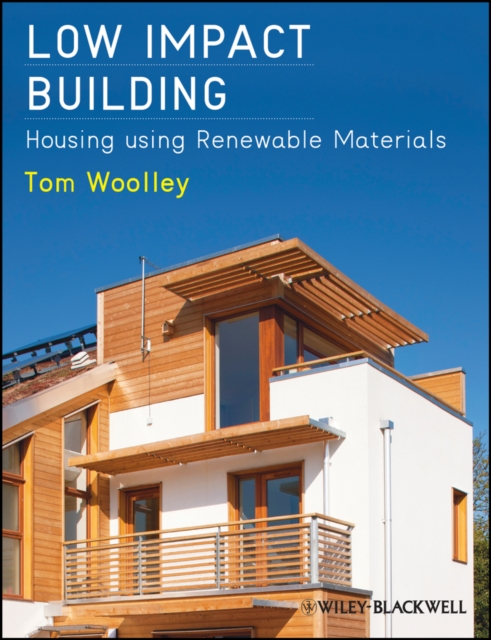
This guide to the designs, technologies and materials that really make green buildings work will help architects, specifiers and clients make informed choices, based on reliable technical information. Low Impact Building: Housing using Renewable Materials is about changing the way we build houses to reduce their 'carbon' footprint and to minimise environmental damage. One of the ways this can be done is by reducing the energy and environmental impact of the materials and resources used to construct buildings by choosing alternative products and systems. In particular, we need to recognise the potential for using natural and renewable construction materials as a way to reduce both carbon emissions but also build in a more benign and healthy way. This book is an account of some attempts to introduce this into mainstream house construction and the problems and obstacles that need to be overcome to gain wider acceptance of genuinely environmental construction methods. The book explores the nature of renewable materials in depth: where do they come from, what are they made of and how do they get into the construction supply chain? The difference between artisan and self-build materials like earth and straw, and more highly processed and manufactured products such as wood fibre insulation boards is explored. The author then gives an account of the Renewable House Programme in the UK explaining how it came about and how it was funded and managed by Government agencies. He analyses 12 case studies of projects from the Programme, setting out the design and methods of construction, buildability, environmental assessment tools used in the design, performance in terms of energy, air tightness, carbon footprint and post-occupancy issues. The policy context of energy and sustainability in the UK, Europe and the rest of the world is subjected to a critical examination to show how this affects the use of natural and renewable materials in the market for insulation and other construction materials. The debate over energy usage and embodied energy is discussed, as this is central to the reason why even many environmentally progressive people ignore the case for natural and renewable materials. The book offers a discussion of building physics and science, considering energy performance, moisture, durability, health and similar issues. A critical evaluation of assessment, accreditation and labelling of materials and green buildings is central to this as well as a review of some of the key research in the field.
eBook

South Korea
\"A young boy growing up in Seoul, South Korea shares details of his life over the course of a single day\"-- Provided by publisher.
Book

MY FATHER JIM WOOLLEY, SAMMONS AND DELIUS
Here, Woolley discusses his father, violinist Jim Woolley, and Jim's links with Sammons and Delius. As a teenager, the story goes that his father won a scholarship in the 1930s to study with the noted violinist, Albert Sammons (1886 to 1957). However, growing up in Weaste in Salford, his father, who was a gardener in the local cemetery, died and he was forced to help his mother in a corner shop and give up the scholarship. His brother sang in the local church choir, which was more highly valued by his grandmother than playing the violin, sadly. Despite not being able to study with Sammons his father remained an accomplished violinist throughout his life. Sammons was a great enthusiast for Delius and received much praise from Delius for his performances of the Violin Concerto, and for giving the first performance of the String Quartet with the London String Quartet.
Journal Article