
Catalogue Search | MBRL


Are you sure you want to remove the book from the shelf?

{{itemTitle}}
14
result(s) for
"World Meteorological Organization"
Sort by:
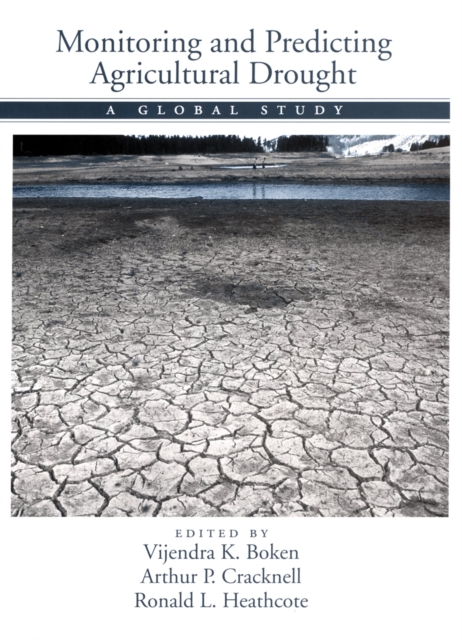
Monitoring and Predicting Agricultural Drought
Accurate monitoring and prediction of agricultural droughts helps manage them, minimize losses attributed to them, and mitigate their extreme forms, which some countries face even today. This book presents the basic concepts of agricultural drought, various remote sensing techniques used to monitor them, and efforts by international organizations to check them.
eBook

Designing a Climate Service for Planning Climate Actions in Vulnerable Countries
The next generation of climate services needs not only tailoring to specific user needs butto provide, in addition, access to key information in a usable way that satisfies the needs of differentusers’ profiles; especially web-based services. Here, we present the outcomes from developingsuch a new interactive prototype. The service provides data for robust climate analysis to underpindecision-making when planning measures to compensate for climate impact. The goal is to facilitatethe communication on climate information between climate modelling communities and adaptationor mitigation initiatives from vulnerable countries that are applying for funds from the Green ClimateFund (GCF). A participatory process was ensured during four workshops in four pilot countries,with an audience of national and international experts. During this process it was made clear thatin all countries there is a strong need for knowledge in climate science, while in most countriesthere was also an increasing need of capacity in hydrological modelling and water management.The active interaction during the workshops was found necessary to facilitate the dialogue betweenservice developers and users. Understanding the users, transparency on potentials and limitations ofclimate services together with capacity development in climate science and methods were requiredcomponents in the development of the service.
Journal Article

Renewable Energy Sources and Climate Change Mitigation
This Intergovernmental Panel on Climate Change Special Report (IPCC-SRREN) assesses the potential role of renewable energy in the mitigation of climate change. It covers the six most important renewable energy sources – bioenergy, solar, geothermal, hydropower, ocean and wind energy – as well as their integration into present and future energy systems. It considers the environmental and social consequences associated with the deployment of these technologies and presents strategies to overcome technical as well as non-technical obstacles to their application and diffusion. SRREN brings a broad spectrum of technology-specific experts together with scientists studying energy systems as a whole. Prepared following strict IPCC procedures, it presents an impartial assessment of the current state of knowledge: it is policy relevant but not policy prescriptive. SRREN is an invaluable assessment of the potential role of renewable energy for the mitigation of climate change for policymakers, the private sector and academic researchers.
eBook
Understanding the transgression of global and regional freshwater planetary boundaries
Freshwater ecosystems have been degraded due to intensive freshwater abstraction. Therefore, environmental flow requirements (EFRs) methods have been proposed to maintain healthy rivers and/or restore river flows. In this study, we used the Variable Monthly Flow (VMF) method to calculate the transgression of freshwater planetary boundaries: (1) natural deficits in which flow does not meet EFRs due to climate variability, and (2) anthropogenic deficits caused by water abstractions. The novelty is that we calculated spatially and cumulative monthly water deficits by river types including the frequency, magnitude and causes of environmental flow (EF) deficits (climatic and/or anthropogenic). Water deficit was found to be a regional rather than a global concern (less than 5% of total discharge). The results show that, from 1960 to 2000, perennial rivers with low flow alteration, such as the Amazon, had an EF deficit of 2–12% of the total discharge, and that the climate deficit was responsible for up to 75% of the total deficit. In rivers with high seasonality and high water abstractions such as the Indus, the total deficit represents up to 130% of its total discharge, 85% of which is due to withdrawals. We highlight the need to allocate water to humans and ecosystems sustainably. This article is part of the Royal Society Science+ meeting issue ‘Drought risk in the Anthropocene’.
Journal Article
Hydrology of Disasters
This timely book reviews the hydrological aspects of different types of disaster and considers measures required to protect people and property against such events as well as disaster prediction, forecasting and monitoring. Its publications coincide with the start of the United Nations Decade for Natural Disaster Reduction.
It comprises twenty-seven papers by experts from a wide range of countries and organizations presented at the Technical Conference convened by the World Meteorological Organization in Geneva in November 1988. The contributions are grouped into five sections covering hydrological problems of extreme floods and droughts, consequences of accidental water pollution, hydrological problems of dam and levee rupture, hydrological consequences of volcanic eruptions and hydrological consequences of earthquakes, landslides and avalanches.
By drawing together work on a wide range of hydrological problems, this book is a valuable reference source for all scientist, engineers and policy- makers whose work touches on this diverse field.
Dr O Starosolszky is the President of the WMO Commission for Hydrology. Mr O Melder is a scientific officer with the WMO.
Secretary-General's Statement * Statement * Hydrological Problems of Extreme Floods and Droughts * The Consequences of Accidental Water Pollution (Spillage) * Hydrological Problems of Dam and Levee Rupture * Hydrological Consequences of Volcanic Eruptions * Hydrological Consequences of Earthquakes, Landslides and Avalanches * Conclusions from the Technical Conference on Hydrology of Hazards * Author Index * Subject Index
eBook

Climate Change and Human Health
The World Health Organization, the World Meteorological Organization and the UN Environment Program have created a team of experts tasked with analyzing the health effects of climate changes on human health. The panel has identified a number of possible major types of health effects that climate change and stratospheric ozone depletion may have. Its recommendations include better monitoring of health-risk indicators and more long-term, multidisciplinary research.
Journal Article


2010 equals record for worlds warmest year
2010 equals record for worlds warmest year The year 2010 ranked as the warmest year on record, together with 2005 and 1998.
Newspaper Article
WMO Statement on Modification of the Ozone Layer due to Human Activities
Based on evidence obtained so far, the potential threat of a considerable depletion of the ozone layer must be recognized. Present knowledge on the ozone problem is reviewed, showing that a lack of understanding remains in a number of important areas. A stepped-up research program is outlined.
Journal Article