
Catalogue Search | MBRL


Are you sure you want to remove the book from the shelf?

{{itemTitle}}
2,403
result(s) for
"Wu, Bian"
Sort by:


Triple-negative breast cancer molecular subtyping and treatment progress
Triple-negative breast cancer (TNBC), a specific subtype of breast cancer that does not express estrogen receptor (ER), progesterone receptor (PR), or human epidermal growth factor receptor 2 (HER-2), has clinical features that include high invasiveness, high metastatic potential, proneness to relapse, and poor prognosis. Because TNBC tumors lack ER, PR, and HER2 expression, they are not sensitive to endocrine therapy or HER2 treatment, and standardized TNBC treatment regimens are still lacking. Therefore, development of new TNBC treatment strategies has become an urgent clinical need. By summarizing existing treatment regimens, therapeutic drugs, and their efficacy for different TNBC subtypes and reviewing some new preclinical studies and targeted treatment regimens for TNBC, this paper aims to provide new ideas for TNBC treatment.
Journal Article


Computational redesign of a hydrolase for nearly complete PET depolymerization at industrially relevant high-solids loading
Biotechnological plastic recycling has emerged as a suitable option for addressing the pollution crisis. A major breakthrough in the biodegradation of poly(ethylene terephthalate) (PET) is achieved by using a LCC variant, which permits 90% conversion at an industrial level. Despite the achievements, its applications have been hampered by the remaining 10% of nonbiodegradable PET. Herein, we address current challenges by employing a computational strategy to engineer a hydrolase from the bacterium HR29. The redesigned variant, TurboPETase, outperforms other well-known PET hydrolases. Nearly complete depolymerization is accomplished in 8 h at a solids loading of 200 g kg
−1
. Kinetic and structural analysis suggest that the improved performance may be attributed to a more flexible PET-binding groove that facilitates the targeting of more specific attack sites. Collectively, our results constitute a significant advance in understanding and engineering of industrially applicable polyester hydrolases, and provide guidance for further efforts on other polymer types.
The application of the LCC variant of polyethylene terephthalate (PET) hydrolase for industrial degradation of PET has been hindered by the 10% of nonbiodegradable PET. Here, the authors use a computational strategy to engineer TurboPETase which outperforms other PETase variants and achieves nearly complete depolymerization of the postconsumer PET bottles at a high, industrially relevant, level of solids loading.
Journal Article
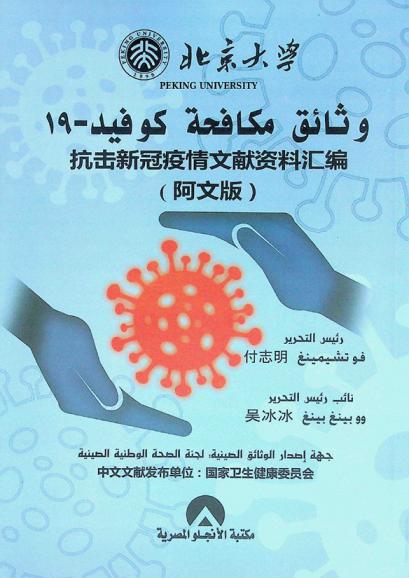
وثائق مكافحة كوفيد-19
بين يدي القارئ كتاب يجمع بين دفتيه الترجمة العربية لوثائق مكافحة كوفيد 19- التي أصدرتها لجنة الصحة الوطنية الصينية، ومـن بـين هذه الوثائق النسخ الست مـن آليات الوقاية مـن الالتهاب الرئوي الناجم عـن فيروس كـورونا المستجد ومكافحته، والنسخة التجريبية السابعة لآليات تـشخيص الالتـِهاب الـرئوي الناجِم عـن فـيروس كـورونا المستجد وعلاجه وغـيرها مـن الـمرفقات. وعـمل على ترجمة النـسخة الـعربية لوثائق مكافحة كـوفيد 19- الصينية فريـق ترجمة به أكـثر من عشريـن أستاذا وطالبا مـن قسم اللغة العربية بكلية اللغات الأجنبية بجامعة بكين بـالتعاون مع كلية الآداب في جامعة القاهرة والمعهد العالي للغات بتونس في جامعة قرطاج، في الفترة مـن مارس وحتى مايو 2020، قام خلالها فـريق الترجمة بترجمة قرابة 100 ألـف رمز صيني.
BOOK


CCL8 secreted by tumor-associated macrophages promotes invasion and stemness of glioblastoma cells via ERK1/2 signaling
Tumor-associated macrophages (TAMs) constitute a large population of glioblastoma and facilitate tumor growth and invasion of tumor cells, but the underlying mechanism remains undefined. In this study, we demonstrate that chemokine (C-C motif) ligand 8 (CCL8) is highly expressed by TAMs and contributes to pseudopodia formation by GBM cells. The presence of CCL8 in the glioma microenvironment promotes progression of tumor cells. Moreover, CCL8 induces invasion and stem-like traits of GBM cells, and CCR1 and CCR5 are the main receptors that mediate CCL8-induced biological behavior. Finally, CCL8 dramatically activates ERK1/2 phosphorylation in GBM cells, and blocking TAM-secreted CCL8 by neutralized antibody significantly decreases invasion of glioma cells. Taken together, our data reveal that CCL8 is a TAM-associated factor to mediate invasion and stemness of GBM, and targeting CCL8 may provide an insight strategy for GBM treatment.
Journal Article

Clinical characteristics, outcomes, and risk factors for mortality in patients with cancer and COVID-19 in Hubei, China: a multicentre, retrospective, cohort study
Patients with cancer are a high-risk population in the COVID-19 pandemic. We aimed to describe clinical characteristics and outcomes of patients with cancer and COVID-19, and examined risk factors for mortality in this population.
We did a retrospective, multicentre, cohort study of 205 patients with laboratory-confirmed severe acute respiratory syndrome coronavirus 2 (SARS-CoV-2) infection and with a pathological diagnosis of a malignant tumour in nine hospitals within Hubei, China, from Jan 13 to March 18, 2020. All patients were either discharged from hospitals or had died by April 20, 2020. Clinical characteristics, laboratory data, and cancer histories were compared between survivors and non-survivors by use of χ2 test. Risk factors for mortality were identified by univariable and multivariable logistic regression models.
Between Jan 13 and Mar 18, 2020, 205 patients with cancer and laboratory-confirmed SARS-CoV-2 infection were enrolled (median age 63 years [IQR 56–70; range 14–96]; 109 [53%] women). 183 (89%) had solid tumours and 22 (11%) had haematological malignancies. The median duration of follow-up was 68 days (IQR 59–78). The most common solid tumour types were breast (40 [20%] patients), colorectal (28 [14%]), and lung cancer (24 [12%]). 54 (30%) of 182 patients received antitumour therapies within 4 weeks before symptom onset. 30 (15%) of 205 patients were transferred to an intensive care unit and 40 (20%) died during hospital admission. Patients with haematological malignancies had poorer prognoses than did those with solid tumours: nine (41%) of 22 patients with haematological malignancies died versus 31 (17%) of 183 patients with solid tumours (hazard ratio for death 3·28 [95% CI 1·56–6·91]; log rank p=0·0009). Multivariable regression analysis showed that receiving chemotherapy within 4 weeks before symptom onset (odds ratio [OR] 3·51 [95% CI 1·16–10·59]; p=0·026) and male sex (OR 3·86 [95% CI 1·57–9·50]; p=0·0033) were risk factors for death during admission to hospital.
Patients with cancer and COVID-19 who were admitted to hospital had a high case-fatality rate. Unfavourable prognostic factors, including receiving chemotherapy within 4 weeks before symptom onset and male sex, might help clinicians to identify patients at high risk of fatal outcomes.
National Natural Science Foundation of China.
Journal Article
Tumour-associated macrophages secrete pleiotrophin to promote PTPRZ1 signalling in glioblastoma stem cells for tumour growth
Intense infiltration of tumour-associated macrophages (TAMs) facilitates malignant growth of glioblastoma (GBM), but the underlying mechanisms remain undefined. Herein, we report that TAMs secrete abundant pleiotrophin (PTN) to stimulate glioma stem cells (GSCs) through its receptor PTPRZ1 thus promoting GBM malignant growth through PTN–PTPRZ1 paracrine signalling. PTN expression correlates with infiltration of CD11b
+
/CD163
+
TAMs and poor prognosis of GBM patients. Co-implantation of M2-like macrophages (MLCs) promoted GSC-driven tumour growth, but silencing PTN expression in MLCs mitigated their pro-tumorigenic activity. The PTN receptor PTPRZ1 is preferentially expressed in GSCs and also predicts GBM poor prognosis. Disrupting PTPRZ1 abrogated GSC maintenance and tumorigenic potential. Moreover, blocking the PTN–PTPRZ1 signalling by shRNA or anti-PTPRZ1 antibody potently suppressed GBM tumour growth and prolonged animal survival. Our study uncovered a critical molecular crosstalk between TAMs and GSCs through the PTN–PTPRZ1 paracrine signalling to support GBM malignant growth, indicating that targeting this signalling axis may have therapeutic potential.
Tumour-associated macrophages (TAMs) facilitate malignant growth of glioblastoma (GBM). Here, the authors show that TAMs support glioma stem cell renewal via paracrine signalling to the pleiotrophin receptor PTPRZ1 and that blocking this axis results in increased survival of tumour-bearing animals.
Journal Article

A single-cell transcriptomic landscape of the lungs of patients with COVID-19
The lung is the primary organ targeted by severe acute respiratory syndrome coronavirus 2 (SARS-CoV-2), making respiratory failure a leading coronavirus disease 2019 (COVID-19)-related mortality. However, our cellular and molecular understanding of how SARS-CoV-2 infection drives lung pathology is limited. Here we constructed multi-omics and single-nucleus transcriptomic atlases of the lungs of patients with COVID-19, which integrate histological, transcriptomic and proteomic analyses. Our work reveals the molecular basis of pathological hallmarks associated with SARS-CoV-2 infection in different lung and infiltrating immune cell populations. We report molecular fingerprints of hyperinflammation, alveolar epithelial cell exhaustion, vascular changes and fibrosis, and identify parenchymal lung senescence as a molecular state of COVID-19 pathology. Moreover, our data suggest that FOXO3A suppression is a potential mechanism underlying the fibroblast-to-myofibroblast transition associated with COVID-19 pulmonary fibrosis. Our work depicts a comprehensive cellular and molecular atlas of the lungs of patients with COVID-19 and provides insights into SARS-CoV-2-related pulmonary injury, facilitating the identification of biomarkers and development of symptomatic treatments.
Wang et al. analysed post-mortem samples of the lungs of patients with COVID-19 by bulk and single-nucleus RNA sequencing along with proteomics and discovered lung senescence as a feature of COVID-19 pathology.
Journal Article