
Catalogue Search | MBRL


Are you sure you want to remove the book from the shelf?

{{itemTitle}}
35,681
result(s) for
"Wu, Lu"
Sort by:

Information acquisitions and sharing through inter-organizational collaboration : impacts of business performance in china
\"This book discusses the effectiveness and impact of trust, e-business diffusion, and organizational processes on business performance in cooperative scenarios, incorporating data from over 500 organizations in China's manufacturing sector\"-- Provided by publisher.
Book

Tryptophan-kynurenine metabolism: a link between the gut and brain for depression in inflammatory bowel disease
Inflammatory bowel disease (IBD), which mainly includes ulcerative colitis (UC) and Crohn's disease (CD), is a group of chronic bowel diseases that are characterized by abdominal pain, diarrhea, and bloody stools. IBD is strongly associated with depression, and its patients have a higher incidence of depression than the general population. Depression also adversely affects the quality of life and disease prognosis of patients with IBD. The tryptophan-kynurenine metabolic pathway degrades more than 90% of tryptophan (TRP) throughout the body, with indoleamine 2,3-dioxygenase (IDO), the key metabolic enzyme, being activated in the inflammatory environment. A series of metabolites of the pathway are neurologically active, among which kynerunic acid (KYNA) and quinolinic acid (QUIN) are molecules of great interest in recent studies on the mechanisms of inflammation-induced depression. In this review, the relationship between depression in IBD and the tryptophan-kynurenine metabolic pathway is overviewed in the light of recent publications.
Journal Article


Cognitive-motor dual task induces strategic kinematic adjustments with increased toe-obstacle clearance for older adults during obstacle crossing
Falls among older adults, especially during obstacle crossing, lead to severe outcomes like fractures and higher healthcare costs due to declining cognitive and motor functions. The study aimed to quantify the kinematic adjustments at individual joints and end-points of the pelvis-leg apparatus in older adults during cognitive-motor dual task involved crossing obstacles of varying heights while performing serial subtraction.
Sixteen healthy older adults each walked and crossed obstacle of three varying heights with leading and trailing limb under single-task and dual-task conditions. Toe-obstacle clearances and pelvic and lower limb angular motions were calculated. Two-way analyses of variance were conducted to study within-subject (task and height) effects on the variables.
Older adults showed significantly reduced crossing speed and increased leading and trailing toe-obstacle clearances. During dual-task obstacle crossing, there were increased pelvic anterior tilt, swing hip abduction and knee flexion, but decreased stance hip adduction at leading-limb crossing, compared to single-task (p < 0.05). There were increased in pelvic posterior tilt and swing knee flexion, but decreased pelvic upward list, stance hip adduction and stance knee flexion during dual-task obstacle crossing at trailing-limb crossing (p < 0.05).
The study found healthy older adults showed reduced crossing speed and adapting behaviour, with distinct kinematic changes at the pelvis, hip, and knee joints, leading to increased toe-obstacle clearances. While this may affect balance adversely. To mitigate fall risks, older adults should consider balance training and avoid distractions like phone use during obstacle crossing. Future studies should explore unexpected obstacles and its effects on at-risk populations.
Journal Article

Recasting the past : the art of Chinese bronzes, 1100-1900
Bronze vessels were the ultimate emblems of power in ancient China. Beginning in the twelfth century, the rediscovery of ancient bronzes as evidence of an earlier golden age led to a revival of bronze casting. This publication presents a comprehensive study of these later Chinese bronzes in archaic styles, which were commissioned by emperors and officials from the twelfth through the nineteenth centuries to assert political legitimacy and alignment with traditional values. Redressing the misconception that these works were mere imitations of the ancient vessels they emulated, 'Recasting the Past' demonstrates that they were in fact creative reinterpretations of antique shapes and decorative motifs that were fundamentally new creations with their own aesthetic and functional character.
BOOK

Recurrent Neural Network Methods for Extracting Dynamic Balance Variables during Gait from a Single Inertial Measurement Unit
Monitoring dynamic balance during gait is critical for fall prevention in the elderly. The current study aimed to develop recurrent neural network models for extracting balance variables from a single inertial measurement unit (IMU) placed on the sacrum during walking. Thirteen healthy young and thirteen healthy older adults wore the IMU during walking and the ground truth of the inclination angles (IA) of the center of pressure to the center of mass vector and their rates of changes (RCIA) were measured simultaneously. The IA, RCIA, and IMU data were used to train four models (uni-LSTM, bi-LSTM, uni-GRU, and bi-GRU), with 10% of the data reserved to evaluate the model errors in terms of the root-mean-squared errors (RMSEs) and percentage relative RMSEs (rRMSEs). Independent t-tests were used for between-group comparisons. The sensitivity, specificity, and Pearson’s r for the effect sizes between the model-predicted data and experimental ground truth were also obtained. The bi-GRU with the weighted MSE model was found to have the highest prediction accuracy, computational efficiency, and the best ability in identifying statistical between-group differences when compared with the ground truth, which would be the best choice for the prolonged real-life monitoring of gait balance for fall risk management in the elderly.
Journal Article
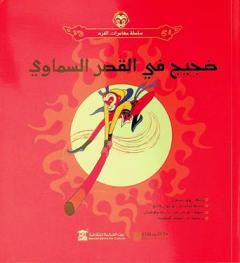
ضجيج في القصر السماوي
طلب الإمبراطور اليشمي من الحكيم الأكبر أن يساعده في إخضاع القرد وترويضه بعد أن أحدث الفوضى في القصر السماوي، أقام الحكيم الأكبر جبل العناصر الخمسة وسجن القرد تحته. وبعد خمسة قرون، كلف الإمبراطور تاي تسونغ من أسرة تانغ الراهب المشهور سان تسانغ، بجلب الكتب المقدسة من الفردوس الغربي. وأثناء رحلته إلى الغرب، أنقذ سان تسانغ القرد وحرره من سجنه، وبعد أن أنارت روح الخير قوان بن القرد، تحلى بالإيمان وصار تلميذا لسان تسانغ ورافقه في رحلته لحراسته في الطريق، وخلال رحلتهما هاجمهما قطاع طرق أرادوا سرقتهما، فضربهم القرد بعصاه الحديدية وقتلهم جميعا وأخذ أغراضهم، فوبخه سان ،تسانغ فاستشاط القرد غضبا لأنه لا يتحمل أن يوبخه أحد، وترك سان تسانغ وذهب لقصر الملك التنين في البحر الشرقي، لكن بعد أن نصحه الملك التنين عاد القرد مرة أخرى إلى معلمه سان تسانغ، وللسيطرة على القرد طلبت قوان ين من سان تسانغ أن يضع طوقا ذهبيا على رأس القرد، ويتلو تعويذة تضييق الطوق لمعاقبته إذا عصى الأوامر. وبالفعل بعد أن عاد القرد مرة أخرى ووضع القبعة على رأسه، وتلا المعلم التعويذة، فتلوى القرد ألما وتعهد أن يحسن التصرف ويطيع الأوامر. روضت قوان بن أيضا تنينا أبيض وحولته إلى حصان ليحمل سان تسانغ في رحلته.
Book

Immune Co-inhibitory Receptors PD-1, CTLA-4, TIM-3, LAG-3, and TIGIT in Medullary Thyroid Cancers: A Large Cohort Study
Abstract
Context
Programmed cell death protein-1 (PD-1), cytotoxic T-lymphocyte antigen 4 (CTLA-4), T-cell immunoglobulin and mucin-domain containing-3 (TIM-3), lymphocyte activation gene-3 (LAG-3), and T-cell immunoglobulin and ITIM domain (TIGIT) are considered major immune co-inhibitory receptors (CIRs) and the most promising immunotherapeutic targets in cancer treatment, but they are largely unexplored in medullary thyroid carcinoma (MTC).
Objective
We aimed to provide the first evidence regarding the expression profiles and clinical significance of CIRs in a large cohort of MTC patients.
Design and Patients
In total, 200 MTC patients who received initial surgery in our hospital were included. Immunohistochemistry was performed to evaluate CIR expressions in tissue microarrays (TMAs). Combined with the results of our previous programmed cell death ligand-1 (PD-L1) study, clinicopathologic and prognostic correlations of these proteins were retrospectively analyzed.
Results
TIM-3, PD-1, CTLA-4, LAG-3, and TIGIT positivity was detected in 96 (48.0%), 27 (13.5%), 25 (12.5%), 6 (3.0%), and 6 (3.0%) patients, respectively, in whom TIM-3, PD-1, and CTLA-4 expressions were positively correlated. Log-rank tests and multivariate Cox analyses both indicated that TIM-3, CTLA-4 expression, and PD-1/PD-L1 coexpression were associated with worse structural recurrence-free survival. In addition, among 20 patients who developed advanced disease during follow-up, 12 (60%) showed TIM-3 positivity, among whom 6 cases also had concurrent moderate to strong PD-1, PD-L1, or CTLA-4 expression.
Conclusions
Using the currently largest TMA cohort of this rare cancer, we delineated the CIR expression profiles in MTC, and identified TIM-3, CTLA-4 expression, and PD-1/PD-L1 coexpression as promising biomarkers for tumor recurrence. Furthermore, a subset of advanced MTCs are probably immunogenic, for which single or combined immunotherapy including TIM-3, PD-1, PD-L1, or CTLA-4 blockade may be potential therapeutic approaches in the future.
Journal Article
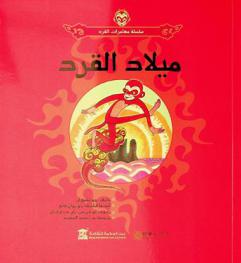
ميلاد القرد
ذهب سان تسانغ وتلاميذه إلى جبل شيتوه، وتنكر الوزير جين شينغ في هيئة رجل مسن وحذرهم من الشياطين الثلاثة، فذهب وو كونغ يتقصى الأمر، ودعا با جبه ليذهبا للقتال فابتلعهما الشيطان الأسد، انتهز القرد وو كونغ الفرصة لربط حبل في بطن الوحش الذي تألم كثيرا. لم يرض الشيطان الفيل والأمر، وطلب من القرد القتال وهزم أيضا، فاضطر للموافقة على عبور الراهب سان تسانغ الجبل على محفة فكر الشيطان النسر في خطة جديدة، ودارت معاركة كبيرة، أسر فيها المعلم وتلاميذه. لكن القرد استطاع الهرب، وذهب إلى جبل الأرواح لدعوة الحكيم الأكبر. وبمساعدته نجحوا في إخضاع الشيطان الأسد والشيطان الفيل وحولوهما إلى أسد وفيل، ثم أخضعوا الشيطان النسر وواصلوا رحلتهم إلى الغرب.
Book

Effect of isavuconazole on the pharmacokinetics of sunitinib and its mechanism
Background
Sunitinib, a newly developed multi-targeted tyrosine kinase inhibitor (TKI), has become a common therapeutic option for managing advanced renal cell carcinoma (RCC). Examining the mechanism underlying the interaction between sunitinib and isavuconazole was the aim of this effort.
Methods
The concentrations of sunitinib and its primary metabolite, N-desethyl sunitinib, were analyzed and quantified using ultra performance liquid chromatography tandem mass spectrometry (UPLC-MS/MS). Our study evaluated the potential interaction between isavuconazole and sunitinib using rat liver microsomes (RLM), human liver microsomes (HLM), and in vivo rat models. For the in vivo study, two groups (
n
= 5) of Sprague-Dawley (SD) rats were randomly allocated to receive sunitinib either with or without co-administration of isavuconazole. Additionally, the effects of isavuconazole on the metabolic stability of sunitinib and N-desethyl sunitinib were studied in RLM in vitro.
Results
Our findings demonstrated that in RLM, isavuconazole exhibited a mixed non-competitive and competitive inhibition mechanism, with an IC
50
(half maximal inhibitory concentration) value of 1.33 µM. Meanwhile, in HLM, isavuconazole demonstrated a competitive inhibition mechanism, with an IC
50
of 5.30 µM. In vivo studies showed that the presence of isavuconazole significantly increased the pharmacokinetic characteristics of sunitinib, with the AUC
(0→t)
, AUC
(0→∞)
, and T
max
rising to approximately 211.38%, 203.92%, and 288.89%, respectively, in contrast to the control group (5 mg/kg sunitinib alone). The pharmacokinetic characteristics of the metabolite N-desethyl sunitinib in the presence of isavuconazole remained largely unchanged compared to the control group. Furthermore, in vitro metabolic stability experiments revealed that isavuconazole inhibited the metabolic processing of both sunitinib and N-desethyl sunitinib.
Conclusions
Isavuconazole had a major impact on sunitinib metabolism, providing fundamental information for the precise therapeutic administration of sunitinib.
Journal Article