
Catalogue Search | MBRL


Are you sure you want to remove the book from the shelf?

{{itemTitle}}
1,977
result(s) for
"Wyatt, Mark"
Sort by:


Carbon monoxide gas produced by a giant impact in the inner region of a young system
Models of terrestrial planet formation predict that the final stages of planetary assembly—lasting tens of millions of years beyond the dispersal of young protoplanetary disks—are dominated by planetary collisions. It is through these giant impacts that planets like the young Earth grow to their final mass and achieve long-term stable orbital configurations
1
. A key prediction is that these impacts produce debris. So far, the most compelling observational evidence for post-impact debris comes from the planetary system around the nearby 23-million-year-old A-type star HD 172555. This system shows large amounts of fine dust with an unusually steep size distribution and atypical dust composition, previously attributed to either a hypervelocity impact
2
,
3
or a massive asteroid belt
4
. Here we report the spectrally resolved detection of a carbon monoxide gas ring co-orbiting with dusty debris around HD 172555 between about six and nine astronomical units—a region analogous to the outer terrestrial planet region of our Solar System. Taken together, the dust and carbon monoxide detections favour a giant impact between large, volatile-rich bodies. This suggests that planetary-scale collisions, analogous to the Moon-forming impact, can release large amounts of gas as well as debris, and that this gas is observable, providing a window into the composition of young planets.
A carbon monoxide gas ring co-orbiting with dusty debris is observed in the outer terrestrial planet region of the star HD 172555, which indicates that a planetary-scale impact took place.
Journal Article
Ms. Marvel
\"Kamala Khan is an ordinary girl from Jersey City - until she's suddenly empowered with extraordinary gifts. But who truly is the new Ms. Marvel? Teenager? Muslim? Inhuman? Find out as she takes the Marvel Universe by storm!\"--Page 4 of cover, volume 1.
Book
A circumbinary protoplanetary disk in a polar configuration
Nearly all young stars are initially surrounded by ‘protoplanetary’ disks of gas and dust, and in the case of single stars at least 30% of these disks go on to form planets1. The process of protoplanetary disk formation can result in initial misalignments, where the disk orbital plane is different from the stellar equator in single-star systems, or different from the binary orbital plane in systems with two stars2. A quirk of the dynamics means that initially misaligned ‘circumbinary’ disks—those that surround two stars—are predicted to evolve to one of two possible stable configurations: one where the disk and binary orbital planes are coplanar and one where they are perpendicular (a ‘polar’ configuration)3–5. Previous work has found coplanar circumbinary disks6, but no polar examples were known until now. Here, we report the first discovery of a protoplanetary circumbinary disk in the polar configuration, supporting the predictions that such disks should exist. The disk shows some characteristics that are similar to disks around single stars, and that are attributed to dust growth. Thus, the first stages of planet formation appear able to proceed in polar circumbinary disks.ALMA observations of well-studied quadruple stellar system HD 98800 have revealed the presence of a circumbinary disk in a polar orientation around one of the binary pairs, providing observational confirmation of the theoretical stability of such an arrangement.
Journal Article
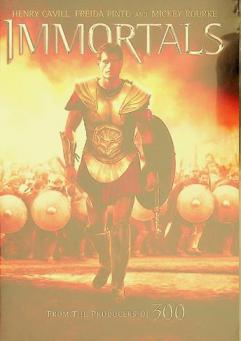
Immortals
\"In this epic tale of vengeance and destiny, power-mad King Hyperion ... threatens to destroy all of humanity on his maniacal quest to obtain the ultimate weapon - the legendary Epirus Bow that gives the power to unleash war on both Heaven and Earth. But Theseus ..., a heroic young villager chosen by the gods, rises up to stop Hyperion's brutal rampage. With supernatural help from the beautiful oracle Phaedra ..., Theseus embraces his destiny and leads a fierce band of warriors in a desperate fight for the future of mankind\"--Container.
DVD
English for specific purposes teachers’ beliefs about their motivational practices and student motivation at a Chinese university
While it is increasingly recognized that teachers have a crucial role to play in motivating learners, language teacher cognition research that focuses on beliefs about second language (L2) learner motivation and motivational practices is still rare, particularly in English for specific purposes (ESP) settings in Asia. Furthermore, much of what is available does not employ stimulated recall interviews to facilitate a comparison of espoused beliefs elicited beforehand, observed classroom practices and situated cognitions. We have employed such methodology in an under-researched ESP setting in China, to gain insights into the influence of culture and context on teacher beliefs and behavior. Our qualitative case study of three Chinese ESP teachers highlights harmony and tensions between espoused beliefs regarding student motivation and the teacher’s motivational role, and motivational practices, this harmony/disharmony being likely to impact these teachers’ self-determination. It considers possible reasons for identified tensions, including limited professional development opportunities in ESP, apparently dated knowledge of L2 motivation theory, deeply embedded Confucian values and an entrenched assessment culture. Findings suggest the need for awareness-raising and mentoring activities designed to support cognitive harmony regarding motivation and motivational practices amongst ESP teachers.
Journal Article

Research Into Second Language Learners’ and Teachers’ Self-Efficacy Beliefs
Language teachers' self-efficacy beliefs have previously been defined as these teachers' beliefs in their abilities to support language learning in various task-, domain- and context-specific cognitive, metacognitive, affective and social ways (Wyatt, 2018a, 2018b). Nevertheless, although this definition suggests a link between learning and teaching, the burgeoning fields of inquiry into language learners' self-efficacy (LLSE) and teachers' self-efficacy (LTSE) beliefs (each numbering over one hundred studies in the 21st century) have developed separately. Notwithstanding research in mainstream education that suggests a link between efficacious teachers and motivated learners (Zee & Koomen, 2016), burning questions that remain largely unanswered include the following: What are the relationships (causal/reciprocal/and how strong?) between LLSE and LTSE beliefs in key dimensions of language learning? And how are these relationships mediated by L2 proficiency? This article aims to make connections between the fields of LLSE and LTSE beliefs explicit, with a view to supporting independent reflexive professionalism (Leung, 2009) amongst researchers. It recommends that researchers of LLSE beliefs (who tend to have a teaching role in the contexts they are researching) and researchers of LTSE beliefs (who tend to be teacher educators or academics conducting investigations across multiple institutions they do not teach in) strive to combine their research endeavors.
Journal Article

Tracing the growth of a community of practice centered on Holistic project-based learning in communication at an engineering university in the United Arab Emirates. Insights from a socially-situated teacher cognition perspective
Ein holistischer, projekt-basierter Ansatz kann nützlich sein, um die Entwicklung von Teamarbeit, kritischem Denken, Kommunikation und Forschungsfertigkeiten für Studierende der Ingenieurwissenschaft in internationalen Kontexten zu fördern, deren Lingua franca Englisch ist. Leider bleibt diese Option in vielen Fällen ungenutzt. In unserer qualitativen Fallstudie haben wir deshalb auf eine Community of Practice einer ingenieurwissenschaftlichen Universität im Mittleren Osten zurückgegriffen, in der projekt-basiertes Lernen zum Einsatz kommt. Rückgreifend auf Konzepte aus der kulturhistorischen tätigkeitstheorie haben wir uns um ein tieferes Verständnis der Art und Weise bemüht, wie diese Community sich entwickelt hat und weiterhin aufrechterhalten wird. Aus einer Kognitionsforschungsperspektive auf sozial-situiertes Lehren/Lernen haben wir Erfahrungen, überzeugungen und Praktiken der Fakultätsmitglieder mit Blick auf projekt-basiertes Lernen untersucht. Unser Beitrag soll anderen Wissenschaftler/innen helfen, ähnliche Projekte in anderen Kontexten zu initiieren oder zu erforschen.
Journal Article

Cosmic dust fertilization of glacial prebiotic chemistry on early Earth
Earth’s surface is deficient in available forms of many elements considered limiting for prebiotic chemistry. In contrast, many extraterrestrial rocky objects are rich in these same elements. Limiting prebiotic ingredients may, therefore, have been delivered by exogenous material; however, the mechanisms by which exogeneous material may be reliably and non-destructively supplied to a planetary surface remains unclear. Today, the flux of extraterrestrial matter to Earth is dominated by fine-grained cosmic dust. Although this material is rarely discussed in a prebiotic context due to its delivery over a large surface area, concentrated cosmic dust deposits are known to form on Earth today due to the action of sedimentary processes. Here we combine empirical constraints on dust sedimentation with dynamical simulations of dust formation and planetary accretion to show that localized sedimentary deposits of cosmic dust could have accumulated in arid environments on early Earth, in particular glacial settings that today produce cryoconite sediments. Our results challenge the widely held assumption that cosmic dust is incapable of fertilizing prebiotic chemistry. Cosmic dust deposits may have plausibly formed on early Earth and acted to fertilize prebiotic chemistry.
Journal Article

Severe length‐dependent peripheral polyneuropathy in a patient with subacute combined spinal cord degeneration secondary to recreational nitrous oxide abuse: A case report and literature review
Nitrous oxide abuse can have detrimental effects on the central and peripheral nervous systems. This case study report aims to demonstrate a combination of severe generalized sensorimotor polyneuropathy and cervical myelopathy related to vitamin B12 deficiency following nitrous oxide abuse. We present a clinical case study and literature review examining primary research—published between 2012 and 2022—reporting nitrous oxide abuse affecting the spinal cord (myelopathy) and peripheral nerves (polyneuropathy); 35 articles were included in the review with a total of 96 patients, where the mean “patients” age was 23.9 years and were in a 2:1 male/female ratio. Of the 96 cases, within the review, 56% of patients were diagnosed with polyneuropathy, most commonly impacting the nerves of the lower limb (62%), while 70% of patients were diagnosed with myelopathy, most commonly impacting the cervical region (78%) on the spinal cord. In our clinical case study, a 28‐year‐old male underwent a multitude of diagnostic investigations for bilateral “foot drop” and sense of lower limb stiffness as ongoing complications of a vitamin B12 deficiency secondary to recreational nitrous oxide abuse. Both the literature review and our case report emphasize the dangers of recreational nitrous oxide inhalation, colloquially termed “nanging” and the risks it presents to both the central and peripheral nervous systems, which is erroneously considered by many recreational drug users to be less harmful than other illicit substances. Our case report emphasizes the danger of recreational nitrous oxide inhalation and the risks it presents to both the central and peripheral nervous systems, which is considered by many recreational users to be less harmful than other illicit substances.
Journal Article