
Catalogue Search | MBRL


Are you sure you want to remove the book from the shelf?

{{itemTitle}}
24
result(s) for
"Xia, Chuanwu"
Sort by:

Structural basis for expanded substrate specificities of human long chain acyl-CoA dehydrogenase and related acyl-CoA dehydrogenases
Crystal structures of human long-chain acyl-CoA dehydrogenase (LCAD) and the catalytically inactive Glu291Gln mutant, have been determined. These structures suggest that LCAD harbors functions beyond its historically defined role in mitochondrial β-oxidation of long and medium-chain fatty acids. LCAD is a homotetramer containing one FAD per 43 kDa subunit with Glu291 as the catalytic base. The substrate binding cavity of LCAD reveals key differences which makes it specific for longer and branched chain substrates. The presence of Pro132 near the start of the E helix leads to helix unwinding that, together with adjacent smaller residues, permits binding of bulky substrates such as 3α, 7α, l2α-trihydroxy-5β-cholestan-26-oyl-CoA. This structural element is also utilized by ACAD11, a eucaryotic ACAD of unknown function, as well as bacterial ACADs known to metabolize sterol substrates. Sequence comparison suggests that ACAD10, another ACAD of unknown function, may also share this substrate specificity. These results suggest that LCAD, ACAD10, ACAD11 constitute a distinct class of eucaryotic acyl CoA dehydrogenases.
Journal Article

Structural basis for human NADPH-cytochrome P450 oxidoreductase deficiency
NADPH-cytochrome P450 oxidoreductase (CYPOR) is essential for electron donation to microsomal cytochrome P450-mediated monooxygenation in such diverse physiological processes as drug metabolism (approximately 85–90% of therapeutic drugs), steroid biosynthesis, and bioactive metabolite production (vitamin D and retinoic acid metabolites). Expressed by a single gene, CYPOR’s role with these multiple redox partners renders it a model for understanding protein–protein interactions at the structural level. Polymorphisms in human CYPOR have been shown to lead to defects in bone development and steroidogenesis, resulting in sexual dimorphisms, the severity of which differs significantly depending on the degree of CYPOR impairment. The atomic structure of human CYPOR is presented, with structures of two naturally occurring missense mutations, V492E and R457H. The overall structures of these CYPOR variants are similar to wild type. However, in both variants, local disruption of H bonding and salt bridging, involving the FAD pyrophosphate moiety, leads to weaker FAD binding, unstable protein, and loss of catalytic activity, which can be rescued by cofactor addition. The modes of polypeptide unfolding in these two variants differ significantly, as revealed by limited trypsin digestion: V492E is less stable but unfolds locally and gradually, whereas R457H is more stable but unfolds globally. FAD addition to either variant prevents trypsin digestion, supporting the role of the cofactor in conferring stability to CYPOR structure. Thus, CYPOR dysfunction in patients harboring these particular mutations may possibly be prevented by riboflavin therapy in utero, if predicted prenatally, or rescued postnatally in less severe cases.
Journal Article

Application of methyl-TROSY to a large paramagnetic membrane protein without perdeuteration: 13C-MMTS-labeled NADPH-cytochrome P450 oxidoreductase
NMR spectroscopy of membrane proteins involved in electron transport is difficult due to the presence of both the lipids and paramagnetic centers. Here we report the solution NMR study of the NADPH-cytochrome P450 oxidoreductase (POR) in its reduced and oxidized states. We interrogate POR, first, in its truncated soluble form (70 kDa), which is followed by experiments with the full-length protein incorporated in a lipid nanodisc (240 kDa). To overcome paramagnetic relaxation in the reduced state of POR as well as the signal broadening due to its high molecular weight, we utilized the methyl-TROSY approach. Extrinsic 13C-methyl groups were introduced by modifying the engineered surface-exposed cysteines with methyl-methanethiosulfonate. Chemical shift dispersion of the resonances from different sites in POR was sufficient to monitor differential effects of the reduction–oxidation process and conformation changes in the POR structure related to its function. Despite the high molecular weight of the POR-nanodisc complex, the surface-localized 13C-methyl probes were sufficiently mobile to allow for signal detection at 600 MHz without perdeuteration. This work demonstrates a potential of the solution methyl-TROSY in analysis of structure, dynamics, and function of POR, which may also be applicable to similar paramagnetic and flexible membrane proteins.
Journal Article

Crystal structure of human mitochondrial trifunctional protein, a fatty acid β-oxidation metabolon
Membrane-bound mitochondrial trifunctional protein (TFP) catalyzes β-oxidation of long chain fatty acyl-CoAs, employing 2-enoyl-CoA hydratase (ECH), 3-hydroxyl-CoA dehydrogenase (HAD), and 3-ketothiolase (KT) activities consecutively. Inherited deficiency of TFP is a recessive genetic disease, manifesting in hypoketotic hypoglycemia, cardiomyopathy, and sudden death. We have determined the crystal structure of human TFP at 3.6-Å resolution. The biological unit of the protein is α₂β₂. The overall structure of the heterotetramer is the same as that observed by cryo-EM methods. The two β-subunits make a tightly bound homodimer at the center, and two α-subunits are bound to each side of the β₂ dimer, creating an arc, which binds on its concave side to the mitochondrial innermembrane. The catalytic residues in all three active sites are arranged similarly to those of the corresponding, soluble monofunctional enzymes. A structure-based, substrate channeling pathway from the ECH active site to the HAD and KT sites is proposed. The passage from the ECH site to the HAD site is similar to those found in the two bacterial TFPs. However, the passage from the HAD site to the KT site is unique in that the acyl-CoA intermediate can be transferred between the two sites by passing along the mitochondrial inner membrane using the hydrophobic nature of the acyl chain. The 3′-AMP-PPi moiety is guided by the positively charged residues located along the “ceiling” of the channel, suggesting that membrane integrity is an essential part of the channel and is required for the activity of the enzyme.
Journal Article


Handbook of flavoproteins
The dynamic field of flavin and flavoprotein biochemistry has seen rapid advancement in recent years. This second book of the two volume set is focussing on complex flavoproteins and physical methods. It gives important new insights into the reaction mechanisms of flavin-containing enzymes and the role of flavoproteins in cell signalling pathways, and is an essential reference for all researchers in biochemistry, chemistry, photochemistry and photophysics working on flavoenzymes.
eBook
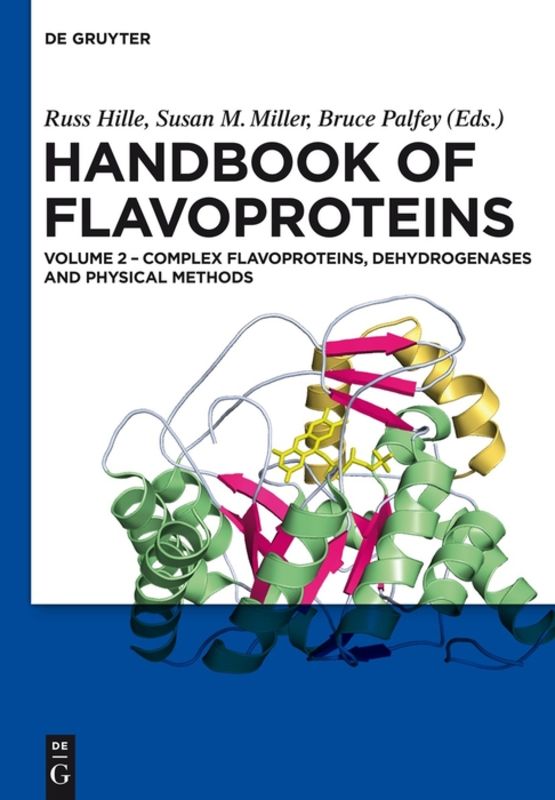
Handbook of Flavoproteins
The dynamic field of flavin and flavoprotein biochemistry has seen rapid advancement in recent years. This comprehensive two volume set provides an overview of all aspects of contemporary research in this important class of enzymes. Topics treated include flavoproteins involved in energy generation, signal transduction and electron transfer (including respiration); oxygen activation by flavoproteins; the biology and biochemistry of complex flavoproteins; flavin and flavoprotein photochemistry/photophysics as well as biotechnological applications of flavoproteins. Recent developments in this field include new structures (including those of large membrane-integral electron transfer complexes containing FMN or FAD), elucidation of the role of flavoproteins in cell signalling pathways (including both phototaxis and the circadian cycle) and important new insights into the reaction mechanisms of flavin-containing enzymes. This volume focusing on complex flavoproteins and physical methods is an essential reference for all researchers in biochemistry, chemistry, photochemistry and photophysics working on flavoenzymes.
eBook

Impact of modifications in bleomycin structure and DNA sequence on drug -DNA interactions
The impact of modifications in the metallobleomycin structure and DNA sequence on the drug-DNA interactions has been studied by oxygen consumption, HPLC, UV-Vis, EPR, NMR and mass spectroscopies. The DNA binding properties of a series of metallobleomycins were investigated by the one-dimensional 1H NMR method. The effect of the external sixth ligand of Fe(III)Blm and Co(III)Blm on their DNA binding was studied in detail by various spectroscopic methods. The presence of cyanide or phosphate converts Fe(III)Blm into high spin species. The high spin cyanide and phosphate complexes bind to DNAa in fast exchange, establishing a relationship between high spin-low spin and fast exchange-slow exchange equilibriums. A similar situation occurs when Co(III)Blm binds to DNAa in the presence of acetate, thus, two different conformations of the metal domain with respect to DNAa can exist, depending on the external ligand. In addition, DNAa can inhibit the Fe(III)Blm reduction by ascorbic acid, and phosphate can reverse this inhibition. The identity of the fifth ligand was investigated by selectively eliminating either the pyruvamide group (Plm) or disaccharide group (Glm) from Blm. Disaccharide seems to act as a secondary ligand to stabilize the primary amine as the fifth ligand. Eliminating the pyruvamide group tremendously changes the properties of its metal complexes, but no activated FePlm or its analogue HO2-Co(III)Plm is formed. When disaccharide is eliminated, Co(II)Glm is in a high spin state instead of a low spin state of Co(II)Blm. Oxygenation and oxidation of Co(II)Glm are slowed down, and the pathway of the HO2-Co(III)Glm formation in the Co(II)Glm oxidation is also changed. In addition, HO2-Co(III)Glm is not stable, and slowly changes to its HO2-Co(III)epiGlm. The former can bind to DNAa in slow exchange, but the latter binds in fast exchange on the NMR time scale. The three-dimensional features of HO2-Co(III)Glm and HO 2-Co(III)epiGlm were studied by 2-D NMR techniques. HO2-Co(III)Glm is almost identical to the structure of HO2-Co(III)Blm. In HO 2-Co(III)epiGlm, the interactions between the P and T group changed the conformation of the linker part in HO2-Co(III)Glm. Modification of the DNAa sequence at the GC specific binding site confirms that the hydrogen bonds, both in minor and major groove may involve the specific binding. Replacing GC by IC changes HO2-Co(III)Blm-DNAa from fast exchange to slow exchange. Replacing GC by 7-deaza-GC does not change the binding kinetics but reduces its inhibitory ability for a Fe(III)Blm reduction. Also, the drug can bind to the double strand cleavage site such that it binds to the single strand cleavage site. Eliminating disaccharide from Blm reduces its DNA binding affinity; in drug-DNA complex, disaccharide most likely interacts with the DNA strand opposite the binding site.
Dissertation

Molecular mechanism of ACAD9 in mitochondrial respiratory complex 1 assembly
Abstract ACAD9 belongs to the acyl-CoA dehydrogenase family, which catalyzes the α-β dehydrogenation of fatty acyl-CoA thioesters. Thus, it is involved in fatty acid β-oxidation (FAO). However, it is now known that the primary function of ACAD9 is as an essential chaperone for mitochondrial respiratory complex 1 assembly. ACAD9 interacts with ECSIT and NDUFAF1, forming the mitochondrial complex 1 assembly (MCIA) complex. Although the role of MCIA in the complex 1 assembly pathway is well studied, little is known about the molecular mechanism of the interactions among these three assembly factors. Our current studies reveal that when ECSIT interacts with ACAD9, the flavoenzyme loses the FAD cofactor and consequently loses its FAO activity, demonstrating that the two roles of ACAD9 are not compatible. ACAD9 binds to the carboxy-terminal half (C-ECSIT), and NDUFAF1 binds to the amino-terminal half of ECSIT. Although the binary complex of ACAD9 with ECSIT or with C-ECSIT is unstable and aggregates easily, the ternary complex of ACAD9-ECSIT-NDUFAF1 (i.e., the MCIA complex) is soluble and extremely stable. Molecular modeling and SAXS studies of the MCIA complex identified the possible interaction sites between the three assembly factors and binding sites for other assembly factors, including complex 1 subunits. Furthermore, we have mapped over 40 currently known pathogenic mutation sites onto the homology-modeled ACAD9 structure, giving us the structural basis for their involvement in diseases that result from complex 1 deficiency. Competing Interest Statement The authors have declared no competing interest. Footnotes * This version of the manuscript has been revised to clarify Figure numbers and also Figure 9 has been added.
Paper
Detection of domain motion in NADPH-cytochrome P450 oxidoreductase through polarization anisotropy measurements
Conformational transitions between closed and open states in the NADPH-cytochrome P450 oxidoreductase (POR) play a critical role in its electron-transport function. In this study, we determined rotational diffusion coefficients of the EDANS fluorophore attached to the cytosolic POR construct lacking the N-terminal transmembrane region. We identified two dynamic modes, slow and fast, which are interpreted as the rotational diffusion of POR as a whole and the local domain motion, respectively. Timescale of the local rotational diffusion component suggests that it may correspond to the transient opening of the fully oxidized POR structure.
Paper