
Catalogue Search | MBRL


Are you sure you want to remove the book from the shelf?

{{itemTitle}}
4,717
result(s) for
"Xian, Hui"
Sort by:
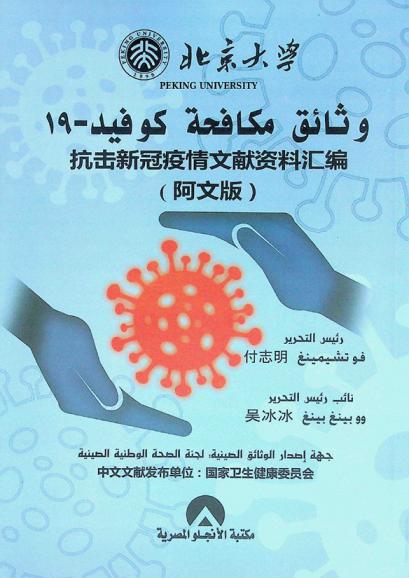
وثائق مكافحة كوفيد-19
بين يدي القارئ كتاب يجمع بين دفتيه الترجمة العربية لوثائق مكافحة كوفيد 19- التي أصدرتها لجنة الصحة الوطنية الصينية، ومـن بـين هذه الوثائق النسخ الست مـن آليات الوقاية مـن الالتهاب الرئوي الناجم عـن فيروس كـورونا المستجد ومكافحته، والنسخة التجريبية السابعة لآليات تـشخيص الالتـِهاب الـرئوي الناجِم عـن فـيروس كـورونا المستجد وعلاجه وغـيرها مـن الـمرفقات. وعـمل على ترجمة النـسخة الـعربية لوثائق مكافحة كـوفيد 19- الصينية فريـق ترجمة به أكـثر من عشريـن أستاذا وطالبا مـن قسم اللغة العربية بكلية اللغات الأجنبية بجامعة بكين بـالتعاون مع كلية الآداب في جامعة القاهرة والمعهد العالي للغات بتونس في جامعة قرطاج، في الفترة مـن مارس وحتى مايو 2020، قام خلالها فـريق الترجمة بترجمة قرابة 100 ألـف رمز صيني.
BOOK

Islands and Page curves in charged dilaton black holes
We study the Page curve for eternal Garfinkle–Horowitz–Strominger dilaton black holes in four dimensional asymptotically flat spacetime by using the island paradigm. The results demonstrate that without the island, the entanglement entropy of Hawking radiation is proportional to time and becomes divergent at late times. While taking account of the existence of the island outside the event horizon, the entanglement entropy stops growing at late times and eventually reaches a saturation value. This value is twice of the Bekenstein–Hawking entropy and consistent with the finiteness of the von Neumann entropy of eternal black holes. Moreover, we discuss the impact of the stringy coefficient n and charge Q on the Page time and the scrambling time respectively. For the non-extremal case, the influence of the coefficient n on them is small compared to the influence of the charge Q. However, for the extremal case, the Page time and the scrambling time become divergent or near vanishing. This implies the island paradigm needs further investigation.
Journal Article
Causality of black holes in 4-dimensional Einstein–Gauss–Bonnet–Maxwell theory
We study charged black hole solutions in 4-dimensional (4D) Einstein–Gauss–Bonnet–Maxwell theory to the linearized perturbation level. We first compute the shear viscosity to entropy density ratio. We then demonstrate how bulk causal structure analysis imposes an upper bound on the Gauss–Bonnet coupling constant in the AdS space. Causality constrains the value of Gauss–Bonnet coupling constant
α
GB
to be bounded by
α
GB
≤
0
as
D
→
4
.
Journal Article

Pole-skipping and hydrodynamic analysis in Lifshitz, AdS2 and Rindler geometries
A
bstract
The “pole-skipping” phenomenon reflects that the retarded Green’s function is not unique at a pole-skipping point in momentum space (
ω, k
). We explore the universality of pole-skipping in different geometries. In holography, near horizon analysis of the bulk equation of motion is a more straightforward way to derive a pole-skipping point. We use this method in Lifshitz, AdS
2
and Rindler geometries. We also study the complex hydrodynamic analyses and find that the dispersion relations in terms of dimensionless variables
ω
2
πT
and
k
2
πT
pass through pole-skipping points
ω
n
2
πT
k
n
2
πT
at small
ω
and
k
in the Lifshitz background. We verify that the position of the pole-skipping points does not depend on the standard quantization or alternative quantization of the boundary theory in AdS
2
×
ℝ
d−
1
geometry. In the Rindler geometry, we cannot find the corresponding Green’s function to calculate pole-skipping points because it is difficult to impose the boundary condition. However, we can still obtain “special points” near the horizon where bulk equations of motion have two incoming solutions. These “special points” correspond to the nonuniqueness of the Green’s function in physical meaning from the perspective of holography.
Journal Article
Analogue of the pole-skipping phenomenon in acoustic black holes
The pole-skipping phenomenon is a special property of the retarded Green’s function of black hole perturbations. We turn to its analog in acoustic black holes, which may relate to experiments. The frequencies of these special points are located at negative integer (imaginary) Matsubara frequencies ω=-i2πTn, which are consistent with the imaginary frequencies of quasinormal modes (QNMs). This implies that the lower-half plane pole-skipping phenomena have the same physical meaning as the imaginary part of QNMs, which represents the dissipation of perturbation of acoustic black holes and is related to the instability time scale of perturbation.
Journal Article

The Role of Astragaloside IV against Cerebral Ischemia/Reperfusion Injury: Suppression of Apoptosis via Promotion of P62-LC3-Autophagy
Background: Ischemia/reperfusion (I/R) caused by ischemic stroke treatments leads to brain injury, and autophagy plays a role in the pathology. Astragaloside IV is a potential neuroprotectant, but its underlying mechanism on cerebral I/R injury needs to be explored. The objective of this study is to investigate the neuroprotective mechanism of Astragaloside IV against cerebral I/R injury. Methods: Middle cerebral artery occlusion method (MCAO) and oxygen and glucose deprivation/reoxygenation (OGD/R) method were used to simulate cerebral I/R injury in Sprague-Dawley (SD) rats and HT22 cells, respectively. The neurological score, 2,3,5-Triphe-nyltetrazolium chloride (TTC) staining, and transmission electron microscope were used to detect cerebral damage in SD rats. Cell viability and cytotoxicity assay were tested in vitro. Fluorescent staining and flow cytometry were applied to detect the level of apoptosis. Western blotting was conducted to examine the expression of proteins associated with autophagy. Results: This study found that Astragaloside IV could decrease the neurological score, reduce the infarct volume in the brain, and alleviate cerebral I/R injury in MCAO rats. Astragaloside IV promoted cell viability and balanced Bcl-2 and Bax expression in vitro, reduced the rate of apoptosis, decreased the expression of P62, and increased the expression of LC3II/LC3I in HT22 cells after OGD/R. Conclusions: These data suggested that Astragaloside IV plays a neuroprotective role by down-regulating apoptosis by promoting the degree of autophagy.
Journal Article
Thermo-electric transport of dyonic Gubser-Rocha black holes
A
bstract
We study the thermo-electric transport coefficients of an extended version of the Gubser-Rocha model. After reviewing the two relaxation time model from holography and studying the effect of the magnetic field on thermo-electric transports from hydrodynamic theory, we present a new dilatonic dyonic asymptotically AdS black hole solution. Notice that S-duality plays an important role in finding the analytic solution with the magnetic field. Using the AdS/CMT dictionary, we analyze the electric and thermo-electric transport properties of the dual field theory. The resistivity and the Hall angle are both linear in
T
for fixed
k/μ
and
B/μ
2
for low temperatures. For fixed
k/T
and
μ/T
, the electric transport coefficients are strange metallic. The magnetoresistance is approximately quadratic in
B
for various choices of parametrizations. The Nernst signal is a bell-shaped function in terms of the magnetic field even when the momentum relaxation is strong.
Journal Article

Pyroptosis-immune cell cross talk in asthma: From molecular mechanisms to precision therapeutics
Asthma is a heterogeneous chronic airway disease characterized by complex inflammation. Pyroptosis, a pro-inflammatory form of programmed cell death mediated by gasdermin (GSDM) family proteins, has recently emerged as a critical amplifier of airway inflammation and tissue remodeling in asthma. This review delineates the molecular underpinnings of pyroptosis, focusing on the roles of canonical (e.g., NLRP3-caspase-1) and non-canonical (e.g., caspase-4/5/11) inflammasome pathways, as well as the broader concept of PANoptosis. We elaborate on how the pore-forming activity of GSDMD and other GSDMs facilitates the release of potent pro-inflammatory cytokines (IL-1β, IL-18), driving pathogenic cross talk among structural cells (epithelium), innate immune cells (macrophages, eosinophils, ILC2s), and adaptive immunity. Crucially, we contextualize pyroptosis within distinct asthma endotypes, proposing that allergen-driven, NLRP3-dominated pathways may underpin Th2-high/eosinophilic inflammation, while pollutant/viral-triggered, non-canonical/AIM2 pathways may favor Th2-low/neutrophilic phenotypes. The translational potential of targeting pyroptosis is underscored through a discussion of biomarkers (e.g., GSDMD-N, IL-18) and a comprehensive summary of preclinical and early clinical inhibitors targeting NLRP3, GSDMD, and key cytokines. By synthesizing these multifaceted roles, this review posits that a nuanced understanding of pyroptosis networks holds significant promise for pioneering endotype-specific therapeutic strategies in asthma management.
Journal Article

L-kynurenine induces NK cell loss in gastric cancer microenvironment via promoting ferroptosis
Background
Natural killer (NK) cells play a major role in body’s fighting against various types of cancers. Their infiltration in the tumor microenvironment (TME) of gastric cancer (GC) are significantly decreased, which has been reported as a robust prognostic marker. However, the causes leading to NK cells loss in GC TME remains poorly understood.
Methods
We constructed a non-contact co-culturing system and humanized xenograft tumor mice model to detect the influence of GC microenvironment on NK-92 or primary human NK cells viability by flow cytometry. Then through using the specific inhibitors for different types of cell death and examining the surrogate markers, we confirmed ferroptosis in NK cells. Inspired by the accidental discoveries, we constructed a NK-92 cell strain with high expression of GPX4 and treated the humanized xenograft tumor mice model with the NK-92 cells.
Results
We found L-KYN, mainly generated through indoleamine 2, 3-dioxygenase (IDO) from GC cells, impaired NK cells viability in TME. Further analysis revealed L-KYN induced ferroptosis in NK cells via an AHR-independent way. Moreover, we found NK cells with higher GPX4 expression showed resistance to L-KYN induced ferroptosis. Based on this, we generated GPX4 over-expressed NK-92 cells, and found these cells showed therapeutic potential towards GC.
Conclusions
Our study revealed a novel mechanism to explain the decline of NK cell number in GC TME. Notably, we also developed a potential immunotherapy strategy, which might be beneficial in clinical treatment in the future.
Journal Article

The Signaling Pathways Regulating NLRP3 Inflammasome Activation
AbstractThe NLRP3 inflammasome is a multi-molecular complex that acts as a molecular platform to mediate caspase-1 activation, leading to IL-1β/IL-18 maturation and release in cells stimulated by various pathogen-associated molecular patterns (PAMPs) or damage-associated molecular patterns (DAMPs). This inflammasome plays an important role in the innate immunity as its activation can further promote the occurrence of inflammation, enhance the ability of host to remove pathogens, and thus facilitate the repair of injured tissues. But if the inflammasome activation is dysregulated, it will cause the development of various inflammatory diseases and metabolic disorders. Therefore, under normal conditions, the activation of inflammasome is tightly regulated by various positive and negative signaling pathways to respond to the stimuli without damaging the host itself while maintaining homeostasis. In this review, we summarize recent advances in the major signaling pathways (including TLRs, MAPK, mTOR, autophagy, PKA, AMPK, and IFNR) that regulate NLRP3 inflammasome activation, providing a brief view of the molecular network that regulates this inflammasome as a theoretical basis for therapeutic intervention of NLRP3 dysregulation-related diseases.
Journal Article