
Catalogue Search | MBRL


Are you sure you want to remove the book from the shelf?

{{itemTitle}}
18,843
result(s) for
"Xiao, Shi"
Sort by:
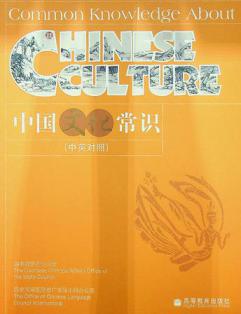
Common knowledge about Chinese culture
Traditional Chinese ideology - Traditional virtues of China - Ancient Chinese literature - Science and technology of ancient China - Traditional Chinese art - Chinese cultural relics - Ancient Chinese architecture - Chinese arts and crafts - Chinese folk customs - Life of the Chinese people.
Book

Flexible power generators by Ag2Se thin films with record-high thermoelectric performance
Exploring new near-room-temperature thermoelectric materials is significant for replacing current high-cost Bi
2
Te
3
. This study highlights the potential of Ag
2
Se for wearable thermoelectric electronics, addressing the trade-off between performance and flexibility. A record-high
ZT
of 1.27 at 363 K is achieved in Ag
2
Se-based thin films with 3.2 at.% Te doping on Se sites, realized by a new concept of doping-induced orientation engineering. We reveal that Te-doping enhances film uniformity and (00
l
)-orientation and in turn carrier mobility by reducing the (00
l
) formation energy, confirmed by solid computational and experimental evidence. The doping simultaneously widens the bandgap, resulting in improved Seebeck coefficients and high power factors, and introduces Te
Se
point defects to effectively reduce the lattice thermal conductivity. A protective organic-polymer-based composite layer enhances film flexibility, and a rationally designed flexible thermoelectric device achieves an output power density of 1.5 mW cm
−2
for wearable power generation under a 20 K temperature difference.
Flexible Ag
2
Se possesses promising near-room-temperature thermoelectric performance, while trade-off in thermoelectric performance and flexibility enhances its practical utility. Here, the authors fabricate polycrystalline Ag
2
Se-based thin film with a high ZT of 1.27 at 363 K by Te doping.
Journal Article

مبادئ الحكم في الصين القديمة
يتناول كتاب (مبادئ الحكم في الصين القديمة) والذي قامه بتأليفه (وي تشينغ) في حوالي (211) صفحة من القطع المتوسط موضوع (تاريخ الصين قديم) مستعرضا المحتويات التالية : قبل أكثر من ألف وربعمائة عام، أصدر الإمبراطور تاي تسونغ إمبراطور أسرة تانغ الملكية (618-907) مرسوما بأن يجمع أربعة من أشهر علماء الصين وسياسييها وأمهرهم وقتها المعارف التاريخية حول مبادئ الحكم الإمبراطوري من الكتب الكلاسيكية القديمة الستة، والمجموعات التاريخية الأربع، والمئات من مؤلفات المدارس الفكرية الصينية، وأن يرتبوها ويستخرجوا منها الدروس الاكثر اهمية حول تهذيب النفس وإصلاحها، وإدارة العائلة، والحكم الجيد للبلاد، وسبل جلب السلام للعالم. وكانت النتيجة مجموعة عنوانها \"تشيونشو تشيياو\" التي أقتبست بعناية من أربعة عشر ألف كتاب، وتسع وثمانين ألف مخطوطة من الكتابات القديمة، بإجمالي خمسمائة ألف فقرة مكتوبة، تغطي خمسة وشتين صنفا من الكتب. وقد ساعد هذا الكتاب الإمبراطور تاي سونغ والكثير من الأباطرة من بعده في أمور الحكم، ويعود الفضل في تحقيق الرخاء والسلام في المراحل اللاحقة بالصين القديمة بنسبة كبيرة إلى هذا الكتاب.
BOOK

Role of plasmacytoid dendritic cells and inducible costimulator‐positive regulatory T cells in the immunosuppression microenvironment of gastric cancer
Regulatory T cells (Tregs) and plasmacytoid dendritic cells (pDCs) play important roles in the immune escape of cancer. In this study, we investigated pDCs and pDC‐induced inducible costimulator (ICOS)+ Treg populations in peripheral blood from gastric cancer (GC) patients and healthy donors by flow cytometry. The distribution of these cells in carcinoma tissue, peritumor tissue, and normal gastric mucosa was detected by immunohistochemistry. Plasma and tissue concentration of the cytokines such as interleukin‐10 and transforming growth factor‐β1 were also measured. We found that the numbers of pDCs, Tregs, and ICOS+ Tregs in peripheral blood were increased in GC patients compared with healthy donors. In tissue, Tregs and ICOS+ Tregs were found distributing mainly in carcinoma tissue, whereas pDCs were mainly found in peritumor tissue. Moreover, the Foxp3+ICOS+/Foxp3+ cell ratio in carcinoma and peritumor tissue were higher than that in normal tissue. There were more ICOS+ Tregs in tumor and peritumor tissue of late‐stage GC patients. There was a positive correlation between pDCs and ICOS+ Tregs in peripheral blood and peritumor tissue from GC patients. In conclusion, pDCs may play a potential role in recruiting ICOS+ Tregs, and both participate in the immunosuppression microenvironment of GC. We found that numbers of pDCs, Tregs and ICOS+ Tregs in peripheral blood were increased in GC patients compared with healthy donors. In tissue, Tregs and ICOS+ Tregs were found distributing mainly in carcinoma tissue, while pDCs mainly in peritumor tissue. Both pDCs and ICOS+ Tregs participate in the immunosuppression microenviroment of gastric cancer together.
Journal Article


High‐Performance Thermoelectric SnSe: Aqueous Synthesis, Innovations, and Challenges
Tin selenide (SnSe) is one of the most promising candidates to realize environmentally friendly, cost‐effective, and high‐performance thermoelectrics, derived from its outstanding electrical transport properties by appropriate bandgaps and intrinsic low lattice thermal conductivity from its anharmonic layered structure. Advanced aqueous synthesis possesses various unique advantages including convenient morphology control, exceptional high doping solubility, and distinctive vacancy engineering. Considering that there is an urgent demand for a comprehensive survey on the aqueous synthesis technique applied to thermoelectric SnSe, herein, a thorough overview of aqueous synthesis, characterization, and thermoelectric performance in SnSe is provided. New insights into the aqueous synthesis‐based strategies for improving the performance are provided, including vacancy synergy, crystallization design, solubility breakthrough, and local lattice imperfection engineering, and an attempt to build the inherent links between the aqueous synthesis‐induced structural characteristics and the excellent thermoelectric performance is presented. Furthermore, the significant advantages and potentials of an aqueous synthesis route for fabricating SnSe‐based 2D thermoelectric generators, including nanorods, nanobelts, and nanosheets, are also discussed. Finally, the controversy, strategy, and outlook toward future enhancement of SnSe‐based thermoelectric materials are also provided. This Review guides the design of thermoelectric SnSe with high performance and provides new perspectives as a reference for other thermoelectric systems. Herein, aqueous‐solution‐based synthesis, characterizations, and thermoelectric performance in SnSe thermoelectrics are thoroughly reviewed by providing new insights including vacancy synergy, crystallization design, doping limit breakthrough, local lattice imperfection engineering, and a promising flexible thermoelectric generator based on appropriate synthesis design.
Journal Article

Oxidative stress marker aberrations in children with autism spectrum disorder: a systematic review and meta-analysis of 87 studies (N = 9109)
There is increasing awareness that oxidative stress may be implicated in the pathophysiology of autism spectrum disorder (ASD). Here we aimed to investigate blood oxidative stress marker profile in ASD children by a meta-analysis. Two independent investigators systematically searched Web of Science, PubMed, and Cochrane Library and extracted data from 87 studies with 4928 ASD children and 4181 healthy control (HC) children. The meta-analysis showed that blood concentrations of oxidative glutathione (GSSG), malondialdehyde, homocysteine, S-adenosylhomocysteine, nitric oxide, and copper were higher in children with ASD than that of HC children. In contrast, blood reduced glutathione (GSH), total glutathione (tGSH), GSH/GSSG, tGSH/GSSG, methionine, cysteine, vitamin B9, vitamin D, vitamin B12, vitamin E, S-adenosylmethionine/S-adenosylhomocysteine, and calcium concentrations were significantly reduced in children with ASD relative to HC children. However, there were no significance differences between ASD children and HC children for the other 17 potential markers. Heterogeneities among studies were found for most markers, and meta-regressions indicated that age and publication year may influence the meta-analysis results. These results therefore clarified blood oxidative stress profile in children with ASD, strengthening clinical evidence of increased oxidative stress implicating in pathogenesis of ASD. Additionally, given the consistent and large effective size, glutathione metabolism biomarkers have the potential to inform early diagnosis of ASD.
Journal Article

Atomically Precise Water‐Soluble Graphene Quantum Dot for Cancer Sonodynamic Therapy
Although water‐soluble graphene quantum dots (GQDs) have shown various promising bio‐applications due to their intriguing optical and chemical properties, the large heterogeneity in compositions, sizes, and shapes of these GQDs hampers the better understanding of their structure‐properties correlation and further uses in terms of large‐scale manufacturing practices and safety concerns. It is shown here that a water‐soluble atomically‐precise GQD (WAGQD‐C96) is synthesized and exhibits a deep‐red emission and excellent sonodynamic sensitization. By decorating sterically hindered water‐soluble functional groups, WAGQD‐C96 can be monodispersed in water without further aggregation. The deep‐red emission of WAGQD‐C96 facilitates the tracking of its bio‐process, showing a good cell‐uptake and long‐time retention in tumor tissue. Compared to traditional molecular sonosensitizers, WAGQD‐C96 generates superior reactive oxygen species and demonstrates excellent tumor inhibition potency as an anti‐cancer sonosensitizer in in vivo studies. A good biosafety of WAGQD‐C96 is validated in both in vitro and in vivo assays. A water‐soluble atomically‐precise graphene quantum dot (WAGQD) with deep‐red emission is synthesized and shows a superior sensitizing potency for cancer sonodynamic therapy. The general synthetic strategy will enable the synthesis of WAGQDs with different sizes, edges, and tailored properties for further bio‐applications.
Journal Article