
Catalogue Search | MBRL


Are you sure you want to remove the book from the shelf?

{{itemTitle}}
39,171
result(s) for
"Xiao, Yan"
Sort by:


Oral arsenic plus retinoic acid versus intravenous arsenic plus retinoic acid for non-high-risk acute promyelocytic leukaemia: a non-inferiority, randomised phase 3 trial
Intravenous arsenic trioxide plus all-trans retinoic acid (ATRA) without chemotherapy is the standard of care for non-high-risk acute promyelocytic leukaemia (white blood cell count ≤10 × 109 per L), resulting in cure in more than 95% of cases. However, a pilot study of treatment with oral arsenic realgar-Indigo naturalis formula (RIF) plus ATRA without chemotherapy, which has a more convenient route of administration than the standard intravenous regimen, showed high efficacy. In this study, we compare an oral RIF plus ATRA treatment regimen with the standard intravenous arsenic trioxide plus ATRA treatment regimen in patients with non-high-risk acute promyelocytic leukaemia.
We did a multicentre, non-inferiority, open-label, randomised, controlled phase 3 trial at 14 centres in China. Patients aged 18–70 years with newly diagnosed (within 7 days) non-high-risk acute promyelocytic leukaemia, and a WHO performance status of 2 or less were eligible. Patients were randomly assigned (2:1) to receive treatment with RIF-ATRA or arsenic trioxide-ATRA as the induction and consolidation therapy. Randomisation was done centrally with permuted blocks and stratification according to trial centre and was implemented through an interactive web response system. RIF (60 mg/kg bodyweight daily in an oral divided dose) or arsenic trioxide (0·15 mg/kg daily in an intravenous dose) and ATRA (25 mg/m2 daily in an oral divided dose) were used until complete remission was achieved. The home-based consolidation therapy was RIF (60 mg/kg daily in an oral divided dose) or intravenous arsenic trioxide (0·15 mg/kg daily in an intravenous dose) in a 4-week on 4-week off regimen for four cycles and ATRA (25 mg/m2 daily in an oral divided dose) in a 2-week on 2-week off regimen for seven cycles. Patients and treating physicians were not masked to treatment allocation. The primary outcome was event-free survival at 2 years. A non-inferiority margin of −10% was used to assess non-inferiority. Primary analyses were done in a modified intention-to-treat population of all patients who received at least one dose of their assigned treatment and the per-protocol population. This study was registered with the Chinese Clinical Trial Registry (ChiCTR-TRC-13004054), and the trial is complete.
Between Feb 13, 2014, and Aug 31, 2015, 109 patients were enrolled and assigned to RIF-ATRA (n=72) or arsenic trioxide-ATRA (n=37). Three patients in the RIF-ATRA and one in the arsenic trioxide-ATRA did not receive their assigned treatment. After a median follow-up of 32 months (IQR 27–36), 67 (97%) of 69 patients in the RIF-ATRA group and 34 (94%) of 36 in the arsenic trioxide-ATRA group had achieved 2-year event-free survival in the modified intention-to-treat population. The percentage difference in event-free survival was 2·7% (95% CI, −5·8 to 11·1). The lower limit of the 95% CI for the difference in event-free survival was greater than the −10% non-inferiority margin, confirming non-inferiority (p=0·0017). Non-inferiority was also confirmed in the per-protocol population. During induction therapy, grade 3–4 hepatic toxic effects (ie, increased liver aspartate aminotransferase or alanine transaminase concentrations) were reported in six (9%) of 69 patients in the RIF-ATRA group versus five (14%) of 36 patients in the arsenic trioxide-ATRA group; grade 3–4 infection was reported in 15 (23%) of 64 versus 15 (42%) of 36 patients. Two patients in the arsenic trioxide-ATRA group died during induction therapy (one from haemorrhage and one from thrombocytopenia).
Oral RIF plus ATRA is not inferior to intravenous arsenic trioxide plus ATRA for the treatment of patients with non-high-risk acute promyelocytic leukaemia. This study suggests that a completely oral, chemotherapy-free model might be an alternative to the standard intravenous treatment for patients with non-high-risk acute promyelocytic leukaemia.
Foundation for innovative research group of the National Natural Science Foundation of China, the Beijing Municipal Science and Technology Commission, the National Key R&D Program of China, and the National Natural Science Foundation of China.
Journal Article

استكشافا لفن الرواية
في هذا الكتاب المميز، يقدم يان ليانكه استكشافا شاملا لفن الرواية وأبعادها المختلفة، حيث يتناول الواقعية وتأثيرها على الكتابة الأدبية، مستعرضا مفاهيمه الخاصة حول الكتابة والرواية. يشتمل الكتاب على تحليل عميق للأعمال الأدبية الكلاسيكية والحديثة، مع تسليط الضوء على التأثيرات والأفكار الرئيسية التي شكلت تلك الأعمال. كما يقدم ليانكه رؤية شخصية وفريدة حول الكتابة وفن الرواية، مستندا إلى خبرته الشخصية ككاتب وناقد أدبي. ويغوص الكتاب في تاريخ الأدب وتطور الرواية على مر العصور، كاشفا عن تأثير الكاتب في عمله الأدبي وعلاقته بشخصياته وقصته.
Book

Tocilizumab for Advanced Non‐Small‐Cell Lung Cancer With Concomitant Cachexia: An Observational Study
Background Cancer cachexia significantly contributes to morbidity and mortality in patients with non‐small‐cell lung cancer (NSCLC). Inflammatory pathways mediated by interleukin‐6 (IL‐6) play a crucial role in the development of cancer cachexia. This study aimed to investigate the use of tocilizumab in the management of NSCLC with coexisting IL‐6‐elevated cachexia. Methods In this retrospective study, data were collected from patients with NSCLC and concurrent IL‐6‐elevated cachexia who received either tocilizumab plus antitumour therapy or antitumour therapy alone. The primary endpoints were overall survival (OS) and improved modified Glasgow Prognostic Score (mGPS) at Week 12. The secondary endpoints included changes from baseline over 12 weeks in body weight, albumin, C‐reactive protein (CRP) and mGPS. Qualitative improvements in patient self‐rated appetite and fatigue were reported as exploratory analysis. Results The study included 49 patients diagnosed with NSCLC and IL‐6‐elevated cachexia, Eastern Cooperative Oncology Group performance status of 2–4. Of these, 26 received tocilizumab in combination with antitumour therapy, and 23 received antitumour therapy alone. The majority of these patients were male (87.8%). Baseline characteristics were almost identical between the two groups. The tocilizumab group demonstrated a significantly longer median OS compared to the control group (15.1 vs. 3.2 months; hazard ratio 0.18, 95% confidence interval 0.08–0.38; p < 0.001). The rate of patients surviving with mGPS improvement at Week 12 was significantly higher in the tocilizumab group than in the control group (risk difference 0.88, 95% confidence interval 0.75–1.00; p < 0.001). Over the 12‐week period, significant improvements were observed in body weight, albumin, CRP and mGPS in the tocilizumab group compared to the control group (body weight: 5.15 ± 0.53 kg vs. −5.69 ± 0.76 kg, p = 0.041; albumin: 5.89 ± 0.70 g/L vs. −2.97 ± 0.71 g/L, p < 0.001; CRP: −91.50 ± 7.15 mg/L vs. 9.47 ± 13.69 mg/L, p < 0.001; mGPS: −1.61 ± 0.15 vs. 0.03 ± 0.08, p < 0.001). The tocilizumab group also displayed significantly higher rates of improvement in appetite and fatigue (both p < 0.001). The incidence of Grade 3 or higher adverse events was 34.6% in the tocilizumab group compared to 78.3% in the control group. Tocilizumab‐related adverse events were observed in three patients (11.5%), including two cases of neutropenia and one case of skin and subcutaneous tissue infection. Conclusion Tocilizumab demonstrated significant benefits in survival and various clinical parameters, including body weight, albumin, CRP, mGPS and symptom burden in patients with NSCLC and concurrent IL‐6‐elevated cachexia. Given the existing unmet medical need for effective interventions for cancer cachexia, tocilizumab may be considered as a potential treatment option.
Journal Article
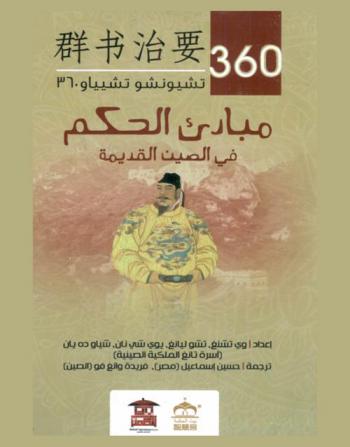
مبادئ الحكم في الصين القديمة
يتناول كتاب (مبادئ الحكم في الصين القديمة) والذي قامه بتأليفه (وي تشينغ) في حوالي (211) صفحة من القطع المتوسط موضوع (تاريخ الصين قديم) مستعرضا المحتويات التالية : قبل أكثر من ألف وربعمائة عام، أصدر الإمبراطور تاي تسونغ إمبراطور أسرة تانغ الملكية (618-907) مرسوما بأن يجمع أربعة من أشهر علماء الصين وسياسييها وأمهرهم وقتها المعارف التاريخية حول مبادئ الحكم الإمبراطوري من الكتب الكلاسيكية القديمة الستة، والمجموعات التاريخية الأربع، والمئات من مؤلفات المدارس الفكرية الصينية، وأن يرتبوها ويستخرجوا منها الدروس الاكثر اهمية حول تهذيب النفس وإصلاحها، وإدارة العائلة، والحكم الجيد للبلاد، وسبل جلب السلام للعالم. وكانت النتيجة مجموعة عنوانها \"تشيونشو تشيياو\" التي أقتبست بعناية من أربعة عشر ألف كتاب، وتسع وثمانين ألف مخطوطة من الكتابات القديمة، بإجمالي خمسمائة ألف فقرة مكتوبة، تغطي خمسة وشتين صنفا من الكتب. وقد ساعد هذا الكتاب الإمبراطور تاي سونغ والكثير من الأباطرة من بعده في أمور الحكم، ويعود الفضل في تحقيق الرخاء والسلام في المراحل اللاحقة بالصين القديمة بنسبة كبيرة إلى هذا الكتاب.
BOOK

CEBPD is a master transcriptional factor for hypoxia regulated proteins in glioblastoma and augments hypoxia induced invasion through extracellular matrix-integrin mediated EGFR/PI3K pathway
Hypoxia contributes to the initiation and progression of glioblastoma by regulating a cohort of genes called hypoxia-regulated genes (HRGs) which form a complex molecular interacting network (HRG-MINW). Transcription factors (TFs) often play central roles for MINW. The key TFs for hypoxia induced reactions were explored using proteomic analysis to identify a set of hypoxia-regulated proteins (HRPs) in GBM cells. Next, systematic TF analysis identified CEBPD as a top TF that regulates the greatest number of HRPs and HRGs. Clinical sample and public database analysis revealed that CEBPD is significantly up-regulated in GBM, high levels of CEBPD predict poor prognosis. In addition, CEBPD is highly expressed in hypoxic condition both in GBM tissue and cell lines. For molecular mechanisms, HIF1α and HIF2α can activate the CEBPD promotor. In vitro and in vivo experiments demonstrated that CEBPD knockdown impaired the invasion and growth capacity of GBM cells, especially in hypoxia condition. Next, proteomic analysis identified that CEBPD target proteins are mainly involved in the EGFR/PI3K pathway and extracellular matrix (ECM) functions. WB assays revealed that CEBPD significantly positively regulated EGFR/PI3K pathway. Chromatin immunoprecipitation (ChIP) qPCR/Seq analysis and Luciferase reporter assay demonstrated that CEBPD binds and activates the promotor of a key ECM protein FN1 (fibronectin). In addition, the interactions of FN1 and its integrin receptors are necessary for CEBPD-induced EGFR/PI3K activation by promoting EGFR phosphorylation. Furthermore, GBM sample analysis in the database corroborated that CEBPD is positively correlated with the pathway activities of EGFR/PI3K and HIF1α, especially in highly hypoxic samples. At last, HRPs are also enriched in ECM proteins, indicating that ECM activities are important components of hypoxia induced responses in GBM. In conclusion, CEPBD plays important regulatory roles in the GBM HRG-MINW as a key TF, which activates the EGFR/PI3K pathway through ECM, especially FN1, mediated EGFR phosphorylation.
Journal Article


Perfluoroalkyl substance pollutants activate the innate immune system through the AIM2 inflammasome
Perfluoroalkyl substances (PFAS) are widely used in various manufacturing processes. Accumulation of these chemicals has adverse effects on human health, including inflammation in multiple organs, yet how PFAS are sensed by host cells, and how tissue inflammation eventually incurs, is still unclear. Here, we show that the double-stranded DNA receptor AIM2 is able to recognize perfluorooctane sulfonate (PFOS), a common form of PFAS, to trigger IL-1β secretion and pyroptosis. Mechanistically, PFOS activates the AIM2 inflammasome in a process involving mitochondrial DNA release through the Ca
2+
-PKC-NF-κB/JNK-BAX/BAK axis. Accordingly,
Aim2
−/
−
mice have reduced PFOS-induced inflammation, as well as tissue damage in the lungs, livers, and kidneys in both their basic condition and in an asthmatic exacerbation model. Our results thus suggest a function of AIM2 in PFOS-mediated tissue inflammation, and identify AIM2 as a major pattern recognition receptor in response to the environmental organic pollutants.
The double-stranded DNA receptor AIM2 is able to sense the environmental pollutant perfluorooctane sulfonate, a prototypical perfluoro-alkyl substrate. Activation of the AIM2 pathway leads to inflammation and tissue damage via IL-1β secretion and pyroptosis of affected innate immune cells.
Journal Article

Combined angiogenesis and PD-1 inhibition for immunomodulatory TNBC: concept exploration and biomarker analysis in the FUTURE-C-Plus trial
Background
Immune checkpoint inhibitors had a great effect in triple-negative breast cancer (TNBC); however, they benefited only a subset of patients, underscoring the need to co-target alternative pathways and select optimal patients. Herein, we investigated patient subpopulations more likely to benefit from immunotherapy and inform more effective combination regimens for TNBC patients.
Methods
We conducted exploratory analyses in the FUSCC cohort to characterize a novel patient selection method and actionable targets for TNBC immunotherapy. We investigated this in vivo and launched a phase 2 trial to assess the clinical value of such criteria and combination regimen. Furthermore, we collected clinicopathological and next-generation sequencing data to illustrate biomarkers for patient outcomes.
Results
CD8-positivity could identify an immunomodulatory subpopulation of TNBCs with higher possibilities to benefit from immunotherapy, and angiogenesis was an actionable target to facilitate checkpoint blockade. We conducted the phase II FUTURE-C-Plus trial to assess the feasibility of combining famitinib (an angiogenesis inhibitor), camrelizumab (a PD-1 monoclonal antibody) and chemotherapy in advanced immunomodulatory TNBC patients. Within 48 enrolled patients, the objective response rate was 81.3% (95% CI, 70.2–92.3), and the median progression-free survival was 13.6 months (95% CI, 8.4–18.8). No treatment-related deaths were reported. Patients with CD8- and/or PD-L1- positive tumors benefit more from this regimen.
PKD1
somatic mutation indicates worse progression-free and overall survival.
Conclusion
This study confirms the efficacy and safety of the triplet regimen in immunomodulatory TNBC and reveals the potential of combining CD8, PD-L1 and somatic mutations to guide clinical decision-making and treatments.
Trial registration
ClinicalTrials.gov:
NCT04129996
. Registered 11 October 2019.
Journal Article

MicroRNA-26 governs profibrillatory inward-rectifier potassium current changes in atrial fibrillation
Atrial fibrillation (AF) is a highly prevalent arrhythmia with pronounced morbidity and mortality. Inward-rectifier K+ current (IK1) is believed to be an important regulator of reentrant-spiral dynamics and a major component of AF-related electrical remodeling. MicroRNA-26 (miR-26) is predicted to target the gene encoding KIR2.1, KCNJ2. We found that miR-26 was downregulated in atrial samples from AF animals and patients and this downregulation was accompanied by upregulation of IK1/KIR2.1 protein. miR-26 overexpression suppressed expression of KCNJ2/KIR2.1. In contrast, miR-26 knockdown, inhibition, or binding-site mutation enhanced KCNJ2/KIR2.1 expression, establishing KCNJ2 as a miR-26 target. Knockdown of endogenous miR-26 promoted AF in mice, whereas adenovirus-mediated expression of miR-26 reduced AF vulnerability. Kcnj2-specific miR-masks eliminated miR-26-mediated reductions in Kcnj2, abolishing miR-26's protective effects, while coinjection of a Kcnj2-specific miR-mimic prevented miR-26 knockdown-associated AF in mice. Nuclear factor of activated T cells (NFAT), a known actor in AF-associated remodeling, was found to negatively regulate miR-26 transcription. Our results demonstrate that miR-26 controls the expression of KCNJ2 and suggest that this downregulation may promote AF.
Journal Article