
Catalogue Search | MBRL


Are you sure you want to remove the book from the shelf?

{{itemTitle}}
30,913
result(s) for
"Yan, Lu"
Sort by:


Assembly and Transfer of Iron–Sulfur Clusters in the Plastid
Iron-Sulfur (Fe-S) clusters and proteins are essential to many growth and developmental processes. In plants, they exist in the plastids, mitochondria, cytosol, and nucleus. Six types of Fe-S clusters are found in the plastid: classic 2Fe-2S, NEET-type 2Fe-2S, Rieske-type 2Fe-2S, 3Fe-4S, 4Fe-4S, and siroheme 4Fe-4S. Classic, NEET-type, and Rieske-type 2Fe-2S clusters have the same 2Fe-2S core; similarly, common and siroheme 4Fe-4S clusters have the same 4Fe-4S core. Plastidial Fe-S clusters are assembled by the sulfur mobilization (SUF) pathway, which contains cysteine desulfurase (EC 2.8.1.7), sulfur transferase (EC 2.8.1.3), Fe-S scaffold complex, and Fe-S carrier proteins. The plastidial cysteine desulfurase-sulfur transferase-Fe-S-scaffold complex system is responsible for
assembly of all plastidial Fe-S clusters. However, different types of Fe-S clusters are transferred to recipient proteins via respective Fe-S carrier proteins. This review focuses on recent discoveries on the molecular functions of different assembly and transfer factors involved in the plastidial SUF pathway. It also discusses potential points for regulation of the SUF pathway, relationships among the plastidial, mitochondrial, and cytosolic Fe-S assembly and transfer pathways, as well as several open questions about the carrier proteins for Rieske-type 2Fe-2S, NEET-type 2Fe-2S, and 3F-4S clusters.
Journal Article
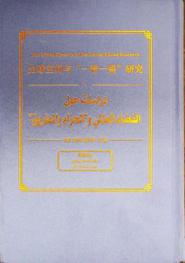
دراسات حول الفضاء العالمي و\الحزام والطريق\ : (مجلد الثقافة)
ينطلق هذا المجلد من العلاقة الهيكلية بين \"الفضاء\" و\"الثقافة\"، ويجمع بين مفهوم \"الفضاء\" في الجغرافيا ومفهوم \"السياق\" في الدراسات الثقافية وغيرهم من المفاهيم الأخرى، ويشرح نماذج ودلالات وأهداف مبادرة \"الحزام والطريق\" في سياق الحضارة الحديثة، ويصف صورة امتداد الحضارة على المحور التاريخي لـ \"الحزام والطريق\"، ويحلل الدلالة الثقافية في كل من اتجاه القيمة وبناء القوة الناعمة وإنشاء السياق الشرقي الخاصين بمبادرة \"الحزام والطريق\"، ويفسر علاقة الارتباط بين الثقافة الوطنية لـ \"الحزام والطريق\" والفضاء الوطني، ويكشف عن السرد عبر الفضاء للرموز الثقافية لـ \"الحزام والطريق\" ويوضح التعبير الرقمي والمرئي لواقع \"الحزام والطريق\"
Book

Chloroplasts at the Crossroad of Photosynthesis, Pathogen Infection and Plant Defense
Photosynthesis, pathogen infection, and plant defense are three important biological processes that have been investigated separately for decades. Photosynthesis generates ATP, NADPH, and carbohydrates. These resources are utilized for the synthesis of many important compounds, such as primary metabolites, defense-related hormones abscisic acid, ethylene, jasmonic acid, and salicylic acid, and antimicrobial compounds. In plants and algae, photosynthesis and key steps in the synthesis of defense-related hormones occur in chloroplasts. In addition, chloroplasts are major generators of reactive oxygen species and nitric oxide, and a site for calcium signaling. These signaling molecules are essential to plant defense as well. All plants grown naturally are attacked by pathogens. Bacterial pathogens enter host tissues through natural openings or wounds. Upon invasion, bacterial pathogens utilize a combination of different virulence factors to suppress host defense and promote pathogenicity. On the other hand, plants have developed elaborate defense mechanisms to protect themselves from pathogen infections. This review summarizes recent discoveries on defensive roles of signaling molecules made by plants (primarily in their chloroplasts), counteracting roles of chloroplast-targeted effectors and phytotoxins elicited by bacterial pathogens, and how all these molecules crosstalk and regulate photosynthesis, pathogen infection, and plant defense, using chloroplasts as a major battlefield.
Journal Article
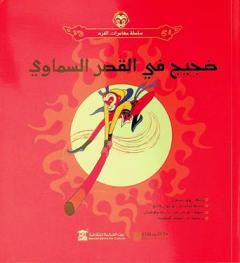
ضجيج في القصر السماوي
طلب الإمبراطور اليشمي من الحكيم الأكبر أن يساعده في إخضاع القرد وترويضه بعد أن أحدث الفوضى في القصر السماوي، أقام الحكيم الأكبر جبل العناصر الخمسة وسجن القرد تحته. وبعد خمسة قرون، كلف الإمبراطور تاي تسونغ من أسرة تانغ الراهب المشهور سان تسانغ، بجلب الكتب المقدسة من الفردوس الغربي. وأثناء رحلته إلى الغرب، أنقذ سان تسانغ القرد وحرره من سجنه، وبعد أن أنارت روح الخير قوان بن القرد، تحلى بالإيمان وصار تلميذا لسان تسانغ ورافقه في رحلته لحراسته في الطريق، وخلال رحلتهما هاجمهما قطاع طرق أرادوا سرقتهما، فضربهم القرد بعصاه الحديدية وقتلهم جميعا وأخذ أغراضهم، فوبخه سان ،تسانغ فاستشاط القرد غضبا لأنه لا يتحمل أن يوبخه أحد، وترك سان تسانغ وذهب لقصر الملك التنين في البحر الشرقي، لكن بعد أن نصحه الملك التنين عاد القرد مرة أخرى إلى معلمه سان تسانغ، وللسيطرة على القرد طلبت قوان ين من سان تسانغ أن يضع طوقا ذهبيا على رأس القرد، ويتلو تعويذة تضييق الطوق لمعاقبته إذا عصى الأوامر. وبالفعل بعد أن عاد القرد مرة أخرى ووضع القبعة على رأسه، وتلا المعلم التعويذة، فتلوى القرد ألما وتعهد أن يحسن التصرف ويطيع الأوامر. روضت قوان بن أيضا تنينا أبيض وحولته إلى حصان ليحمل سان تسانغ في رحلته.
Book
Identification and Roles of Photosystem II Assembly, Stability, and Repair Factors in Arabidopsis
Photosystem II (PSII) is a multi-component pigment-protein complex that is responsible for water splitting, oxygen evolution, and plastoquinone reduction. Components of PSII can be classified into core proteins, low-molecular-mass proteins, extrinsic oxygen-evolving complex (OEC) proteins, and light-harvesting complex II proteins. In addition to these PSII subunits, more than 60 auxiliary proteins, enzymes, or components of thylakoid protein trafficking/targeting systems have been discovered to be directly or indirectly involved in de novo assembly and/or the repair and reassembly cycle of PSII. For example, components of thylakoid-protein-targeting complexes and the chloroplast-vesicle-transport system were found to deliver PSII subunits to thylakoid membranes. Various auxiliary proteins, such as PsbP-like (Psb stands for PSII) and light-harvesting complex-like proteins, atypical short-chain dehydrogenase/reductase family proteins, and tetratricopeptide repeat proteins, were discovered to assist the de novo assembly and stability of PSII and the repair and reassembly cycle of PSII. Furthermore, a series of enzymes were discovered to catalyze important enzymatic steps, such as C-terminal processing of the D1 protein, thiol/disulfide-modulation, peptidylprolyl isomerization, phosphorylation and dephosphorylation of PSII core and antenna proteins, and degradation of photodamaged PSII proteins. This review focuses on the current knowledge of the identities and molecular functions of different types of proteins that influence the assembly, stability, and repair of PSII in the higher plant Arabidopsis thaliana.
Journal Article
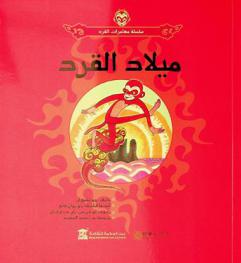
ميلاد القرد
ذهب سان تسانغ وتلاميذه إلى جبل شيتوه، وتنكر الوزير جين شينغ في هيئة رجل مسن وحذرهم من الشياطين الثلاثة، فذهب وو كونغ يتقصى الأمر، ودعا با جبه ليذهبا للقتال فابتلعهما الشيطان الأسد، انتهز القرد وو كونغ الفرصة لربط حبل في بطن الوحش الذي تألم كثيرا. لم يرض الشيطان الفيل والأمر، وطلب من القرد القتال وهزم أيضا، فاضطر للموافقة على عبور الراهب سان تسانغ الجبل على محفة فكر الشيطان النسر في خطة جديدة، ودارت معاركة كبيرة، أسر فيها المعلم وتلاميذه. لكن القرد استطاع الهرب، وذهب إلى جبل الأرواح لدعوة الحكيم الأكبر. وبمساعدته نجحوا في إخضاع الشيطان الأسد والشيطان الفيل وحولوهما إلى أسد وفيل، ثم أخضعوا الشيطان النسر وواصلوا رحلتهم إلى الغرب.
Book

Establishment of a morphological atlas of the Caenorhabditis elegans embryo using deep-learning-based 4D segmentation
The invariant development and transparent body of the nematode
Caenorhabditis elegans
enables complete delineation of cell lineages throughout development. Despite extensive studies of cell division, cell migration and cell fate differentiation, cell morphology during development has not yet been systematically characterized in any metazoan, including
C. elegans
. This knowledge gap substantially hampers many studies in both developmental and cell biology. Here we report an automatic pipeline, CShaper, which combines automated segmentation of fluorescently labeled membranes with automated cell lineage tracing. We apply this pipeline to quantify morphological parameters of densely packed cells in 17 developing
C. elegans
embryos. Consequently, we generate a time-lapse 3D atlas of cell morphology for the
C. elegans
embryo from the 4- to 350-cell stages, including cell shape, volume, surface area, migration, nucleus position and cell-cell contact with resolved cell identities. We anticipate that CShaper and the morphological atlas will stimulate and enhance further studies in the fields of developmental biology, cell biology and biomechanics.
The systematic characterization of
C. elegans
morphology during development has yet to be performed. Here, the authors produce a 3D atlas of
C. elegans
morphology from 17 embryos and 54 developmental stages, using an automated pipeline, CShaper (combining segmentation of fluorescently labeled membranes with automated cell lineage tracing).
Journal Article
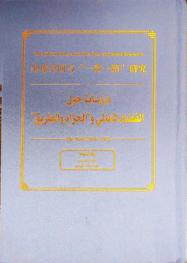
دراسات حول الفضاء العالمي و\الحزام والطريق\ : (مجلد السياحة)
إن استراتيجية \"الحزام والطريق\" هي عملية طويلة الأمد، ولا يمكن وصف دورها في تعزيز تنمية السياحة ببساطة. يحلل \"الفضاء العالمي و\"حزام واحد وطريق واحد\" حجم السياحة\" الوضع الحالي لتنمية السياحة العالمية في سياق استراتيجية \"حزام واحد وطريق واحد\"، ويقدم بالتفصيل تطور السياحة العالمية والخلفية السياحية. \"حزام وطريق\"، بما في ذلك نظرة عامة على صناعة السياحة العالمية، والاتجاهات الجديدة في تنمية السياحة العالمية ونمط السياحة العالمية، وما إلى ذلك، واستنادا إلى تحليل فرص وتحديات تنمية السياحة العالمية والصينية، والتأثير الترويجي لـ \"حزام واحد وطريق واحد\"، وتم تفسير استراتيجية \"الحزام والطريق\" لتنمية السياحة.
Book

Versatile full-colour nanopainting enabled by a pixelated plasmonic metasurface
The growing interest to develop modern digital displays and colour printing has driven the advancement of colouration technologies with remarkable speed. In particular, metasurface-based structural colouration shows a remarkable high colour saturation, wide gamut palette, chiaroscuro presentation and polarization tunability. However, previous approaches cannot simultaneously achieve all these features. Here, we design and experimentally demonstrate a surface-relief plasmonic metasurface consisting of shallow nanoapertures that enable the independent manipulation of colour hue, saturation and brightness by individually varying the geometric dimensions and orientation of the nanoapertures. We fabricate microscale artworks using a reusable template-stripping technique that features photorealistic and stereoscopic impressions. In addition, through the meticulous arrangement of differently oriented nanoapertures, kaleidoscopic information states can be decrypted by particular combinations of incident and reflected polarized light.
A plasmonic metasurface for full-colour nanopainting simultaneously achieves a chiaroscuro presentation, wide-gamut palette, high saturation and dynamic colour tunability.
Journal Article