
Catalogue Search | MBRL


Are you sure you want to remove the book from the shelf?

{{itemTitle}}
8,853
result(s) for
"Yan, Xi"
Sort by:
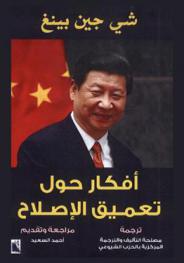
أفكار حول تعميق الإصلاح
يناقش الكتاب سلسلة من الإيضاحات الهامة قدمها الرئيس الصيني والأمين العام للجنة المركزية للحزب الشيوعي الصيني، شي جين بينغ، وتدور حول أفكار الإصلاح وتوسيع الانفتاح على نحو شامل في الصين. يضم الكتاب أكثر من 70 وثيقة هامة على صورة كلمات شي جين بينغ وخطاباته وتعليقاته وتوجيهاته وينقسم الكتاب إلى 12 موضوعا خاصا تتضمن 274 قطعة من مقتطفات الأقوال، نشر بعضها لأول مرة.
Book

Effects of Puerarin on the Prevention and Treatment of Cardiovascular Diseases
Puerarin, an isoflavone glycoside derived from Pueraria lobata (Willd.) Ohwi, has been identified as a pharmacologically active component with diverse benefits. A large number of experimental and clinical studies have demonstrated that puerarin is widely used in the treatment of a variety of diseases. Among them, cardiovascular diseases (CVDs) are the leading cause of death in the world, and therefore remain one of the most prominent global public health concerns. In this review, we systematically analyze the preclinical investigations of puerarin in CVDs, such as atherosclerosis, cardiac hypertrophy, heart failure, diabetic cardiovascular complications, myocardial infarction, stroke and hypertension. In addition, the potential molecular targets of puerarin are also discussed. Furthermore, we summarize the clinical trails of puerarin in the treatment of CVDs. Finally, the therapeutic effects of puerarin derivatives and its drug delivery systems are overviewed.
Journal Article
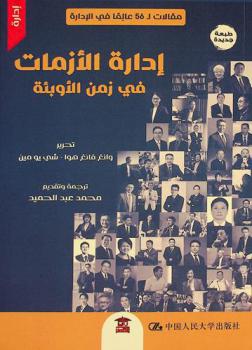
إدارة الأزمات في زمن الأوبئة : مقالات لـ 56 عالما في الإدارة
يضم هذا الكتاب خلاصة تجارب وعصارة أفكار 56 عالما، هم من أبرز علماء الإدارة في الصين، وقد حملوا على عاتقهم مسؤولية قيادة المؤسسات الصينية لسنوات عديدة، وهو كتاب مرجعي لكل المؤسسات على المستوى العالمي والتي إن حدث لها ضرر في فترات الأزمات أو الأوبئة، فلن يتوقف هذا الضرر عند ملاكها أو المنتفعين منها، بل سيمتد أثره إلى قطاعات عريضة من العمالة، وسيضرب القوة الإنتاجية ولا سيما الصادرات والواردات وغيرها من الموارد. ومن ثم فهم محاربون على الخطوط الأولى، مثلهم مثل الأطباء في أزمة انتشار فيروس كورونا المستجد، وإن كان مجال تخصص كل مختلفا منهم عن الآخر، ففريق منهم ينقذ حياة الناس، بينما الفريق الآخر ينقذ أقواتهم. ولغة الكتاب لغة سهلة وبسيطة، تنطلق أفكاره من مواقف عامة وليست من مواقف خاصة محددة، ومن هنا تعد أفكاره صالحة للتطبيق على المؤسسات الصغيرة والمتوسطة في كل مكان، والتي أصبح لزاما عليها أن تلجأ للابتكار والإبداع إن أرادت الاستمرار على قيد الحياة، وبات عليها أن تبحث وسط ركام الأزمة عن الإيجابيات التي يمكن أن تهب لها حياة جديدة وسبلا مبتكرة للخلاص.
Book

Circularly polarized luminescence of agglomerate emitters
Circularly polarized luminescence (CPL) originates from the chiral emissive excited states. CPL materials have promising applications in 3D optical displays, encryptions, biological probes, chiral photoelectric devices, and CPL switches, most of which require excellent CPL performances including bright luminescence and high luminescence dissymmetry factor (glum) in the agglomerate state. This review systematically summarizes the progress about CPL of aggregate and solid materials, such as organic materials, metal‐organic materials (such as coordination polymers, organic‐inorganic metal halides, metal clusters, and cluster‐assembled materials), the assembled materials by supramolecular interactions, and liquid crystals. We also present the current challenges and a future perspective of chiral emitting agglomerate materials. In this review, besides the fundamental principles of circularly polarized luminescence (CPL), CPL measurement methods for solid‐state samples and the recent progress of the diverse agglomerate CPL‐emitters, including organic materials, crystalline metal‐organic materials (coordination polymers, organic–inorganic metal halides, metal clusters, and cluster‐assembled materials), supramolecular ensembles, and liquid crystals are summarized. The opportunities and challenges of CPL‐emitters in agglomerate state are presented.
Journal Article
تاريخ العلاقات بين الصين وعمان
يستعرض هذا الكتاب الجوانب التاريخية والسياسية والثقافية للعلاقات بين الصين وسلطنة عمان، منذ العصور القديمة وحتى العصر الحديث، مع تركيز خاص على التبادل التجاري والبحري الذي ازدهر بين الجانبين عبر طريق الحرير البحري. يبرز الكتاب كيف شكل التواصل الحضاري بين الصين وعمان أحد أقدم النماذج للعلاقات السلمية في التاريخ، حيث ساهم البحارة العمانيون في نقل السلع والثقافات بين الشرق الأقصى والجزيرة العربية. كما يتناول العلاقات الدبلوماسية الحديثة بين البلدين، وتطورها في إطار الشراكات الاقتصادية ومبادرة الحزام والطريق، مؤكدا على الاحترام المتبادل والتعاون المتوازن بين البلدين عبر القرون.
BOOK

Ligand engineering to achieve enhanced ratiometric oxygen sensing in a silver cluster-based metal-organic framework
Ratiometric luminescent oxygen sensing based on dual fluorescence and phosphorescence emission in a single matrix is highly desirable, yet the designed synthesis remains challenging. Silver-chalcogenolate-cluster-based metal-organic frameworks that combine the advantages of silver clusters and metal-organic frameworks have displayed unique luminescent properties. Herein, we rationally introduce −NH
2
groups on the linkers of a silver-chalcogenolate-cluster-based metal-organic framework (Ag
12
bpy-NH
2
) to tune the intersystem crossing, achieving a dual fluorescence-phosphorescence emission from the same linker chromophore. The blue fluorescence component has a 100-nm gap in wavelength and 8,500,000-fold difference in lifetime relative to a yellow phosphorescence component. Ag
12
bpy-NH
2
quantifies oxygen during hypoxia with the limit of detection of as low as 0.1 ppm and 0.3 s response time, which is visualized by the naked eye. Our work shows that metal cluster-based MOFs have great potential in luminescent sensing, and the longer-lived charge-separated states could find more photofunctional applications in solar energy transformation and photocatalysis.
Incorporating dual fluorescence and phosphorescence into a single matrix is attractive for oxygen sensing, but material design is challenging. Here the authors achieve dual fluorescence-phosphorescence from a single linker chromophore in a silver chalcogenolate-cluster-based metal-organic framework.
Journal Article

Genome-wide identification and expression profiling analysis of maize AP2/ERF superfamily genes reveal essential roles in abiotic stress tolerance
Background
As one of the largest transcription factor families in plants, the APETALA2/Ethylene-Responsive Factor (AP2/ERF) superfamily is involved in various biological processes and plays significant roles in plant growth, development and responses to various stresses. Although identification and characterization of AP2/ERF superfamily genes have been accomplished in many plant species, very little is known regarding the structure and function of
AP2/ERF
genes in maize.
Results
In this study, a total of 214 genes encoding ZmAP2/ERF proteins with complete AP2/ERF domain were eventually identified according to the AGPv4 version of the maize B73 genome. Based on the number of AP2/ERF domain and similarities of amino acid sequences among AP2/ERF proteins from
Arabidopsis
, rice and maize, all 214 putative ZmAP2/ERF proteins were categorized into three distinct families, including the AP2 family (44), the ERF family (166) and the RAV family (4), respectively. Among them, the ERF family was further subdivided into two diverse subfamilies, including the DREB and ERF subfamilies with 61 and 105 members, respectively. Further, based on phylogenetic analysis, the members of DREB and ERF subfamilies were subdivided into four (Group I-IV) and eight (Group V-XII) groups, respectively. The characteristics of exon-intron structure of these putative
ZmAP2/ERF
genes and conserved protein motifs of their encoded ZmAP2/ERF proteins were also presented respectively, which was in accordance with the results of group classification. Promoter analysis suggested that
ZmAP2/ERF
genes shared many stress- and hormone-related cis-regulatory elements. Gene duplication and synteny analysis revealed that tandem or segmental duplication and purifying selection might play significant roles in evolution and functional differentiation of AP2/ERF superfamily genes among three various gramineous species (maize, rice and sorghum). Using RNA-seq data, transcriptome analysis indicated that the majority of
ZmAP2/ERF
genes displayed differential expression patterns at different developmental stages of maize. In addition, the following analyses of co-expression network among
ZmAP2/ERF
genes and protein protein interaction between ZmAP2 and ZmERF proteins further enabled us to understand the regulatory relationship among members of the AP2/ERF superfamily in maize. Furthermore, by quantitative real-time PCR analysis, twenty-seven selected
ZmAP2/ERF
genes were further confirmed to respond to three different abiotic stresses, suggesting their potential roles in various abiotic stress responses. Collectively, these results revealed that these
ZmAP2/ERF
genes play essential roles in abiotic stress tolerance.
Conclusions
Taken together, the present study will serve to present an important theoretical basis for further exploring the function and regulatory mechanism of
ZmAP2/ERF
genes in the growth, development, and adaptation to abiotic stresses in maize.
Journal Article

Hypersensitive dual-function luminescence switching of a silver-chalcogenolate cluster-based metal–organic framework
Silver(
i
) chalcogenide/chalcogenolate clusters are promising photofunctional materials for sensing, optoelectronics and solar energy harvesting applications. However, their instability and poor room-temperature luminescent quantum yields have hampered more extensive study. Here, we graft such clusters to adaptable bridging ligands, enabling their interconnection and the formation of rigid metal–organic frameworks. By controlling the spatial separation and orientation of the clusters, they then exhibit enhanced stability (over one year) and quantum yield (12.1%). Ultrafast dual-function fluorescence switching (<1 s) is also achieved, with turn-off triggered by O
2
and multicoloured turn-on by volatile organic compounds. Single-crystal X-ray diffraction of the inclusion materials, obtained by single-crystal-to-single-crystal transformation, enables precise determination of the position of the small molecules within the framework, elucidating the switching mechanism. The work enriches the cluster-based metal–organic framework portfolio, bridges the gap between silver chalcogenide/chalcogenolate clusters and metal–organic frameworks, and provides a foundation for further development of functional silver-cluster-based materials.
The properties of discrete species can sometimes be improved by fixing them into extended materials. This strategy has now been applied to silver(
I
) chalcogenide/chalcogenolate clusters, resulting in a metal–organic framework with enhanced stability and fluorescent sensing capabilities. Crystallographic analysis allows precise structural determination of guest binding, which is responsible for both emission turn-off and multicoloured turn-on.
Journal Article

Stepwise Amplification of Circularly Polarized Luminescence in Chiral Metal Cluster Ensembles
Chiral metal‐organic frameworks (MOFs) are usually endowed by chiral linkers and/or guests. The strategy using chiral secondary building units in MOFs for solving the trade‐off of circularly polarized luminescence (CPL)‐active materials, high photoluminescence quantum yields (PLQYs) and high dissymmetry factors (|glum|) has not been demonstrated. This work directionally assembles predesigned chiral silver clusters with ACQ linkers through reticular chemistry. The nanoscale chirality of the cluster transmits through MOF's framework, where the linkers are arranged in a quasi‐parallel manner and are efficiently isolated and rigidified. Consequently, this backbone of chiral cluster‐based MOFs demonstrates superb CPL, high PLQYs of 50.3%, and |glum| of 1.2 × 10⁻². Crystallographic analyses and DFT calculations show the quasi‐parallel arrangement manners of emitting linkers leading to a large angle between the electric and magnetic transition dipole moments, boosting CPL response. As compared, an ion‐pair‐direct assembly without interactions between linkers induces one‐ninth |glum| and one‐sixth PLQY values, further highlighting the merits of directional arrangement in reticular nets. In addition, a prototype CPL switching fabricated by a chiral framework is controlled through alternating ultraviolet and visible light. This work is expected to inspire the development of reticular chemistry for high‐performance chiroptical materials. Chiral transfer and circularly polarized luminescence activity are successfully achieved by assembling ACQ molecules with chiral Ag clusters in chiral silver cluster‐based assembled materials. The chiral reticular self‐assembly exhibits markedly enhanced luminescence efficiency and glum values compared to those of the ion‐pair‐direct assembly through a well‐defined spatial arrangement and highly efficient synergy.
Journal Article

Epidemiological and virological surveillance of influenza viruses in China during 2020–2021
Background
During the coronavirus disease 2019 (COVID-19) pandemic, seasonal influenza activity declined globally and remained below previous seasonal levels, but intensified in China since 2021. Preventive measures to COVID-19 accompanied by different epidemic characteristics of influenza in different regions of the world. To better respond to influenza outbreaks under the COVID-19 pandemic, we analyzed the epidemiology, antigenic and genetic characteristics, and antiviral susceptibility of influenza viruses in the mainland of China during 2020–2021.
Methods
Respiratory specimens from influenza like illness cases were collected by sentinel hospitals and sent to network laboratories in Chinese National Influenza Surveillance Network. Antigenic mutation analysis of influenza virus isolates was performed by hemagglutination inhibition assay. Next-generation sequencing was used for genetic analyses. We also conducted molecular characterization and phylogenetic analysis of circulating influenza viruses. Viruses were tested for resistance to antiviral medications using phenotypic and/or sequence-based methods.
Results
In the mainland of China, influenza activity recovered in 2021 compared with that in 2020 and intensified during the traditional influenza winter season, but it did not exceed the peak in previous years. Almost all viruses isolated during the study period were of the B/Victoria lineage and were characterized by genetic diversity, with the subgroup 1A.3a.2 viruses currently predominated. 37.8% viruses tested were antigenically similar to reference viruses representing the components of the vaccine for the 2020–2021 and 2021–2022 Northern Hemisphere influenza seasons. In addition, China has a unique subgroup of 1A.3a.1 viruses. All viruses tested were sensitive to neuraminidase inhibitors and endonuclease inhibitors, except two B/Victoria lineage viruses identified to have reduced sensitivity to neuraminidase inhibitors.
Conclusions
Influenza activity increased in the mainland of China in 2021, and caused flu season in the winter of 2021–2022. Although the diversity of influenza (sub)type decreases, B/Victoria lineage viruses show increased genetic and antigenic diversity. The world needs to be fully prepared for the co-epidemic of influenza and severe acute respiratory syndrome coronavirus 2 (SARS-CoV-2) virus globally.
Journal Article