
Catalogue Search | MBRL


Are you sure you want to remove the book from the shelf?

{{itemTitle}}
7,734
result(s) for
"Yao, Qi"
Sort by:


Lamella-nanostructured eutectic zinc–aluminum alloys as reversible and dendrite-free anodes for aqueous rechargeable batteries
Metallic zinc is an attractive anode material for aqueous rechargeable batteries because of its high theoretical capacity and low cost. However, state-of-the-art zinc anodes suffer from low coulombic efficiency and severe dendrite growth during stripping/plating processes, hampering their practical applications. Here we show that eutectic-composition alloying of zinc and aluminum as an effective strategy substantially tackles these irreversibility issues by making use of their lamellar structure, composed of alternating zinc and aluminum nanolamellas. The lamellar nanostructure not only promotes zinc stripping from precursor eutectic Zn
88
Al
12
(at%) alloys, but produces core/shell aluminum/aluminum sesquioxide interlamellar nanopatterns in situ to in turn guide subsequent growth of zinc, enabling dendrite-free zinc stripping/plating for more than 2000 h in oxygen-absent aqueous electrolyte. These outstanding electrochemical properties enlist zinc-ion batteries constructed with Zn
88
Al
12
alloy anode and K
x
MnO
2
cathode to deliver high-density energy at high levels of electrical power and retain 100% capacity after 200 hours.
Aqueous rechargeable Zn-ion batteries are attractive energy storage devices, but their wide adoption is impeded by the irreversible metallic Zn anode. Here the authors report lamellar-nanostructured eutectic Zn/Al alloys as reversible and dendrite-free anodes for improved battery performance.
Journal Article


Sepsis-associated encephalopathy: a vicious cycle of immunosuppression
Sepsis-associated encephalopathy (SAE) is commonly complicated by septic conditions, and is responsible for increased mortality and poor outcomes in septic patients. Uncontrolled neuroinflammation and ischemic injury are major contributors to brain dysfunction, which arises from intractable immune malfunction and the collapse of neuroendocrine immune networks, such as the cholinergic anti-inflammatory pathway, hypothalamic-pituitary-adrenal axis, and sympathetic nervous system. Dysfunction in these neuromodulatory mechanisms compromised by SAE jeopardizes systemic immune responses, including those of neutrophils, macrophages/monocytes, dendritic cells, and T lymphocytes, which ultimately results in a vicious cycle between brain injury and a progressively aberrant immune response. Deep insight into the crosstalk between SAE and peripheral immunity is of great importance in extending the knowledge of the pathogenesis and development of sepsis-induced immunosuppression, as well as in exploring its effective remedies.
Journal Article

سرقة فاكهة الجينسنغ
في بداية العالم عم الظلام الكون في الفترة التي سميت بـ «الفوضى الأزلية». وبعد مرور 5400 عام، طارت المواد الخفيفة إلى السماء وتحولت إلى الشمس والقمر والنجوم والأجرام الفلكية، وبعد 5400 عام أخرى تجمدت المواد الثقيلة وكونت المياه والنار والجبال والصخور والتربة، وبمرور 5400 عام أخرى وجدت الحياة على الأرض وانقسم العالم إلى أربع قارات الشرقية والغربية والجنوبية والشمالية، وفي القارة الشرقية كان هناك جبل يسمى جبل الأزهار والثمار على قمته صخرة خالدة، تعرضت الصخرة لضوء الشمس والقمر فاكتسبت قدرات خارقة، إلى أن انفجرت وجلبت الفوضى للعالم. وبعد أكثر من 500 كلف راهب من القارة الجنوبية بإحضار الكتب المقدسة من القارة عام الغربية للقضاء على الكوارث والآلام في العالم، ولم تنجح رحلته إلا بعد أن مر بعقبات بلغ عددها 81 عقبة. وترتبط هذه الأسطورة ارتباطا وثيقا بشخصية «القرد» الذي تجرأ وأعلن تمرده على السماء والأرض.
Book

Improving Agricultural Product Traceability Using Blockchain
Most traditional agricultural traceability systems are centralized, which could result in the low reliability of traceability results, enterprise privacy data leakage vulnerabilities, and the generation of information islands. To solve the above problems, we propose a trusted agricultural product traceability system based on the Ethereum blockchain in this paper. We designed a dual storage model of “Blockchain+IPFS (InterPlanetary File System)” to reduce the storage pressure of the blockchain and realize efficient information queries. Additionally, we propose a data privacy protection solution based on some cryptographic primitives and the Merkle Tree that can avoid enterprise privacy and sensitive data leakage. Furthermore, we implemented the proposed system using the Ethereum blockchain platform and provided the cost, performance, and security analysis, as well as compared it with the existing solutions. The results showed that the proposed system is both efficient and feasible and can meet the practical application requirements.
Journal Article
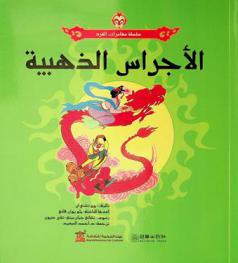
الأجراس الذهبية
في قرية فاولا وتشوانغ أراد السيد قاو العثور على زوج لابنته الصغرى ولكن الأمر انتهى به الشيطان الخنزير ودعا السيد قاو الكثيرين لإخضاع الشيطان لكنهم فشلوا. وعندما سمع سان تسائخ والقرد أثناء رحلتهما إلى الغرب أن هناك شيطانا في القرية، تطوع الفرد للمساعدة، والتقى بالشيطان الخنزير وحاربه ولحق به إلى كيفه. أدرك الشيطان الخنزير أن سان تسانغ والقرد في رحلة لإحضار الكتب المقدسة، فأخبر القرد أنه كان ينتظرهما بعدما تلقى تعليمات من قوان بن. لكن القرد لم يصدقه فطلب منه أن يحرق كهفه ثم سيأخذه لمقابلة سان تسانغ فك سان تسانغ وثاق الشيطان الخنزير واتخذه تلميذا ثانيا له. واتضح أن الشيطان الخنزير كان قائدا في السماء ولكنه نفي إلى العالم الأرضي لسوء سلوكه، ومنحته قوان بن اسم وو ننغ ثم منحه سان تسانغ اسم \"با جیه\".
Book

Sestrin2 protects dendrite cells against ferroptosis induced by sepsis
Ferroptosis is a nonapoptotic form of programmed cell death triggered by the accumulation of reactive oxygen species (ROS) depended on iron overload. Although most investigations focus on the relationship between ferroptosis and cancer, neurodegenerative diseases, and ischemia/reperfusion injury, research on ferroptosis induced by immune-related inflammatory diseases, especially sepsis, is scarce. Sestrin2 (Sesn2), a highly evolutionary and stress-responsive protein, is critically involved in defense against oxidative stress challenges. Upregulated expression of Sesn2 has been observed in preliminary experiments to have an antioxidative function in the context of an inflammatory response. Nevertheless, the underlying function of Sesn2 in inflammation-mediated ferroptosis in the immune system remains uncertain. The current study aimed to demonstrate the protective effect of Sesn2 on ferroptosis and even correlations with ferroptosis and the functions of ferroptotic-dendritic cells (DCs) stimulated with lipopolysaccharide (LPS). The mechanism underlying DCs protection from LPS-induced ferroptosis by Sesn2 was further explored in this study. We found that the immune response of DCs assessed by co-stimulatory phenotypes was gradually enhanced at the peak time of 12 h upon 1 μg/ml LPS stimulation while ferroptosis in DCs treated with LPS at 24 h was significantly detected. LPS-induced ferroptosis showed a suppressive impact on DCs in phenotypic maturation, which was conversely relieved by the ferroptotic inhibitor. Compared with wild-type (WT) mice, DCs in genetic defective mice of Sesn2 (Sesn2
−/−
) exhibited exacerbated ferroptosis. Furthermore, the protective effect of Sesn2 on ferroptosis was noticed to be associated with the ATF4-CHOP-CHAC1 pathway, eventually exacerbating ferroptosis by degrading of glutathione. These results indicate that Sesn2 can suppress the ferroptosis of DCs in sepsis by downregulating the ATF4-CHOP-CHAC1 signaling pathway, and it might play an antioxidative role.
Journal Article


Ferritinophagy: A novel insight into the double‐edged sword in ferritinophagy–ferroptosis axis and human diseases
Nuclear receptor coactive 4 (NCOA4), which functions as a selective cargo receptor, is a critical regulator of the particularly autophagic degradation of ferritin, a process known as ferritinophagy. Mechanistically, NCOA4‐mediated ferritinophagy performs an increasingly vital role in the maintenance of intracellular iron homeostasis by promoting ferritin transport and iron release as needed. Ferritinophagy is not only involved in iron‐dependent responses but also in the pathogenesis and progression of various human diseases, including metabolism‐related, neurodegenerative, cardiovascular and infectious diseases. Therefore, ferritinophagy is of great importance in maintaining cell viability and function and represents a potential therapeutic target. Recent studies indicated that ferritinophagy regulates the signalling pathway associated with ferroptosis, a newly discovered type of cell death characterised by iron‐dependent lipid peroxidation. Although accumulating evidence clearly demonstrates the importance of the interplay between dysfunction in iron metabolism and ferroptosis, a deeper understanding of the double‐edged sword effect of ferritinophagy in ferroptosis has remained elusive. Details of the mechanisms underlying the ferritinophagy–ferroptosis axis in regulating relevant human diseases remain to be elucidated. In this review, we discuss the latest research findings regarding the mechanisms that regulate the biological function of NCOA4‐mediated ferritinophagy and its contribution to the pathophysiology of ferroptosis. The important role of the ferritinophagy–ferroptosis axis in human diseases will be discussed in detail, highlighting the great potential of targeting ferritinophagy in the treatment of diseases. Nuclear receptor coactive 4 (NCOA4), served as a selective cargo receptor, is critically responsible for the mediation of autophagic degradation of ferritin that is defined as ferrinnophagy. Mechanically, NCOA4‐mediated ferritinophagy is considered as a pre‐requisite for maintenance of intracellular iron homeostasis by promoting ferritin transport and iron release in accordance with requirements. Therefore, ferritinophagy is of great importance in safeguarding the viability and functionality of cells, and might be a potential therapeutic target for various diseases. In this review, we conclude the latest research findings and regulated mechanisms covering the biological function of NCOA4‐mediated ferritinophagy and its contribution to the pathophysiology of ferroptosis. Moreover, the pivotal role of ferritinophagy–ferroptosis axis in human diseases will be discussed in details, proposing to attract attention on the great potential of ferritinophagy in the treatment of various diseases.
Journal Article