
Catalogue Search | MBRL


Are you sure you want to remove the book from the shelf?

{{itemTitle}}
13,963
result(s) for
"Yao, Yan"
Sort by:

Age–period–cohort analysis of pulmonary tuberculosis reported incidence, China, 2006–2020
Background
Tuberculosis (TB) poses a severe public health challenge in China and worldwide. This study evaluated the effects of age, period, and birth cohort on reported incidence trends of TB based on population and refined the characteristics of high-risk groups.
Methods
Aggregate data that reported pulmonary tuberculosis (PTB) cases from China Tuberculosis Management Information System (TBIMS) from 2006 to 2020 were used to analyze effect coefficients through the age–period–cohort (APC) model based on intrinsic estimator (IE) method, and converted them into relative risk (
RR
) to estimate trends.
Results
A total of 14.82 million cases of PTB were reported in China from 2006 to 2020, showing a continuous downward trend. The reporting rate increased with age by age group, with 70–74 years old being 2–3 times higher than that in 20–24 years old. APC analysis model showed that age effects were bimodal in 20–24 years old [
RR
= 2.29, 95% confidence interval (
CI
): 1.73–3.03] and 70–74 years old (
RR
= 1.95, 95%
CI:
1.67–2.27), and lower than the overall average in the groups under 15 years old. Stratified results showed that the risk was higher for women under age 40 than men and higher for men over 40. The risk was higher in urban than in rural areas under 30 years old and slightly higher in rural than in urban between 30 and 64 years old. The risk for 15–34 years old was significantly higher in the east than in other regions. The period effects showed a decreasing trend, and the risk was higher in rural in recent years. Except for cohorts born in 1961–1965 and 2001–2005, where the
RR
increased, the later the cohort was born, the lower the risk. The cohort 1926–1930 in eastern had the highest risk (
RR
= 3.49, 95%
CI:
2.44–4.98).
Conclusions
The reported incidence of PTB continued to decline in China from 2006 to 2020. The young (20–24 years old) and the elderly (70–74 years old) were equally at high risk. There were differences in the age, period and cohort effects on PTB incidence among gender, urban–rural and regions. Our findings better reflected the characteristics of high-risk populations, thus contributing to the development of timely and effective intervention strategies, and providing clues for etiological research.
Graphical abstract
Journal Article


DPPA2/4 and SUMO E3 ligase PIAS4 opposingly regulate zygotic transcriptional program
The molecular mechanism controlling the zygotic genome activation (ZGA) in mammals remains poorly understood. The 2-cell (2C)-like cells spontaneously emerging from cultures of mouse embryonic stem cells (ESCs) share some key transcriptional and epigenetic programs with 2C-stage embryos. By studying the transition of ESCs into 2C-like cells, we identified developmental pluripotency associated 2 and 4 (Dppa2/4) as important regulators controlling zygotic transcriptional program through directly up-regulating the expression of double homeobox (Dux). In addition, we found that DPPA2 protein is sumoylated and its activity is negatively regulated by small ubiquitin-like modifier (Sumo) E3 ligase protein inhibitor of activated STAT 4 (PIAS4). PIAS4 is down-regulated during ZGA process and during transitioning of ESCs into 2C-like cells. Depleting Pias4 or overexpressing Dppa2/4 is sufficient to activate 2C-like transcriptional program, whereas depleting Dppa2/4 or forced expression of Pias4 or Sumo2-Dppa2 inhibits 2C-like transcriptional program. Furthermore, ectopic expression of Pias4 or Sumo2-Dppa2 impairs early mouse embryo development. In summary, our study identifies key molecular rivals consisting of transcription factors and a Sumo2 E3 ligase that regulate zygotic transcriptional program upstream of Dux.
Journal Article
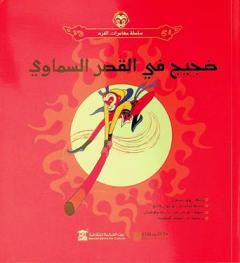
ضجيج في القصر السماوي
طلب الإمبراطور اليشمي من الحكيم الأكبر أن يساعده في إخضاع القرد وترويضه بعد أن أحدث الفوضى في القصر السماوي، أقام الحكيم الأكبر جبل العناصر الخمسة وسجن القرد تحته. وبعد خمسة قرون، كلف الإمبراطور تاي تسونغ من أسرة تانغ الراهب المشهور سان تسانغ، بجلب الكتب المقدسة من الفردوس الغربي. وأثناء رحلته إلى الغرب، أنقذ سان تسانغ القرد وحرره من سجنه، وبعد أن أنارت روح الخير قوان بن القرد، تحلى بالإيمان وصار تلميذا لسان تسانغ ورافقه في رحلته لحراسته في الطريق، وخلال رحلتهما هاجمهما قطاع طرق أرادوا سرقتهما، فضربهم القرد بعصاه الحديدية وقتلهم جميعا وأخذ أغراضهم، فوبخه سان ،تسانغ فاستشاط القرد غضبا لأنه لا يتحمل أن يوبخه أحد، وترك سان تسانغ وذهب لقصر الملك التنين في البحر الشرقي، لكن بعد أن نصحه الملك التنين عاد القرد مرة أخرى إلى معلمه سان تسانغ، وللسيطرة على القرد طلبت قوان ين من سان تسانغ أن يضع طوقا ذهبيا على رأس القرد، ويتلو تعويذة تضييق الطوق لمعاقبته إذا عصى الأوامر. وبالفعل بعد أن عاد القرد مرة أخرى ووضع القبعة على رأسه، وتلا المعلم التعويذة، فتلوى القرد ألما وتعهد أن يحسن التصرف ويطيع الأوامر. روضت قوان بن أيضا تنينا أبيض وحولته إلى حصان ليحمل سان تسانغ في رحلته.
Book

Infection with novel coronavirus (SARS-CoV-2) causes pneumonia in Rhesus macaques
The 2019 novel coronavirus (SARS-CoV-2) outbreak is a major challenge for public health. SARS-CoV-2 infection in human has a broad clinical spectrum ranging from mild to severe cases, with a mortality rate of ~6.4% worldwide (based on World Health Organization daily situation report). However, the dynamics of viral infection, replication and shedding are poorly understood. Here, we show that
Rhesus macaques
are susceptible to the infection by SARS-CoV-2. After intratracheal inoculation, the first peak of viral RNA was observed in oropharyngeal swabs one day post infection (1 d.p.i.), mainly from the input of the inoculation, while the second peak occurred at 5 d.p.i., which reflected on-site replication in the respiratory tract. Histopathological observation shows that SARS-CoV-2 infection can cause interstitial pneumonia in animals, characterized by hyperemia and edema, and infiltration of monocytes and lymphocytes in alveoli. We also identified SARS-CoV-2 RNA in respiratory tract tissues, including trachea, bronchus and lung; and viruses were also re-isolated from oropharyngeal swabs, bronchus and lung, respectively. Furthermore, we demonstrated that neutralizing antibodies generated from the primary infection could protect the
Rhesus macaques
from a second-round challenge by SARS-CoV-2. The non-human primate model that we established here provides a valuable platform to study SARS-CoV-2 pathogenesis and to evaluate candidate vaccines and therapeutics.
Journal Article


Negative association of C-reactive protein-albumin-lymphocyte index (CALLY index) with all-cause and cause-specific mortality in patients with cancer: results from NHANES 1999–2018
Background
The CALLY index, which is derived from C-reactive protein (CRP) content, serum albumin level, and total lymphocyte count, reflects the immune, nutritional, and inflammatory status of the body. Lack of sufficient evidence on the correlation between the CALLY index and the prognosis of cancer patients with various cancer forms. This study seeks to elucidate the association between the CALLY index and mortality from all causes as well as specific causes in cancer patients within a U.S. population.
Methods
This investigation encompassed 3511 cancer-afflicted adults from the National Health and Nutritional Examination Surveys (NHANES) spanning 1999 to 2018. The CALLY index was measured at baseline only. The relationship between the CALLY index and mortality from both all causes and cancer specifically was examined using Cox proportional hazards models. Additionally, restricted cubic spline, piecewise linear regression, and various subgroup and sensitivity analyses were employed.
Results
Over a median follow-up of 103 months, 1,355 deaths occurred, and the incidence of all-cause mortality for these participants was 38.34%. Our findings indicate that an elevated CALLY index correlates with a diminished risk of all-cause mortality. Upon applying a natural logarithmic transformation to the CALLY index, the comprehensively adjusted model revealed that each one-unit increment in ln CALLY corresponded to a 18% decrease in all-cause mortality risk among cancer patients (HR = 0.82, 95% CI:0.79–0.86). Analyses of mortality due to cardiac and cancer-related causes yielded consistent results, which were robust across various subgroup and sensitivity analyses.
Conclusion
The CALLY index demonstrated a linear and negative association with all-cause mortality, as well as mortality caused by cancer and cardiac conditions, highlighting its significant prognostic value in patients with oncological conditions.
Journal Article
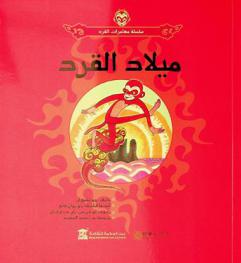
ميلاد القرد
ذهب سان تسانغ وتلاميذه إلى جبل شيتوه، وتنكر الوزير جين شينغ في هيئة رجل مسن وحذرهم من الشياطين الثلاثة، فذهب وو كونغ يتقصى الأمر، ودعا با جبه ليذهبا للقتال فابتلعهما الشيطان الأسد، انتهز القرد وو كونغ الفرصة لربط حبل في بطن الوحش الذي تألم كثيرا. لم يرض الشيطان الفيل والأمر، وطلب من القرد القتال وهزم أيضا، فاضطر للموافقة على عبور الراهب سان تسانغ الجبل على محفة فكر الشيطان النسر في خطة جديدة، ودارت معاركة كبيرة، أسر فيها المعلم وتلاميذه. لكن القرد استطاع الهرب، وذهب إلى جبل الأرواح لدعوة الحكيم الأكبر. وبمساعدته نجحوا في إخضاع الشيطان الأسد والشيطان الفيل وحولوهما إلى أسد وفيل، ثم أخضعوا الشيطان النسر وواصلوا رحلتهم إلى الغرب.
Book
Atrial fibrillation: mechanism and clinical management
Abstract
Atrial fibrillation (AF), the most common sustained arrhythmia, is associated with a range of symptoms, including palpitations, cognitive impairment, systemic embolism, and increased mortality. It places a significant burden on healthcare systems worldwide. Despite decades of research, the precise mechanisms underlying AF remain elusive. Current understanding suggests that factors like stretch-induced fibrosis, epicardial adipose tissue (EAT), chronic inflammation, autonomic nervous system (ANS) imbalances, and genetic mutations all play significant roles in its development. In recent years, the advent of wearable devices has revolutionized AF diagnosis, enabling timely detection and monitoring. However, balancing early diagnosis with efficient resource utilization presents new challenges for healthcare providers. AF management primarily focuses on stroke prevention and symptom alleviation. Patients at high risk of thromboembolism require anticoagulation therapy, and emerging pipeline drugs, particularly factor XI inhibitors, hold promise for achieving effective anticoagulation with reduced bleeding risks. The scope of indications for catheter ablation in AF has expanded significantly. Pulsed field ablation, as a novel energy source, shows potential for improving success rates while ensuring safety. This review integrates existing knowledge and ongoing research on AF pathophysiology and clinical management, with emphasis on diagnostic devices, next-generation anticoagulants, drugs targeting underlying mechanisms, and interventional therapies. It offers a comprehensive mosaic of AF, providing insights into its complexities.
Journal Article