
Catalogue Search | MBRL


Are you sure you want to remove the book from the shelf?

{{itemTitle}}
5
result(s) for
"Young, Alison, author"
Sort by:

Street art world
Street art and graffiti are a familiar sight in cities around the world. Neighbourhoods painted with murals are popular with tourists and tagged walls become backdrops for fashion shoots and music videos. Banksy is a global celebrity whose work sells for astonishing prices. Millions of photographs of street art are saved on smartphones, uploaded to social media and displayed on t-shirts and other merchandise. But are street art and graffiti the same thing, or do they have different histories, meanings and practitioners? Who makes street art? Who buys it? Can it be exhibited in a gallery or must it be located on the street? Why have museums started collecting street art? Is there a commercial market for street art? And will it even exist in the future? This strikingly illustrated book explores every aspect of street art, from making and photographing it to stealing and selling it. Artists working in the streets reveal both their passion for street art and ambivalence about its commodification. The rise, fall and rise again of street art in the art market is told through revealing encounters with collectors and auction houses in Paris, London, Melbourne and beyond.0Based on twenty years of research in the graffiti and street art scenes, Street Art World is the first book to provide a history and context for the words and images that appear in cities all around the world. Inviting the reader into a realm that is usually hidden, it will enthral all those who enjoy this global phenomenon.
Book
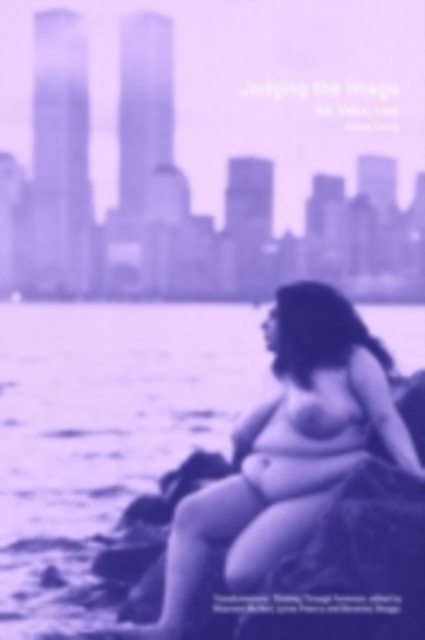
Judging the Image
Art, value, law - the links between these three terms mark a history of struggle in the cultural scene. Studies of contemporary culture have thus increasingly turned to the image as central to the production of legitimacy, aesthetics and order. Judging the Image extends the cultural turn in legal and criminological studies by interrogating our responses to the image. This book provides a space to think through problems of ethics, social authority and the legal imagination. Concepts of memory and interpretation, violence and aesthetic, authority and legitimacy are considered in a diverse range of sites, including:* body, performance and regulation * judgment, censorship and controversial artworks* graffiti and the aesthetics of public space* HIV and the art of the disappearing body* witnessing, ethics and the performance of suffering* memorial images - art in the wake of disaster.
eBook
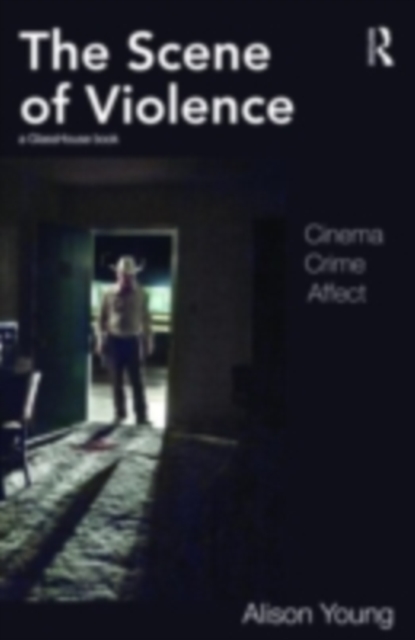
The Scene of Violence
In the contemporary fascination with images of crime, violence gets under our skin and keeps us enthralled. The Scene of Violence explores the spectator’s encounter with the cinematic scene of violence – rape and revenge, homicide and serial killing, torture and terrorism. Providing a detailed reading of both classical and contemporary films – for example, Kill Bill, Blue Velvet, Reservoir Dogs, The Matrix, Psycho, The Accused, Elephant, Seven, Thelma & Louise, United 93, Zodiac, and No Country for Old Men – Alison Young returns the affective processes of the cinematic image to the study of law, crime and violence. Engaging with legal theory, cultural criminology and film studies, the book unfolds both our attachment to the authority of law and our identification with the illicit. Its original contribution is to bring together the cultural fascination of crime with a nuanced account of what it means to watch cinema. The Scene of Violence shows how the spectator is bound by the laws of film to the judgment of the crime-image.
'Alison Young may be the best law and film scholar in the world. Her insight and eminence in the field are amply on display in The Scene of Violence . Here Young draws our attention to what she calls \"the spectatorial relation engendered by film.\" No one who watches a film will ever watch it the same way after reading this book. No one who has ever thought about the relationship of law, violence and film will ever think about them the same way after reading this book. The Scene of Violence will be an instant classic.' – Austin Sarat, William Nelson Cromwell Professor of Jurisprudence and Political Science at Amherst College
1. The Crime-Image 2. Judging the Affect of Screen Violence 3. \"Don’t You Fucking Look At Me\": Sexual Injury, Vision and Cinematic Revenge 4. The Serial Killer’s Accomplice 5. The Cinema of Disaster: Screening 9/11 6. No End to Violence?
eBook

Parliamentary Sovereignty and the Human Rights Act
The Human Rights Act 1998 is criticised for providing a weak protection of human rights. The principle of parliamentary legislative supremacy prevents entrenchment, meaning that courts cannot overturn legislation passed after the Act that contradicts Convention rights. This book investigates this assumption, arguing that the principle of parliamentary legislative supremacy is sufficiently flexible to enable a stronger protection of human rights, which can replicate the effect of entrenchment. Nevertheless, it is argued that the current protection should not be strengthened. If correctly interpreted, the Human Rights Act can facilitate democratic dialogue that enables courts to perform their proper correcting function to protect rights from abuse, whilst enabling the legislature to authoritatively determine contestable issues surrounding the extent to which human rights should be protected alongside other rights, interests and goals of a particular society. This understanding of the Human Rights Act also provides a different justification for the preservation of Dicey's conception of parliamentary sovereignty in the UK Constitution.
eBook
Focus on Phonological Acquisition
The publication of this edited volume comes at a time when interest in the acquisition of phonology by both children learning a first language and adults learning a second is starting to swell. The ten contributions, from established scholars and relative newcomers alike, provide a comprehensive demonstration of the progress being made in the field through the theory-based analysis of both spontaneous and experimental acquisition data involving a number of first and second languages including English, French, German, Korean, Polish and Spanish. Aimed at those active in phonology and its acquisition, yet written to be accessible to the non-specialist as well, the volume carefully lays out the various theoretical frameworks in which the authors work such as Feature Geometry, Lexical Phonology, Non-Linear Phonology, Prosodic Phonology, and Optimality Theory.
eBook