
Catalogue Search | MBRL


Are you sure you want to remove the book from the shelf?

{{itemTitle}}
49,820
result(s) for
"Yu, J"
Sort by:


Cryo-EM structure of an activated GPCR–G protein complex in lipid nanodiscs
G-protein-coupled receptors (GPCRs) are the largest superfamily of transmembrane proteins and the targets of over 30% of currently marketed pharmaceuticals. Although several structures have been solved for GPCR–G protein complexes, few are in a lipid membrane environment. Here, we report cryo-EM structures of complexes of neurotensin, neurotensin receptor 1 and Gα
i1
β
1
γ
1
in two conformational states, resolved to resolutions of 4.1 and 4.2 Å. The structures, determined in a lipid bilayer without any stabilizing antibodies or nanobodies, reveal an extended network of protein–protein interactions at the GPCR–G protein interface as compared to structures obtained in detergent micelles. The findings show that the lipid membrane modulates the structure and dynamics of complex formation and provide a molecular explanation for the stronger interaction between GPCRs and G proteins in lipid bilayers. We propose an allosteric mechanism for GDP release, providing new insights into the activation of G proteins for downstream signaling.
Structures of GPCR neurotensin receptor 1 (NTSR1) in complex with neurotensin and Gα
i1
β
1
γ
1
in a lipid bilayer environment and without stabilizing antibodies reveal extensive interactions at the GPCR–G protein interface.
Journal Article


Engineered T Cell Therapy for Cancer in the Clinic
T cells play a key role in cell-mediated immunity, and strategies to genetically modify T cells, including chimeric antigen receptor (CAR) T cell therapy and T cell receptor (TCR) T cell therapy, have achieved substantial advances in the treatment of malignant tumors. In clinical trials, CAR-T cell and TCR-T cell therapies have produced encouraging clinical outcomes, thereby demonstrating their therapeutic potential in mitigating tumor development. This article summarizes the current applications of CAR-T cell and TCR-T cell therapies in clinical trials worldwide. It is predicted that genetically engineered T cell immunotherapies will become safe, well-tolerated, and effective therapeutics and bring hope to cancer patients.
Journal Article

Adoptive Cell Therapy Targeting Neoantigens: A Frontier for Cancer Research
Adoptive cell therapy (ACT) is a kind of immunotherapy in which T cells are genetically modified to express a chimeric antigen receptor (CAR) or T cell receptor (TCR), and ACT has made a great difference in treating multiple types of tumors. ACT is not perfect, and it can be followed by severe side effects, which hampers the application of ACT in clinical trials. One of the most promising methods to minimize side effects is to endow adoptive T cells with the ability to target neoantigens, which are specific to tumor cells. With the development of antigen screening technologies, more methods can be applied to discover neoantigens in cancer cells, such as whole-exome sequencing combined with mass spectrometry, neoantigen screening through an inventory-shared neoantigen peptide library, and neoantigen discovery via trogocytosis. In this review, we focus on the side effects of existing antigens and their solutions, illustrate the strategies of finding neoantigens in CAR-T and TCR-T therapies through methods reported by other researchers, and summarize the clinical behavior of these neoantigens.
Journal Article
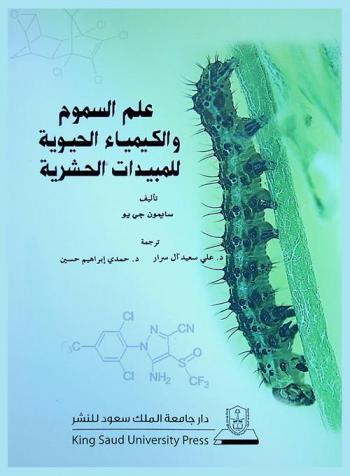
علم السموم والكيمياء الحيوية للمبيدات الحشرية
يتناول هذا الكتاب مباشرة سمية المبيدات الحشرية ضد الحشرات بصورة مركزة من ناحية مجاميع المبيدات الحشرية وطرق تأثيرها واختيارية العديد من هذه المبيدات ضد الآفات المستهدفة وعدم سميتها لبعض الأعداء الحيوية المهمة وأسباب هذه الاختيارية وكيفية استغلال ذلك في برامج المكافحة المتكاملة للحفاظ على الأعداء الحيوية. ويوضح الكتاب أيضا الأسس الكيموحيوية لتأثير العديد من المبيدات على الآفات وعدم سميتها للثدييات. وتناول الكتاب أيضا العديد من المبيدات التي لها تأثيرات ضارة على الأعداء الحيوية لتجنب استخدامها في البيئات التي توجد فيها هذه الكائنات النافعة. كما يذكر الكتاب بعض النباتات المقاومة للحشرات والمواد التي تفرزها للدفاع عن نفسها ضد هذه الحشرات. ويضم الكتاب فكرة عن القوانين المنظمة للمبيدات وصور تجهيزاتها ومقاومة الآفات لها وأيضا مصير المبيدات في البيئة وتمثيلها في الحشرات وطرق تقسيم المبيدات الحشرية، والمجاميع الحديثة للمبيدات الحشرية والأكاروسية واستعمالاتها.
BOOK

PUMA, a potent killer with or without p53
PUMA (
p
53
u
pregulated
m
odulator of
a
poptosis) is a Bcl-2 homology 3 (BH3)-only Bcl-2 family member and a critical mediator of p53-dependent and -independent apoptosis induced by a wide variety of stimuli, including genotoxic stress, deregulated oncogene expression, toxins, altered redox status, growth factor/cytokine withdrawal and infection. It serves as a proximal signaling molecule whose expression is regulated by transcription factors in response to these stimuli. PUMA transduces death signals primarily to the mitochondria, where it acts indirectly on the Bcl-2 family members Bax and/or Bak by relieving the inhibition imposed by antiapoptotic members. It directly binds and antagonizes all known antiapoptotic Bcl-2 family members to induce mitochondrial dysfunction and caspase activation. PUMA ablation or inhibition leads to apoptosis deficiency underlying increased risks for cancer development and therapeutic resistance. Although elevated PUMA expression elicits profound chemo- and radiosensitization in cancer cells, inhibition of PUMA expression may be useful for curbing excessive cell death associated with tissue injury and degenerative diseases. Therefore, PUMA is a general sensor of cell death stimuli and a promising drug target for cancer therapy and tissue damage.
Journal Article


Multivalent counterions diminish the lubricity of polyelectrolyte brushes
Polyelectrolyte brushes consist of charged polymer chains attached to a common backbone or surface. They provide excellent lubrication between two surfaces for both engineered and physiological materials. The packing of the brushes is sensitive to pH, temperature, or added salts. Yu et al. show that the presence of multivalent ions can cause brush collapse, similarly to monovalent ions (see the Perspective by Ballauff). Critically—and not observed with the addition of monovalent ions—very low concentrations of multivalent ions cause bridging between the brushes and increase friction between the surfaces to the extent that their value for biomedical devices is limited. Science , this issue p. 1434 ; see also p. 1399 Low concentrations of multivalent ions dramatically increase the friction between polymer brushes. Polyelectrolyte brushes provide wear protection and lubrication in many technical, medical, physiological, and biological applications. Wear resistance and low friction are attributed to counterion osmotic pressure and the hydration layer surrounding the charged polymer segments. However, the presence of multivalent counterions in solution can strongly affect the interchain interactions and structural properties of brush layers. We evaluated the lubrication properties of polystyrene sulfonate brush layers sliding against each other in aqueous solutions containing increasing concentrations of counterions. The presence of multivalent ions (Y 3+ , Ca 2+ , Ba 2+ ), even at minute concentrations, markedly increases the friction forces between brush layers owing to electrostatic bridging and brush collapse. Our results suggest that the lubricating properties of polyelectrolyte brushes in multivalent solution are hindered relative to those in monovalent solution.
Journal Article