
Catalogue Search | MBRL


Are you sure you want to remove the book from the shelf?

{{itemTitle}}
24,777
result(s) for
"Yu, Sheng"
Sort by:


Gut microbiota related steroid hormone biosynthesis provide novel insights into high-salt diet related renal injury vit gut-kidney axis
High-salt diet (HSD) is a major risk factor for renal injury, and gut microbiota may play a role in this process. In this study, we investigated the potential role of gut microbiota in HSD-related renal injury and the microbial mechanisms involved. Through function observation, mechanism screening, and further verification using transcriptomic and metabolomic profiling and bioinformatics, we found that HSD caused renal dysfunction, inflammation, hypoimmunity, and serious renal damage in conventional mice, but this effect was absent in germ-free (GF) mice. Differential gene set enrichment analyses of the gut and kidney identified the steroid hormone biosynthesis pathway as a main culprit. For further verification, differential metabolite set enrichment analyses of feces indicated the involvement of the steroid hormone biosynthesis pathway. Through comprehensive profiling of intestinal and renal tissues along with fecal samples, we detected three genes and two metabolites showing prominent enrichment in the steroid hormone biosynthesis pathway. RT-qPCR suggested that the core gene
Cyp1a1
, which depends on the interplay between HSD and gut microbiota, was inhibited in both the gut and kidney in HSD-related renal injury. Finally, dehydroepiandrosterone decreased the mRNA expression of
Cyp1a1
in the gut and kidney. The data suggest that HSD promotes renal injury by manipulating the gut-kidney axis via gut microbiota and strengthening the steroid hormone biosynthesis pathway. The study expands the current knowledge on the gut microbial control of the gut-kidney axis in HSD-related renal injury, which finally provides novel insights into the therapeutic strategies for preventing or attenuating HSD-related kidney diseases.
Journal Article


The Relationships between Physical Activity and Life Satisfaction and Happiness among Young, Middle-Aged, and Older Adults
Physical activity has benefits on physical and psychological health. The aims of this study were to investigate (1) the relationships between physical activity and life satisfaction and happiness in young, middle-aged, and older adults while controlling for demographic characteristics, and (2) the relationships between age and life satisfaction and happiness for different physical activity levels. A total of 2345 healthy adults were recruited. Demographic characteristic, physical activity, life satisfaction, and happiness were collected. Participants were divided into young, middle-aged, and older adult groups based on age, and physical activity was categorized as high, moderate, and low. After controlling for demographic characteristics, participants with high and moderate activity levels had significantly higher life satisfaction and happiness than those with a low activity level across the total population and the three age groups. Age squared was a significant predictor of a positive curvilinear between age and life satisfaction and happiness. Physical activity was significantly related to life satisfaction and happiness in young, middle-aged, and older adults. In addition, life satisfaction and happiness increased with increasing age. The results support the promotion of physical activity.
Journal Article
المحادثات الأساسية في الصين
يعلمك المحادثات الأساسيةُ في الصين. يوضح العديد من مشاهد الحياة الواقعية في الصين. يساعدك في أن تصبح متحدثا طلقا.

Mouse models of sarcopenia: classification and evaluation
Sarcopenia is a progressive and widespread skeletal muscle disease that is related to an increased possibility of adverse consequences such as falls, fractures, physical disabilities and death, and its risk increases with age. With the deepening of the understanding of sarcopenia, the disease has become a major clinical disease of the elderly and a key challenge of healthy ageing. However, the exact molecular mechanism of this disease is still unclear, and the selection of treatment strategies and the evaluation of its effect are not the same. Most importantly, the early symptoms of this disease are not obvious and are easy to ignore. In addition, the clinical manifestations of each patient are not exactly the same, which makes it difficult to effectively study the progression of sarcopenia. Therefore, it is necessary to develop and use animal models to understand the pathophysiology of sarcopenia and develop therapeutic strategies. This paper reviews the mouse models that can be used in the study of sarcopenia, including ageing models, genetically engineered models, hindlimb suspension models, chemical induction models, denervation models, and immobilization models; analyses their advantages and disadvantages and application scope; and finally summarizes the evaluation of sarcopenia in mouse models.
Journal Article


Towards precision oncology in advanced prostate cancer
Metastatic biopsy programmes combined with advances in genomic sequencing have provided new insights into the molecular landscape of castration-resistant prostate cancer (CRPC), identifying actionable targets, and emerging resistance mechanisms. The detection of DNA repair aberrations, such as mutation of BRCA2, could help select patients for poly(ADP-ribose) polymerase (PARP) inhibitor or platinum chemotherapy, and mismatch repair gene defects and microsatellite instability have been associated with responses to checkpoint inhibitor immunotherapy. Poor prognostic features, such as the presence of RB1 deletion, might help guide future therapeutic strategies. Our understanding of the molecular features of CRPC is now being translated into the clinic in the form of increased molecular testing for use of these agents and for clinical trial eligibility. Genomic testing offers opportunities for improving patient selection for systemic therapies and, ultimately, patient outcomes. However, challenges for precision oncology in advanced prostate cancer still remain, including the contribution of tumour heterogeneity, the timing and potential cooperation of multiple driver gene aberrations, and diverse resistant mechanisms. Defining the optimal use of molecular biomarkers in the clinic, including tissue-based and liquid biopsies, is a rapidly evolving field.
Journal Article
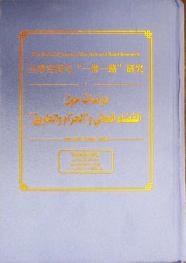
دراسات حول الفضاء العالمي و\الحزام والطريق\ : (مجلد البيئة الإيكولوجية)
إن معظم الدول والمناطق على طول «الحزام والطريق» هي دول نامية، وتعاني جميعا من مشكلات في البيئة الإيكولوجية أكثر أو أقل، كما إنها تواجه تحديات ضخمة في التوازن بين التنمية وحماية البيئة. وتواجه هذه البلدان النامية فرصا غير مسبوقة أتاحها المفهوم الاستراتيجي لمبادرة «الحزام والطريق»، كما أن كيفية التعامل مع التحدي المتمثل في حماية البيئة الإيكولوجية أثناء بناء وتطوير «الحزام والطريق» هي المهمة الأساسية التي تواجهها البلدان النامية بما فيها الصين. ويناقش هذا الكتاب ويلخص الخلفية البيئية الإيكولوجية للبلدان/ المناطق المشاركة في مبادرة \"الحزام والطريق\" والمشكلات الرئيسية في هذا الجانب.
Book

Scaling-up of carbon dots hydrothermal synthesis from sugars in a continuous flow microreactor system for biomedical application as in vitro antimicrobial drug nanocarrier
Carbon dots (CDs) are a new class of nanomaterials exhibiting high biocompatibility, water solubility, functionality, and tunable fluorescence (FL) property. Due to the limitations of batch hydrothermal synthesis in terms of low CDs yield and long synthesis duration, this work aimed to increase its production capacity through a continuous flow reactor system. The influence of temperature and time was first studied in a batch reactor for glucose, xylose, sucrose and table sugar precursors. CDs synthesized from sucrose precursor exhibited the highest quantum yield (QY) (175.48%) and the average diameter less than 10 nm (~6.8 ± 1.1 nm) when synthesized at 220°C for 9 h. For a flow reactor system, the best condition for CDs production from sucrose was 1 mL min−1 flow rate at 280°C, and 0.2 MPa pressure yielding 53.03% QY and ~ 6.5 ± 0.6 nm average diameter (6.6 mg min−1 of CDs productivity). CDs were successfully used as ciprofloxacin (CP) nanocarrier for antimicrobial activity study. The cytotoxicity study showed that no effect of CDs on viability of L-929 fibroblast cells was detected until 1000 µg mL−1 CDs concentration. This finding demonstrates that CDs synthesized via a flow reactor system have a high zeta potential and suitable surface properties for nano-theranostic applications.
Journal Article