
Catalogue Search | MBRL


Are you sure you want to remove the book from the shelf?

{{itemTitle}}
196
result(s) for
"Yu, Ya-Fang"
Sort by:

Efficacy and safety of combined targeted therapy and immunotherapy versus targeted monotherapy in unresectable hepatocellular carcinoma: a systematic review and meta-analysis
Background
Cancer therapy has evolved from non-specific cytotoxic agents to a selective, mechanism-based approach that includes targeted agents and immunotherapy. Although the response to targeted therapies for unresectable hepatocellular carcinoma (HCC) is acceptable with the improved survival, the high tumor recurrence rate and drug-related side effects continue to be problematic. Given that immune checkpoint inhibitor alone are not robust enough to improve survival in unresectable HCC, growing evidence supports the combination of targeted therapy and immunotherapy with synergistic effect.
Methods
Online databases including PubMed, EMBASE, Cochrane Library, and Web of Science were searched for the studies that compared targeted monotherapy with the combination therapy of targeted drug and checkpoint inhibitors in unresectable HCC patients. Eligibility criteria were the presence of at least one measurable lesion as defined by the Response Evaluation Criteria in Solid Tumors (version 1.1) for unresectable HCC patients, an Eastern Cooperative Oncology Group performance status of 0–2, and a Child–Pugh score ≤ 7. Outcome measurements include overall survival (OS), progression-free survival (PFS), and treatment-related adverse event (TRAE).
Results
Three phase II/III randomized controlled trials were included in this study. The pooled results showed that combination therapy significantly improved survival than targeted monotherapy, in terms of OS (hazard ratio (HR) = 0.67; 95% confidence interval [CI]: 0.50–0.91) and PFS (HR = 0.58; 95% CI: 0.51–0.67), respectively. In the incidence of grade 3–5 TRAEs, the combination therapy was significantly higher than targeted monotherapy (odds ratio = 1.98; 95% CI: 1.13–3.48).
Conclusion
For unresectable HCC, combined targeted drug and immunotherapy significantly improved survival compared with targeted monotherapy. However, the incidences of AEs of combinational therapy were higher than targeted monotherapy.
Journal Article

Efficacy and Safety of Hyperbaric Oxygen Therapy for Radiation-Induced Hemorrhagic Cystitis: A Systematic Review and Meta-Analysis
Background: Radiation-induced hemorrhagic cystitis (RHC) is a chronic inflammatory disease in patients undergoing radiation therapy that causes a cluster of symptoms which may have a latent period of months to years. The current non-invasive treatments include drug treatment and hyperbaric oxygen therapy (HBOT), which has been widely applied for RHC so far but with limited evidence. Thus, we conducted a systematic review and meta-analysis to clarify the effects and safety of HBOT for RHC. Methods: A systematic review and meta-analysis were utilized, searching in the databases of Embase, Pubmed, and Web of Science. The primary endpoint of the present study was complete remission of hematuria. The meta-analysis was conducted using a random effects model, and a pooled odds ratio with 95% CI was calculated. Results: A total of 317 studies were searched and fourteen articles with 556 patients were collected. The results showed that a total of 500 patients (89.9%) had symptom improvement, and the pooled results demonstrated that 55% of patients with HBOT had complete remission of hematuria (95% CI 51–59%). Conclusions: A significant improvement of symptoms when treated with HBOT was shown in this meta-analysis for patients with RHC.
Journal Article

Intensive Care Unit-Acquired Weakness
Intensive care unit (ICU)-acquired weakness is a common neuromuscular complication of critical illness that is considered to be associated with prolonged duration on mechanical ventilation and systemic inflammatory response syndrome. In addition, nutrition and metabolic alternations, which are commonly seen in patients in the ICU, may further accelerate muscle wasting and increase the incidence of ICU-acquired weakness. The clinical features of ICU-acquired weakness include acute generalized muscle weakness that develops after the onset of critical illness. Diaphragmatic dysfunction, post-extubation dysphagia, and functional decline also are common in patients with ICU-acquired weakness. As the recovery of these physical functions is lengthy and difficult, a multidisciplinary team management is recommended. This mini-review was conducted to provide a scientific overview for ICU-acquired weakness, including its definition, etiology, diagnosis/screening, impacts, and potential intervention strategies. We hope t
Journal Article

Environmental monitoring and benchmarking of VCM airborne emissions for a major PVC plant in Taiwan with 15 PVC plants in the USA
Vinyl chloride monomer (VCM) is classified as group 1 carcinogenic to humans by the International Agency for Research for Cancer (IARC). In 2012, USEPA promulgated a new VCM emission standard as part of National Emission Standards for Hazardous Air Pollutants (NESHAP) for polyvinyl chloride (PVC) and copolymer plants. The standard was set by benchmarking of peer plants with maximum achievable control technology (MACT). This study performs an emission assessment of a world-class PVC plant in Taiwan according to the MACT analysis. The emission data obtained were then benchmarked with baseline emission estimates of 15 PVC plants in the USA. Results of this study show seven types of VCM emissions: stripped resin of suspension/dispersion, wastewater, process vent, heat-exchange system, storage tank, equipment leaks, and other sources (gasholder). All the emission factors are complied with their MACT emission limitations (MEL) and ranked either #1 or #2 among the 15 plants. They are also summed and benchmarked against the production capacity of each plant, showing a negative power function with a fair correlation (
R
2
= 0.73). Among seven types of emissions, stripped resin contributes the highest (51.7%) by average emission factor of the 15 plants plus this study plant.
Journal Article

Developments and applications of a computerized system for Taiwan diet exposure assessment model: demonstrated for organophosphate pesticides residues in food matrices
Objectives: To develop a computerized system for assessing dietary exposure to residual organophosphate pesticides and to evaluate the associated potential health risk. Methods: We inquired toxicological parameters of 56 organophosphate pesticides regulated by Taiwan Food and Drug Administration, collected residue data of 1,235 samples analyzed in the total diet study and post-market surveillance of 2014, and aggregated 401,551 records obtained from the Nutritional and Health Survey. Using structural query language (SQL), we developed 3 relational databases including toxicology (TOX), residual concentration (CON), and core food consumption rate (CCR). The CCR was calculated using observed individual mean (OIM) algorithm. The user interface adopted the graphical user interface (GUI) technique. The cumulative risks were estimated by target organ systems. Results: Four internet GUI modules were developed, including TOX inquired toxicological data by exposure routes and target organ systems; CON compared residual
Journal Article

Sustainable Development of Urban and Rural Areas
Selected, peer reviewed papers from the 3rd International Conference on Civil Engineering and Transportation (ICCET 2013), December 14-15, 2013, Kunming, China.
eBook
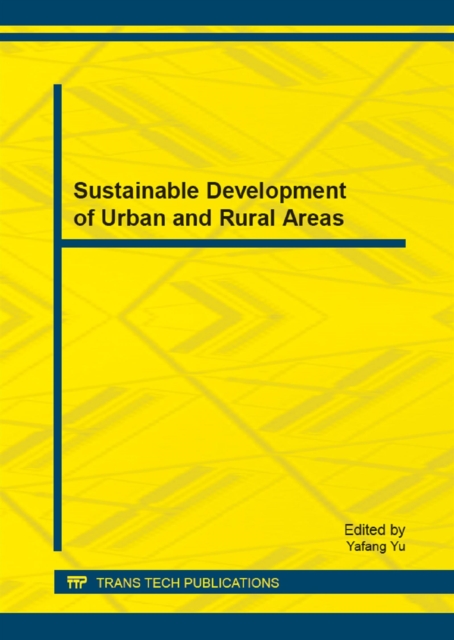
Sustainable Development of Urban and Rural Areas
Collection of selected, peer reviewed papers from the 2013 International Conference on Civil Engineering and Transportation (ICCET 2013). December 14-15, 2013, Kunming, China. Volume is indexed by Thomson Reuters CPCI-S (WoS).The 175 papers are grouped as follows: Chapter 1: Architectural Design and its Theory;Chapter 2: Building Science and Technology;Chapter 3: Traditional Construction Materials;Chapter 4: Advanced Construction Materials;Chapter 5: Renewable Energy and Building Energy Saving; Chapter 6: Urban and Rural Planning and Design;Chapter 7: Water Purification and Waste Treatment; Chapter 8: Environmental Engineering and Environmental ProtectionKeyword: Architectural Design and its Theory; Building Science and Technology; Traditional Construction Materials; Advanced Construction Materials; Renewable Energy and Building Energy Saving; Urban and Rural Planning and Design; Water Purification and Waste Treatment; Environmental Engineering and Environmental Protection
eBook
Pharmacological evidence: a new therapeutic approach to the treatment of chronic heart failure through SUR2B/Kir6.1 channel in endothelial cells
Both iptakalim (Ipt) and natakalim (Nat) activate the SUR2B/Kir6.1 channel, an ATP-sensitive potassium channel (KATp) subtype, with high selectivity. In this study we investigated the therapeutic effects of Ipt and Nat against isoproterenol-induced chronic heart failure (ISO-CHF) in rats, and demonstrated a new therapeutic approach to the treatment of CHF through activation of the SUR2B/Kir6.1 channel in endothelial cells. In ISO-CHF rats, oral administration of Nat (1, 3, 9 mg.kg^-1.d^-1) or Ipt (3 mg.kg^-1.d^-1) for 60 days significantly improved cardiac dysfunction, reversed cardiac remodeling, significantly attenuated the pathological increases in BNP levels, and improved endothelial dysfunction by adjusting the balance between endothelin and NO systems. The therapeutic effects of Nat were prevented by the selective KATp blocker glibenclamine (Gli, 50 mg.kg^-1.d^-1), confirming that these effects were mediated through activation of the SUR2B/Kir6.1 channel in endothelial cells. The molecular mechanisms underlying the therapeutic effects of Nat were further addressed using proteomic methods. We identified 724 proteins in the plasma of ISO-CHF rats; 55 proteins were related to Nat. These differentially expressed proteins were mainly involved in single-organism processes and the regulation of biological quality relative to CHF, including proteasome (Psm) and ATP protein clusters. We screened out PRKAR213, GAS6/eNOS/NO and NO/Pt~/VASP pathways involved in the amelioration of CHF among the 24 enriched pathways. We further confirmed 6 protein candidates, including PRKAR2~, GAS6 and VASP, which were involved in the endothelial mechanisms, and ATP, TIMP3 and AGT, which contributed to its cardiovascular actions. This study demonstrates a new pharmacological approach to the treatment of CHF through activation of the SUR2B/Kir6.1 channel in endothelial cells, and that the eNOS/VASP pathways are involved in its signaling mechanisms.
Journal Article
Preparation and electrochemical properties of carbon-coated LiFePO_4 hollow nanofibers
Carbon-coated LiFePO_4 hollow nanofibers as cathode materials for Li-ion batteries were obtained by coaxial electrospinning. X-ray diffraction, scanning electron microscopy, transmission electron microscopy, Brunauer–Emmett–Teller specific surface area analysis, galvanostatic charge–discharge, and electrochemical impedance spectroscopy(EIS) were employed to investigate the crystalline structure, morphology, and electrochemical performance of the as-prepared hollow nanofibers. The results indicate that the carbon-coated LiFePO_4 hollow nanofibers have good long-term cycling performance and good rate capability: at a current density of 0.2C(1.0C = 170 mA ·g^-1) in the voltage range of 2.5–4.2 V, the cathode materials achieve an initial discharge specific capacity of 153.16 mA h·g^-1 with a first charge–discharge coulombic efficiency of more than 97%, as well as a high capacity retention of 99% after 10 cycles; moreover, the materials can retain a specific capacity of 135.68 mA h·g^-1, even at 2C.
Journal Article
Short-term Preoperative Octreotide for Thyrotropin-secreting Pituitary Adenoma
Background: Thyrotropin-secreting pituitary adenomas (TSHomas) are a rare cause of hyperthyroidism. Somatostatin (SST) analogs work by interacting with somatostatin receptors (SSTRs). This study aimed to evaluate short-term preoperative octreotide (OCT) use in TSHoma patients and to investigate SSTR2 and SSTR5 expression and observe structural changes in tumor tissue. Methods: We reviewed records and samples from eight TSHoma patients treated between July 2012 and July 2015. We tested immunohistochemically for SSTR2/5 expression and examined TSHoma cells for morphological changes. Signed rank sum test was used to compare the efficacy of short-term preoperative OCT treatment. Results: OCT treatment (median time: 7.9 days, range: 3-16 days; median total dose: 1.8 mg, range: 0.94.2 mg) led to significant decrease in all patients' thyroid hormone levels (FT3 [nmol/L]: 8.33 [7.02, 12.29] to 4.67 [3.52, 5.37] [P = 0.008]; FT4 [pmol/L]: 25.36 [21.34, 28.99] to 16.66 [14.88, 21.49] [P = 0.016]; and TSH [gU/ml]: 5.80 [4.37, 6.78] to 0.57 [0.19, 1.24] [P = 0.008]). All the eight tumor specimens expressed high SSTR2 protein levels; 5/8 expressed high SSTRS, but 3/8 that expressed low SSTR5 presented a significantly higher TS H suppression rate (P = 0.036). Electron microscopy showed subcellular level impairments, including clumped nuclear chromatin and reduced cytoplasmic volume. Golgi complexes were observed in the OCT-treated TSHoma specimens. Conclusions: OCT can control hormone levels and damage the ultrastructure of tumor cells and organelles. Short-term response to OCT may be related to SSTR5 expression. Preoperative SST analog treatment for TSHoma could be considered as a combination therapy.
Journal Article