
Catalogue Search | MBRL


Are you sure you want to remove the book from the shelf?

{{itemTitle}}
579
result(s) for
"Yu-Wen Lu"
Sort by:
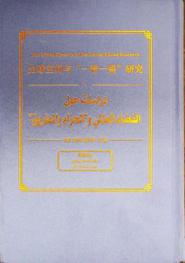
دراسات حول الفضاء العالمي و\الحزام والطريق\ : (مجلد الثقافة)
ينطلق هذا المجلد من العلاقة الهيكلية بين \"الفضاء\" و\"الثقافة\"، ويجمع بين مفهوم \"الفضاء\" في الجغرافيا ومفهوم \"السياق\" في الدراسات الثقافية وغيرهم من المفاهيم الأخرى، ويشرح نماذج ودلالات وأهداف مبادرة \"الحزام والطريق\" في سياق الحضارة الحديثة، ويصف صورة امتداد الحضارة على المحور التاريخي لـ \"الحزام والطريق\"، ويحلل الدلالة الثقافية في كل من اتجاه القيمة وبناء القوة الناعمة وإنشاء السياق الشرقي الخاصين بمبادرة \"الحزام والطريق\"، ويفسر علاقة الارتباط بين الثقافة الوطنية لـ \"الحزام والطريق\" والفضاء الوطني، ويكشف عن السرد عبر الفضاء للرموز الثقافية لـ \"الحزام والطريق\" ويوضح التعبير الرقمي والمرئي لواقع \"الحزام والطريق\"
Book

Development and interpretation of a pathomics-based model for the prediction of microsatellite instability in Colorectal Cancer
Microsatellite instability (MSI) has been approved as a pan-cancer biomarker for immune checkpoint blockade (ICB) therapy. However, current MSI identification methods are not available for all patients. We proposed an ensemble multiple instance deep learning model to predict microsatellite status based on histopathology images, and interpreted the pathomics-based model with multi-omics correlation. Methods: Two cohorts of patients were collected, including 429 from The Cancer Genome Atlas (TCGA-COAD) and 785 from an Asian colorectal cancer (CRC) cohort (Asian-CRC). We established the pathomics model, named Ensembled Patch Likelihood Aggregation (EPLA), based on two consecutive stages: patch-level prediction and WSI-level prediction. The initial model was developed and validated in TCGA-COAD, and then generalized in Asian-CRC through transfer learning. The pathological signatures extracted from the model were analyzed with genomic and transcriptomic profiles for model interpretation. Results: The EPLA model achieved an area-under-the-curve (AUC) of 0.8848 (95% CI: 0.8185-0.9512) in the TCGA-COAD test set and an AUC of 0.8504 (95% CI: 0.7591-0.9323) in the external validation set Asian-CRC after transfer learning. Notably, EPLA captured the relationship between pathological phenotype of poor differentiation and MSI (P < 0.001). Furthermore, the five pathological imaging signatures identified from the EPLA model were associated with mutation burden and DNA damage repair related genotype in the genomic profiles, and antitumor immunity activated pathway in the transcriptomic profiles. Conclusions: Our pathomics-based deep learning model can effectively predict MSI from histopathology images and is transferable to a new patient cohort. The interpretability of our model by association with pathological, genomic and transcriptomic phenotypes lays the foundation for prospective clinical trials of the application of this artificial intelligence (AI) platform in ICB therapy.
Journal Article

The Ameliorative Effects of Saikosaponin in Thioacetamide-Induced Liver Injury and Non-Alcoholic Fatty Liver Disease in Mice
Liver disorders are a major health concern. Saikosaponin-d (SSd) is an effective active ingredient extracted from Bupleurum falcatum, a traditional Chinese medicinal plant, with anti-inflammatory and antioxidant properties. However, its hepatoprotective properties and underlying mechanisms are unknown. We investigated the effects and underlying mechanisms of SSd treatment for thioacetamide (TAA)-induced liver injury and high-fat-diet (HFD)-induced non-alcoholic fatty liver disease (NAFLD) in male C57BL/6 mice. The SSd group showed significantly higher food intake, body weight, and hepatic antioxidative enzymes (catalase (CAT), glutathione peroxidase (GPx), and superoxide dismutase (SOD)) and lower hepatic cyclooxygenase-2 (COX-2), serum alanine aminotransferase (ALT), aspartate aminotransferase (AST), alkaline phosphatase (ALP), interleukin (IL)-1β, tumor necrosis factor (TNF)-α, and fibroblast growth factor-21 (FGF21) compared with controls, as well as reduced expression of inflammation-related genes (nuclear factor kappa B (NF-κB) and inducible nitric oxide synthase (iNOS)) messenger RNA (mRNA). In NAFLD mice, SSd reduced serum ALT, AST, triglycerides, fatty acid–binding protein 4 (FABP4) and sterol regulatory element–binding protein 1 (SREBP1) mRNA, and endoplasmic reticulum (ER)-stress-related proteins (phosphorylated eukaryotic initiation factor 2α subunit (p-eIF2α), activating transcription factor 4 (ATF4), and C/EBP homologous protein (CHOP). SSd has a hepatoprotective effect in liver injury by suppressing inflammatory responses and acting as an antioxidant.
Journal Article

The association between different impact exercises and osteoporosis: an analysis of data from the Taiwan biobank
Osteoporosis is a prevalent condition marked by reduced bone density and an elevated risk of fractures, especially among postmenopausal women. Exercise plays a crucial role in preventing and managing osteoporosis, with weight-bearing and impact exercises being particularly effective in enhancing bone density and mitigating disease risk. This study investigated the relationship between various types of impact exercises and osteoporosis using data from the Taiwan Biobank (TWB). The study sample comprised 5,123 individuals without osteoporosis and 1,770 individuals with the condition. Student’s t-test and logistic regression analyses were utilized to assess the associations between exercise types and osteoporosis risk. Results indicated that high-impact exercise significantly reduced the likelihood of developing osteoporosis compared to no exercise (odds ratio; OR = 0.573, 95% CI: 0.406–0.810,
P
= 0.002). Conversely, low-impact exercises did not show a significant overall association with osteoporosis (OR = 1.160, 95% CI: 0.932–1.445,
P
= 0.184). Stratified analysis by sex revealed that high-impact exercise was protective against osteoporosis in men (OR = 0.391, 95% CI: 0.202–0.755,
P
= 0.005), but not significantly so in women (OR = 0.671, 95% CI: 0.438–1.027,
P
= 0.066). These findings suggest that high-impact exercise is associated with a reduced risk of osteoporosis, particularly among Taiwanese men aged 30 to 70.
Journal Article

Horizontally Transferred Salivary Protein Promotes Insect Feeding by Suppressing Ferredoxin-Mediated Plant Defenses
Abstract
Herbivorous insects such as whiteflies, planthoppers, and aphids secrete abundant orphan proteins to facilitate feeding. Yet, how these genes are recruited and evolve to mediate plant–insect interaction remains unknown. In this study, we report a horizontal gene transfer (HGT) event from fungi to an ancestor of Aleyrodidae insects approximately 42 to 190 million years ago. BtFTSP1 is a salivary protein that is secreted into host plants during Bemisia tabaci feeding. It targets a defensive ferredoxin 1 in Nicotiana tabacum (NtFD1) and disrupts the NtFD1–NtFD1 interaction in plant cytosol, leading to the degradation of NtFD1 in a ubiquitin-dependent manner. Silencing BtFTSP1 has negative effects on B. tabaci feeding while overexpressing BtFTSP1 in N. tabacum benefits insects and rescues the adverse effect caused by NtFD1 overexpression. The association between BtFTSP1 and NtFD1 is newly evolved after HGT, with the homologous FTSP in its fungal donor failing to interact and destabilize NtFD1. Our study illustrates the important roles of horizontally transferred genes in plant–insect interactions and suggests the potential origin of orphan salivary genes.
Journal Article

The Ameliorative Effects of Fucoidan in Thioacetaide-Induced Liver Injury in Mice
Liver disorders have been recognized as one major health concern. Fucoidan, a sulfated polysaccharide extracted from the brown seaweed Fucus serratus, has previously been reported as an anti-inflammatory and antioxidant. However, the discovery and validation of its hepatoprotective properties and elucidation of its mechanisms of action are still unknown. The objective of the current study was to investigate the effect and possible modes of action of a treatment of fucoidan against thioacetamide (TAA)-induced liver injury in male C57BL/6 mice by serum biochemical and histological analyses. The mouse model for liver damage was developed by the administration of TAA thrice a week for six weeks. The mice with TAA-induced liver injury were orally administered fucoidan once a day for 42 days. The treated mice showed significantly higher body weights; food intakes; hepatic antioxidative enzymes (catalase, glutathione peroxidase (GPx), and superoxide dismutase (SOD)); and a lower serum alanine aminotransferase (ALT), aspartate aminotransferase (AST), tumor necrosis factor-α (TNF-α), interleukin-1β (IL-1β), and C-reactive protein (CRP) levels. Additionally, a reduced hepatic IL-6 level and a decreased expression of inflammatory-related genes, such as cyclooxygenase-2 (COX-2), and inducible nitric oxide synthase (iNOS) mRNA was observed. These results demonstrated that fucoidan had a hepatoprotective effect on liver injury through the suppression of the inflammatory responses and acting as an antioxidant. In addition, here, we validated the use of fucoidan against liver disorders with supporting molecular data.
Journal Article

Interaction between gender and age on the methylation levels of KLF14 promoter
This study investigated the relationship between age, sex, and methylation levels of the Krüppel-like factor 14 (
KLF14
) promoter. Utilizing data from the Taiwan Biobank (TWB), established in 2005, we analyzed a cohort of 1,141 participants. DNA methylation analyses were conducted by Health GeneTech Corp., commissioned by TWB. Methylation levels of the
KLF14
promoter were determined by averaging the values of 10 CpG sites: cg09823095, cg25109431, cg21449170, cg05651960, cg18751682, cg08097417, cg07955995, cg22285878, cg21520933, and cg06533629. Participants were divided into four age groups (30–40, 40–50, 50–60, and 60–70 years). Multiple linear regression analyses were performed to assess the impact of age and sex on
KLF14
promoter methylation and to evaluate the interaction between these variables. Our findings revealed that men exhibited higher
KLF14
promoter methylation levels, with a significant age-dependent increase. Notably, in participants aged over 50,
KLF14
methylation levels were substantially higher in men compared to women (β = 0.00336,
P
= 0.0108 for the 50–60 age group; β = 0.00472,
P
= 0.0238 for the 60–70 age group). Our study reveals a sex-specific increase in
KLF14
promoter methylation among men over 50, with no significant differences observed in individuals younger than 50. This finding suggests that age and sex may play a crucial role in the epigenetic regulation of
KLF14
.
Journal Article

Effects of seated Baduanjin training modalities on body composition, muscle strength, and gait parameters in older adults: A cluster-randomised controlled trial
Background and Objective The relationship between seated exercise frequency and physiological changes in older adults has received insufficient research attention. We examined how Baduanjin session frequency, Baduanjin instructional format, and low-intensity resistance training affect the body composition, muscle strength, and gait parameters of older adults. Methods A prospective, cluster-randomised, controlled, two-arm trial was conducted at day care centres for older adults in Taiwan over 12 weeks between May and September 2024. The experimental group received a multicomponent seated Baduanjin intervention which included online and in-person sessions and additional resistance training, whereas the control group completed only the online Baduanjin sessions. Body composition was assessed using bioelectrical impedance analysis. Muscle strength of the upper and lower extremities was measured using handheld dynamometers. Gait parameters were evaluated using GaitUp wearable motion sensors. Results Linear mixed-effects analysis revealed significant between-group differences in grip strength, gait speed, cadence, and load ratio after 12 weeks ( p < 0.05). The experimental group maintained their functional abilities, whereas the control group experienced marked declines. No significant changes were observed in skeletal muscle index, body fat percentage, or isometric knee extensor force over the intervention period. Additionally, the foot-flat ratio significantly decreased in the experimental group ( p = 0.004) but increased in the control group ( p = 0.011); the between-group difference was significant (B = 5.28, 95 % confidence interval [2.14, 8.41], p = 0.001). Conclusion The multicomponent seated Baduanjin intervention was more effective than the once-weekly Baduanjin sessions in improving physical outcomes. Thus, Baduanjin is a safe, feasible, and beneficial. intervention for older adults. This study was registered on ClinicalTrials.gov (Registration No. NCT06550661) on 6 August 2024.
Journal Article

Research progress in bioremediation of petroleum pollution
With the enhancement of environmental protection awareness, research on the bioremediation of petroleum hydrocarbon environmental pollution has intensified. Bioremediation has received more attention due to its high efficiency, environmentally friendly by-products, and low cost compared with the commonly used physical and chemical restoration methods. In recent years, bacterium engineered by systems biology strategies have achieved biodegrading of many types of petroleum pollutants. Those successful cases show that systems biology has great potential in strengthening petroleum pollutant degradation bacterium and accelerating bioremediation. Systems biology represented by metabolic engineering, enzyme engineering, omics technology, etc., developed rapidly in the twentieth century. Optimizing the metabolic network of petroleum hydrocarbon degrading bacterium could achieve more concise and precise bioremediation by metabolic engineering strategies; biocatalysts with more stable and excellent catalytic activity could accelerate the process of biodegradation by enzyme engineering; omics technology not only could provide more optional components for constructions of engineered bacterium, but also could obtain the structure and composition of the microbial community in polluted environments. Comprehensive microbial community information lays a certain theoretical foundation for the construction of artificial mixed microbial communities for bioremediation of petroleum pollution. This article reviews the application of systems biology in the enforce of petroleum hydrocarbon degradation bacteria and the construction of a hybrid-microbial degradation system. Then the challenges encountered in the process and the application prospects of bioremediation are discussed. Finally, we provide certain guidance for the bioremediation of petroleum hydrocarbon-polluted environment.
Journal Article

Iatrogenic Pneumothorax during Acupuncture: Case Report
Acupuncture treatment in local areas is commonly used to treat pain or soreness; however, acupuncture around the neck or shoulder may be a risk factor for pneumothorax. Herein, we report two cases of iatrogenic pneumothorax after acupuncture. These points indicate that physicians should be aware of these risk factors through history-taking before acupuncture. Chronic pulmonary diseases, such as chronic bronchitis, emphysema, tuberculosis, lung cancer, pneumonia, and thoracic surgery, may be associated with a higher risk of iatrogenic pneumothorax after acupuncture. Even if the incidence of pneumothorax should be low under caution and fully evaluated, it is still recommended to arrange further imaging examinations to rule out the possibility of iatrogenic pneumothorax.
Journal Article