
Catalogue Search | MBRL


Are you sure you want to remove the book from the shelf?

{{itemTitle}}
5
result(s) for
"Yuen, Belinda K. P"
Sort by:

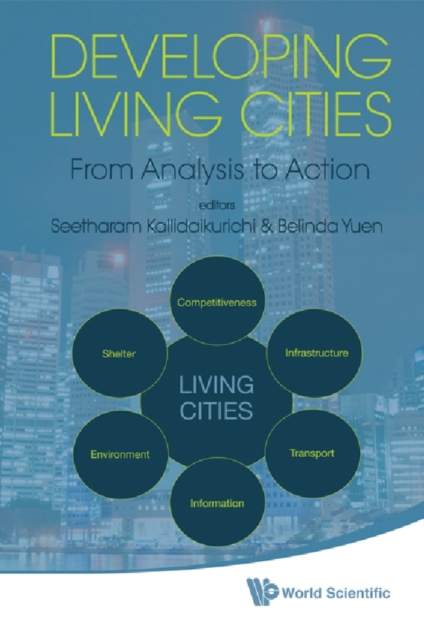
Developing living cities
With more and more of the world's population projected to live in urban areas, the life and death of cities has become a key factor in urban development considerations. This book attempts to bring an original contribution on the analysis of creating living cities. It advances the concept and framework of a “living city” and also explicates the key attributes of a “living city” that are increasingly critical to the reinvigoration and sustainable growth of cities.
eBook
World cities
How does a city make sound policy decisions on sustainability and governance while simultaneously promoting economic growth and development excellence? This book focuses on the major challenges that world cities are facing in such key areas as governance, social inclusiveness, infrastructural development, financial solvency as well as environmental and ecological sustainability. Based on case studies from cities in North America, Europe, and the Asia-Pacific, this collection of essays brings together some of the top academics, professionals and policymakers from the world over and presents their views on how to best strike the balance between growth and sustainability. The range of perspectives, ideas and depth of information makes this an invaluable resource for researchers, city planning professionals and policymakers in environment, urban development and urban economic planning.
eBook
Cities and climate change : responding to an urgent agenda
The 5th urban research symposium on cities and climate change responding to an urgent agenda, held in Marseille in June 2009, sought to highlight how climate change and urbanization are converging to create one of the greatest challenges of our time. Cities consume much of the world's energy, and thus produce much of the world's greenhouse gas emissions. Yet cities, to varying extents, are also vulnerable to climate change impacts, with poor populations facing the greatest risk. Thus, adaptation and increased resilience constitute priorities for every city, and cities have a key role to play in mitigating climate change. Climate change mitigation and adaptation in cities has emerged as a new theme on the global agenda, creating a strong desire among governments, the private sector, and the academic community worldwide to learn from experiences and good practice examples. The 5th urban research symposium made an important contribution to the growing body of knowledge and practice in the area of cities and climate change. During the three-day symposium, approximately 200 papers were presented to more than 700 participants representing more than 70 countries. As co-organizers, the authors found it very rewarding to have such an audience and to see the wide range of topics discussed, from indicators and measurement to institutions and governance. This publication is comprised of an edited selection of the many papers submitted to the symposium and gives a flavor of the questions asked and possible answers. (The entire collection of symposium papers is available as an online resource for interested readers.) The authors look forward to the benefits that the knowledge gained and the partnerships forged during the symposium will have for global efforts on cities and climate change.
eBook

Planning Asian Cities: Risks and Resilience
In Planning Asian Cities: Risks and Resilience, Stephen Hamnett and Dean Forbes have brought together some of the region's most distinguished urbanists to explore the planning history and recent development of Pacific Asia's major cities.
They show how globalization, and the competition to achieve global city status, has had a profound effect on all these cities. Tokyo is an archetypal world city. Singapore, Hong Kong and Seoul have acquired world city characteristics. Taipei and Kuala Lumpur have been at the centre of expanding economies in which nationalism and global aspirations have been intertwined and expressed in the built environment. Beijing, Hong Kong and Shanghai have played key, sometimes competing, roles in China's rapid economic growth. Bangkok's amenity economy is currently threatened by political instability, while Jakarta and Manila are the core city-regions of less developed countries with sluggish economies and significant unrealized potential.
But how resilient are these cities to the risks that they face? How can they manage continuing pressures for development and growth while reducing their vulnerability to a range of potential crises? How well prepared are they for climate change? How can they build social capital, so important to a city's recovery from shocks and disasters? What forms of governance and planning are appropriate for the vast mega-regions that are emerging? And, given the tradition of top-down, centralized, state-directed planning which drove the economic growth of many of these cities in the last century, what prospects are there of them becoming more inclusive and sensitive to the diverse needs of their populations and to the importance of culture, heritage and local places in creating liveable cities?
eBook