
Catalogue Search | MBRL


Are you sure you want to remove the book from the shelf?

{{itemTitle}}
35,120
result(s) for
"Zhang, Ling"
Sort by:

The river, the plain, and the state : an environmental drama in Northern Song China, 1048-1128
\"On July 19, 1048, the Yellow River breached its banks, drastically changing its course across the Hebei Plain and turning it into a delta where the river sought a path out to the ocean. This dramatic shift of forces in the natural world resulted from political deliberation and hydraulic engineering of the imperial state of the Northern Song Dynasty. It created 80 years of social suffering, economic downturn, political upheaval, and environmental changes, which reshaped medieval North China Plain and challenged the state. Ling Zhang deftly applies textual analysis, theoretical provocation, and modern scientific data in her gripping analysis of how these momentous events altered China's physical and political landscapes and how its human communities adapted and survived. In so doing, she opens up an exciting new field of research by wedding environmental, political, economic, and social history in her examination of one of North China's most significant environmental changes\"-- Provided by publisher.
Book

Keratin 6, 16 and 17—Critical Barrier Alarmin Molecules in Skin Wounds and Psoriasis
Located at the skin surface, keratinocytes (KCs) are constantly exposed to external stimuli and are the first responders to invading pathogens and injury. Upon skin injury, activated KCs secrete an array of alarmin molecules, providing a rapid and specific innate immune response against danger signals. However, dysregulation of the innate immune response of KCs may lead to uncontrolled inflammation and psoriasis pathogenesis. Keratins (KRT) are the major structural intermediate filament proteins in KCs and are expressed in a highly specific pattern at different differentiation stages of KCs. While KRT14-KRT5 is restricted to basal proliferative KCs, and KRT10-KRT1 is restricted to suprabasal differentiated KCs in normal skin epidermis, the wound proximal KCs downregulate KRT10-K1 and upregulate KRT16/KRT17-KRT6 upon skin injury. Recent studies have recognized KRT6/16/17 as key early barrier alarmins and upregulation of these keratins alters proliferation, cell adhesion, migration and inflammatory features of KCs, contributing to hyperproliferation and innate immune activation of KCs in response to an epidermal barrier breach, followed by the autoimmune activation of T cells that drives psoriasis. Here, we have reviewed how keratins are dysregulated during skin injury, their roles in wound repairs and in initiating the innate immune system and the subsequent autoimmune amplification that arises in psoriasis.
Journal Article


Emerging photodynamic/sonodynamic therapies for urological cancers: progress and challenges
Photodynamic therapy (PDT), and sonodynamic therapy (SDT) that developed from PDT, have been studied for decades to treat solid tumors. Compared with other deep tumors, the accessibility of urological tumors (e.g., bladder tumor and prostate tumor) makes them more suitable for PDT/SDT that requires exogenous stimulation. Due to the introduction of nanobiotechnology, emerging photo/sonosensitizers modified with different functional components and improved physicochemical properties have many outstanding advantages in cancer treatment compared with traditional photo/sonosensitizers, such as alleviating hypoxia to improve quantum yield, passive/active tumor targeting to increase drug accumulation, and combination with other therapeutic modalities (e.g., chemotherapy, immunotherapy and targeted therapy) to achieve synergistic therapy. As WST11 (TOOKAD® soluble) is currently clinically approved for the treatment of prostate cancer, emerging photo/sonosensitizers have great potential for clinical translation, which requires multidisciplinary participation and extensive clinical trials. Herein, the latest research advances of newly developed photo/sonosensitizers for the treatment of urological cancers, and the efficacy, as well as potential biological effects, are highlighted. In addition, the clinical status of PDT/SDT for urological cancers is presented, and the optimization of the photo/sonosensitizer development procedure for clinical translation is discussed.
Journal Article


Reduction of metal artifacts from knee tumor prostheses on CT images: value of the single energy metal artifact reduction (SEMAR) algorithm
Background
To evaluate the effect of the single energy metal artifact reduction (SEMAR) algorithm with a multidetector CT (MDCT) for knee tumor prostheses.
Methods
First, a phantom of knee tumor prosthesis underwent a MDCT scan. The raw data was reconstructed by iterative reconstruction (IR) alone and IR plus SEMAR. The mean value of the CT number and the image noise were measured around the prosthesis at the stem level and articular level. Second, 95 consecutive patients with knee tumor prostheses underwent MDCT scans. The raw data were also reconstructed by the two methods. Periprosthetic structures were selected at the similar two levels. Four radiologists visually graded the image quality on a scale from 0 to 5. Additionally, the readers also assessed the presence of prosthetic complication and tumor recurrence on a same scale.
Results
In the phantom, when the SEMAR was used, the CT numbers were closer to normal value and the noise of images using soft and sharper kernel were respectively reduced by up to 77.1% and 43.4% at the stem level, and by up to 82.2% and 64.5% at the articular level. The subjective scores increased 1 ~ 3 points and 1 ~ 4 points at the two levels, respectively. Prosthetic complications and tumor recurrence were diagnosed in 66 patients. And the SEMAR increased the diagnostic confidence of prosthetic complications and tumor recurrence (4 ~ 5 vs. 1 ~ 1.5).
Conclusions
The SEMAR algorithm can significantly reduce the metal artifacts and increase diagnostic confidence of prosthetic complications and tumor recurrence in patients with knee tumor prostheses.
Journal Article


An all-natural bioinspired structural material for plastic replacement
Petroleum-based plastics are useful but they pose a great threat to the environment and human health. It is highly desirable yet challenging to develop sustainable structural materials with excellent mechanical and thermal properties for plastic replacement. Here, inspired by nacre’s multiscale architecture, we report a simple and efficient so called “directional deforming assembly” method to manufacture high-performance structural materials with a unique combination of high strength (281 MPa), high toughness (11.5 MPa m
1/2
), high stiffness (20 GPa), low coefficient of thermal expansion (7 × 10
−6
K
−1
) and good thermal stability. Based on all-natural raw materials (cellulose nanofiber and mica microplatelet), the bioinspired structural material possesses better mechanical and thermal properties than petroleum-based plastics, making it a high-performance and eco-friendly alternative structural material to substitute plastics.
It is desirable yet challenging to develop sustainable structural materials to replace petroleum-based plastics. Here, the authors report a facile assembly method for manufacturing high-performance structural materials with a unique combination of high strength, toughness and stiffness.
Journal Article
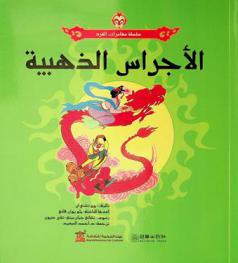
الأجراس الذهبية
في قرية فاولا وتشوانغ أراد السيد قاو العثور على زوج لابنته الصغرى ولكن الأمر انتهى به الشيطان الخنزير ودعا السيد قاو الكثيرين لإخضاع الشيطان لكنهم فشلوا. وعندما سمع سان تسائخ والقرد أثناء رحلتهما إلى الغرب أن هناك شيطانا في القرية، تطوع الفرد للمساعدة، والتقى بالشيطان الخنزير وحاربه ولحق به إلى كيفه. أدرك الشيطان الخنزير أن سان تسانغ والقرد في رحلة لإحضار الكتب المقدسة، فأخبر القرد أنه كان ينتظرهما بعدما تلقى تعليمات من قوان بن. لكن القرد لم يصدقه فطلب منه أن يحرق كهفه ثم سيأخذه لمقابلة سان تسانغ فك سان تسانغ وثاق الشيطان الخنزير واتخذه تلميذا ثانيا له. واتضح أن الشيطان الخنزير كان قائدا في السماء ولكنه نفي إلى العالم الأرضي لسوء سلوكه، ومنحته قوان بن اسم وو ننغ ثم منحه سان تسانغ اسم \"با جیه\".
Book

The Biological Functions and Clinical Applications of Integrins in Cancers
Integrins are the adhesion molecules and receptors of extracellular matrix (ECM). They mediate the interactions between cells-cells and cells-ECM. The crosstalk between cancer cells and their microenvironment triggers a variety of critical signaling cues and promotes the malignant phenotype of cancer. As a type of transmembrane protein, integrin-mediated cell adhesion is essential in regulating various biological functions of cancer cells. Recent evidence has shown that integrins present on tumor cells or tumor-associated stromal cells are involved in ECM remodeling, and as mechanotransducers sensing changes in the biophysical properties of the ECM, which contribute to cancer metastasis, stemness and drug resistance. In this review, we outline the mechanism of integrin-mediated effects on biological changes of cancers and highlight the current status of clinical treatments by targeting integrins.
Journal Article