
Catalogue Search | MBRL


Are you sure you want to remove the book from the shelf?

{{itemTitle}}
17,786
result(s) for
"Zhong, Yu"
Sort by:

صلوات تبتية : (رواية) /
تلقي الرواية الضوء على منطقة مجهولة جغرافيا وتاريخيا من الصين، وهي منطقة غير مألوفة للقارئ العربي، وتثير داخله شعورا مبهما بالسحر والغموض، ويتوازى بالرواية مساران سرديان، يروي المسار الرئيسي التغيرات التاريخية للتبت على مدار الخمسين عاما الماضية، وتحول بطل الرواية (جين مي وانغ تشا) من شخصية الراهب إلى العلماني، ويصف التمرد المسلح للمتشددين، والإصلاح الديمقراطي، ونشوب الحرب بين الصين والهند، وغيرها من الأحداث التاريخية الكبرى لتاريخ التبت، ومع الصعود والهبوط في مصير العديد من الشخصيات الصغيرة، تعرض الرواية النظرة التبتية حول مفهوم الموت والحياة وفهم وتجاوز المعاناة المتعلقة بحياة المعلم البوذي.
BOOK

Hsa_circ_0003258 promotes prostate cancer metastasis by complexing with IGF2BP3 and sponging miR-653-5p
Background
More and more studies have shown that circular RNAs (circRNAs) play a critical regulatory role in many cancers. However, the potential molecular mechanism of circRNAs in prostate cancer (PCa) remains largely unknown.
Methods
Differentially expressed circRNAs were identified by RNA sequencing. The expression of hsa_circ_0003258 was evaluated using quantitative real-time PCR and RNA in situ hybridization. The impacts of hsa_circ_0003258 on the metastasis of PCa cells were investigated by a series of in vitro and in vivo assays. Lastly, the underlying mechanism of hsa_circ_0003258 was revealed by Western blot, biotin-labeled RNA pulldown, RNA immunoprecipitation, luciferase assays and rescue experiments.
Results
Increased expression of hsa_circ_0003258 was found in PCa tissues and was associated with advanced TNM stage and ISUP grade. Overexpression of hsa_circ_0003258 promoted PCa cell migration by inducing epithelial mesenchymal transformation (EMT) in vitro as well as tumor metastasis in vivo
,
while knockdown of hsa_circ_0003258 exerts the opposite effect. Mechanistically, hsa_circ_0003258 could elevate the expression of Rho GTPase activating protein 5 (ARHGAP5) via sponging miR-653-5p. In addition, hsa_circ_0003258 physically binds to insulin like growth factor 2 mRNA binding protein 3 (IGF2BP3) in the cytoplasm and enhanced HDAC4 mRNA stability, in which it activates ERK signalling pathway, then triggers EMT programming and finally accelerates the metastasis of PCa.
Conclusions
Upregulation of hsa_circ_0003258 drives tumor progression through both hsa_circ_0003258/miR-653-5p/ARHGAP5 axis and hsa_circ_0003258/IGF2BP3 /HDAC4 axis. Hsa_circ_0003258 may act as a promising biomarker for metastasis of PCa and an attractive target for PCa intervention.
Journal Article
دفتر السجن
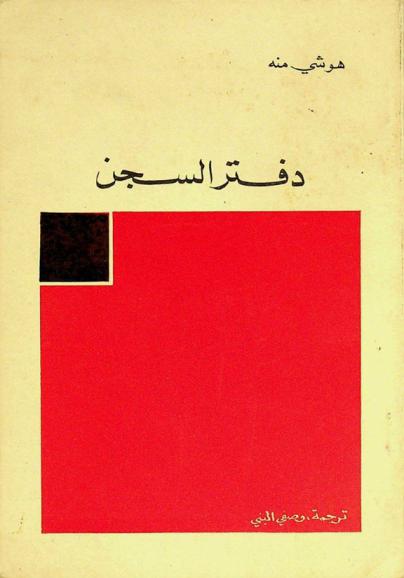
قلائل جدا من أبطال الكفاح التحرري في عالمنا الحديث، من تميزوا بما تميز به (هوشي مين)، من عزيمة نضالية لا تعرف النوط، بل لا يتسرب إليها شيء من شك، وبساطة في العلاقات الشخصية والحياة اليومية جعلت هذا المناضل العظيم أليفا إلى جميع القلوب، وأبا لكل واحد من شعب فيتنام، وأصالة في إدراك المشكلات الفيتنامية المحلية من خلال المشكلات الإنسانية، بفكر حي، ومفهوم ثوري لا أثر للزيف فيه، ونفحة فنية تجلت لدى صاحبها شعرا رقيقا ينم عن إنسان شاعر مرهف الإحساس، رقيق الشخصية. لقد كان هذا الزعيم، إلى جانب إدراكه الثاقب لقضايا العصر الكبرى، يمارس النضال بنفسه وعقله وجسمه، ويرتقي من هذا النضال المشخص-إن صح التعبير-إلى نضال أكثر شمولا وعالمية، نضال الإنسان من أجل الحرية والتقدم والسلام. لقد قدم هذا الثوري الشاعر، من خلال مراحل كفاح امتد زهاء ستين سنة، صورة حية لتكامل النضال في وجهيه : القومي والأممي. وكان مغزى حياته هذا هو على وجه التقريب : لا نضال مجديا إلا في إطار الهوية الوطنية للشعب، ولا يكون هذا النضال عالميا أمميا ما لم يقدم له كل شعب، من حيث هو شعب ذو شخصية خاصة به، إسهاما إيجابيا. أليس من حق بطل مثل \"هوشي مين\" أن يعرفه القارئ العربي، من وجوه أخرى غير وجوه كفاحه الوطني ؟ إن هذا الإنسان الرقيق البسيط الطيب، كان يعبر عن مشاعره ببساطة عجيبة، وكانت مشاعره هي ذاتها ما يشعر به كل إنسان حين يرى الشمس تشرق فوق بلاده، أو يلتقي بالفلاح وهو يزرع حقله، أو يلاحظ الطفل وهو يلعب، أو يدخل السجن بوصفه مناضلا، أو يشترك مع الناس في أفراحهم ومتاعبهم، هذه المشاعر قدم \"هوشي مين\" نماذج منها في قصائد غاية في البساطة، غاية في العذوبة، يحس كل من يقرؤها أنه هو الذي نظمها. أنها مشاعر إنسان صادق مع نفسه كصدقة مع الناس. ومثلما يتحدث \"هوشي مين\" بتواضع يدعو إلى الإجلال، فإنه ينظم الشعر ببساطة لا مكان فيها للصنعة أو الافتعال. تشهد بذلك هذه القصائد التي يضمها هذا الكتاب. متوخيا تقديما في صيغة شعرية بسيطة، دون أن يضحي بشيء من روح النص الأصلي وصياغته، رغم كونه قد نقلها عن ترجمة فرنسية هي ذاتها ترجمة أمينة ودقيقة للأصل الفيتنامي.
Book
CircSMARCC1 facilitates tumor progression by disrupting the crosstalk between prostate cancer cells and tumor-associated macrophages via miR-1322/CCL20/CCR6 signaling
Background
Circular RNAs (circRNAs) mediate the infiltration of tumor-associated macrophages (TAMs) to facilitate carcinogenesis and development of various types of cancers. However, the role of circRNAs in regulating macrophages in prostate cancer (PCa) remains uncertain.
Methods
Differentially expressed circRNAs in PCa were identified by RNA sequencing. The expression of circSMARCC1 was recognized and evaluated using fluorescence in situ hybridization and quantitative real-time PCR. The oncogenic role of circSMARCC1 in PCa tumor proliferation and metastasis was investigated through a series of in vitro and in vivo assays. Finally, Western blot, biotin-labeled RNA pulldown, luciferase assay, rescue experiments, and co-culture experiments with TAMs were conducted to reveal the mechanistic role of circSMARCC1.
Results
CircSMARCC1 was dramatically up-regulated in PCa cells, plasma and tissues. Overexpression of circSMARCC1 promotes tumor proliferation and metastasis both in vitro and in vivo, whereas knockdown of circSMARCC1 exerts the opposite effects. Mechanistically, circSMARCC1 regulates the expression of CC-chemokine ligand 20 (CCL20) via sponging miR-1322 and activate PI3K-Akt signaling pathway involved in the proliferation and epithelial mesenchymal transformation. More importantly, high expression of circSMARCC1 was positively associated with colonization of CD68
+
/CD163
+
/CD206
+
TAMs in tumor microenvironment. In addition, overexpression of circSMARCC1 facilitates the expression of CD163 in macrophages through the CCL20-CCR6 axis, induces TAMs infiltration and M2 polarization, thereby leading to PCa progression.
Conclusions
CircSMARCC1 up-regulates the chemokine CCL20 secretion by sponging miR-1322, which is involved in the crosstalk between tumor cells and TAMs by targeting CCL20/CCR6 signaling to promote progression of PCa.
Journal Article


LncRNA SNHG14 promotes inflammatory response induced by cerebral ischemia/reperfusion injury through regulating miR-136-5p /ROCK1
Recently, long non-coding RNAs (lncRNAs) are considered as critical regulators in pathogenesis progression of cerebral ischemia. In present study, lncRNA-small nucleolar RNA host gene 14 (SNHG14) was found upregulated in middle cerebral artery occlusion/reperfusion (MCAO/R) treated brain tissues and oxygen-glucose deprivation and reoxygenation (OGD/R) treated PC-12 cells. Interference of SNHG14 by shRNA vector enhanced neuron survival and suppressed inflammation in response to OGD/R insult. SNHG14 positively regulated the expression of Rho-associated coiled-coil-containing protein kinase 1 (ROCK1) via acting as a sponge of microRNA (miR)-136–5p. SNHG14 promoted neurological impairment and inflammatory response through elevating the expression of ROCK1 while decreasing miR-136–5p level in OGD/R induced damage. Collectively, we illustrated that SNHG14 could be a novel strategy for treatment ischemia stoke.
Journal Article


Circularly polarized luminescence of coordination aggregates
The development and applications of materials with efficient circularly polarized luminescence (CPL) have become an interdisciplinary frontier research topic. We summarize herein the recent advance in the development and applications of CPL‐active aggregates based on metal‐ligand coordination materials (termed as “coordination aggregates”). The materials surveyed are classified as aggregates of small‐molecular metal complexes, which include monocomponent assemblies of Pt(II) complexes and other complexes and binary aggregates of metal complexes, and CPL‐active metal‐ligand coordination helicates, polymers, and frameworks. The efforts in improving the dissymmetry luminescence factors and quantum yields of these materials and the use of the aggregation strategy in enhancing the performance of isolated molecules are discussed. The recent applications of chiral metal complexes in circularly polarized organic light‐emitting diodes (OLEDs) based on solution‐ or evaporation‐processed procedures are surveyed. In addition, the uses of lanthanide complexes in CPL‐contrast imaging and as CPL probes are highlighted. The common discussion on the mechanism of aggregation‐enhanced CPLs and a perspective on future works of CPL‐active coordination aggregates are finally given. The recent progress in the development of circularly polarized luminescence (CPL)‐active aggregates of metal‐ligand coordination materials is summarized, including those based on discrete chiral metal complexes, chiral metal‐ligand helicates, and coordination polymers and frameworks. The applications of these materials in circularly polarized organic light‐emitting diodes and CPL‐contrast imaging and probes are further discussed.
Journal Article


Cellulose Aerogels: Synthesis, Applications, and Prospects
Due to its excellent performance, aerogel is considered to be an especially promising new material. Cellulose is a renewable and biodegradable natural polymer. Aerogel prepared using cellulose has the renewability, biocompatibility, and biodegradability of cellulose, while also having other advantages, such as low density, high porosity, and a large specific surface area. Thus, it can be applied for many purposes in the areas of adsorption and oil/water separation, thermal insulation, and biomedical applications, as well as many other fields. There are three types of cellulose aerogels: natural cellulose aerogels (nanocellulose aerogels and bacterial cellulose aerogels), regenerated cellulose aerogels, and aerogels made from cellulose derivatives. In this paper, more than 200 articles were reviewed to summarize the properties of these three types of cellulose aerogels, as well as the technologies used in their preparation, such as the sol–gel process and gel drying. In addition, the applications of different types of cellulose aerogels were also introduced.
Journal Article