
Catalogue Search | MBRL


Are you sure you want to remove the book from the shelf?

{{itemTitle}}
24,088
result(s) for
"Zhou, Ying"
Sort by:

The source of innovation in China : highly innovative human systems
\"Given the popular belief that China's comparative advantage is its low labour cost, The Source of Innovation in China argues that the fundamental source for Chinese economic growth is its innovation. Based on qualitative case studies and quantitative surveys of 600 firms, this research describes the competitive advantages of successful Chinese enterprises and builds a theoretical framework for innovative firms and empirically tests the resulting hypothesis. The authors explore the general features of Chinese enterprise and innovation, hypothesizing that the rapid economic development in China is based on innovation. This innovation is not only about technological innovation, but also process and strategy innovation. Cases are drawn from technological innovative firms and from traditional labour-intensive industries. Moreover, the underlying source of Chinese innovation is centred on its people, and the authors discuss this by looking at the philosophical, linguistic and culture influences. They take a broad stakeholder perspective and employ social network theory to explain that, by extension, innovative people surround the organization and create organizational values. At the organizational level, they propose a theoretical framework of a High-Innovative Human System, by integrating both Western and Chinese management systems. \"-- Provided by publisher.
Book

Generation of vascularized brain organoids to study neurovascular interactions
Brain organoids have been used to recapitulate the processes of brain development and related diseases. However, the lack of vasculatures, which regulate neurogenesis and brain disorders, limits the utility of brain organoids. In this study, we induced vessel and brain organoids, respectively, and then fused two types of organoids together to obtain vascularized brain organoids. The fused brain organoids were engrafted with robust vascular network-like structures and exhibited increased number of neural progenitors, in line with the possibility that vessels regulate neural development. Fusion organoids also contained functional blood–brain barrier-like structures, as well as microglial cells, a specific population of immune cells in the brain. The incorporated microglia responded actively to immune stimuli to the fused brain organoids and showed ability of engulfing synapses. Thus, the fusion organoids established in this study allow modeling interactions between the neuronal and non-neuronal components in vitro, particularly the vasculature and microglia niche. Understanding how the organs form and how their cells behave is essential to finding the causes and treatment for developmental disorders, as well as understanding certain diseases. However, studying most organs in live animals or humans is technically difficult, expensive and invasive. To address this issue, scientists have developed models called ‘organoids’ that recapitulate the development of organs using stem cells in the lab. These models are easier to study and manipulate than the live organs. Brain organoids have been used to recapitulate brain formation as well as developmental, degenerative and psychiatric brain conditions such as microcephaly, autism and Alzheimer’s disease. However, these brain organoids lack the vasculature (the network of blood vessels) that supplies a live brain with nutrients and regulates its development, and which has important roles in brain disorders. Partly due to this lack of blood vessels, brain organoids also do not develop a blood brain barrier, the structure that prevents certain contents of the blood, including pathogens, toxins and even certain drugs from entering the brain. These characteristics limit the utility of existing brain organoids. To overcome these limitations, Sun, Ju et al. developed brain organoids and blood vessel organoids independently, and then fused them together to obtain vascularized brain organoids. These fusion organoids developed a robust network of blood vessels that was well integrated with the brain cells, and produced more neural cell precursors than brain organoids that had not been fused. This result is consistent with the idea that blood vessels can regulate brain development. Analyzing the fusion organoids revealed that they contain structures similar to the blood-brain barrier, as well as microglial cells (immune cells specific to the brain). When exposed to lipopolysaccharide – a component of the cell wall of certain bacteria – these cells responded by initiating an immune response in the fusion organoids. Notably, the microglial cells were also able to engulf connections between brain cells, a process necessary for the brain to develop the correct structures and work normally. Sun, Ju et al. have developed a new organoid system that will be of broad interest to researchers studying interactions between the brain and the circulatory system. The development of brain-blood-barrier-like structures in the fusion organoids could also facilitate the development of drugs that can cross this barrier, making it easier to treat certain conditions that affect the brain. Refining this model to allow the fusion organoids to grow for longer times in the lab, and adding blood flow to the system will be the next steps to establish this system.
Journal Article


Anomalous mantle transition zone beneath the Yellowstone hotspot track
The origin of the Yellowstone and Snake River Plain volcanism has been strongly debated. The mantle plume model successfully explains the age-progressive volcanic track, but a deep plume structure has been absent in seismic imaging. Here I apply diffractional tomography to receiver functions recorded at USArray stations to map high-resolution topography of mantle transition-zone discontinuities. The images reveal a trail of anomalies that closely follow the surface hotspot track and correlate well with a seismic wave-speed gap in the subducting Farallon slab. This observation contradicts the plume model, which requires anomalies in the mid mantle to be confined in a narrow region directly beneath the present-day Yellowstone caldera. I propose an alternative interpretation of the Yellowstone volcanism. About 16 million years ago, a section of young slab that had broken off from a subducted spreading centre in the mantle first penetrated the 660 km discontinuity beneath Oregon and Idaho, and pulled down older stagnant slab. Slab tearing occurred along pre-existing fracture zones and propagated northeastward. This reversed-polarity subduction generated passive upwellings from the lower mantle, which ascended through a water-rich mantle transition zone to produce melting and age-progressive volcanism.
Journal Article


Neuropeptide Y Is an Immunomodulatory Factor: Direct and Indirect
Neuropeptide Y (NPY), which is widely distributed in the nervous system, is involved in regulating a variety of biological processes, including food intake, energy metabolism, and emotional expression. However, emerging evidence points to NPY also as a critical transmitter between the nervous system and immune system, as well as a mediator produced and released by immune cells.
and
studies based on gene-editing techniques and specific NPY receptor agonists and antagonists have demonstrated that NPY is responsible for multifarious direct modulations on immune cells by acting on NPY receptors. Moreover, via the central or peripheral nervous system, NPY is closely connected to body temperature regulation, obesity development, glucose metabolism, and emotional expression, which are all immunomodulatory factors for the immune system. In this review, we focus on the direct role of NPY in immune cells and particularly discuss its indirect impact on the immune response.
Journal Article
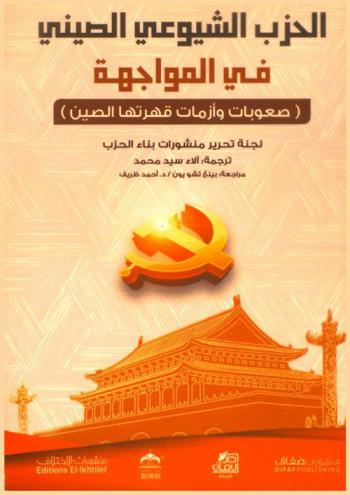
الحزب الشيوعي الصيني في المواجهة : صعوبات وأزمات قهرتها الصين
شهدت قوة الصين وصورها وحياة الصينيين، تغيرا جذريا هائلا خلا الـ 30 عاما الاخيرة منذ ثمانينات القرن العشرين، فقد كان للتحول الثوري في طرق الإنتاج وشكل المعيشة دورا كبيرا في التغيير الذي طالما كان حلما يراود الصينيين في الماضي، وإذا قيل إن الحلم الصيني يتمثل في نهوض الشعب وازدهار البلاد وسعادة المواطنين باعتبارها ثلاثة عناصر مترابطة، فيمكن القول أن الحزب الشيوعي الصيني والحكومة الصينية من خلال الجهود الكبيرة والتمسك بالحكمة في آليات تسيير الحكم، يحول هذا الحلم بشكل تدريجي إلى واقع ملموس.
BOOK

Cross the borders: the dual cultural devaluation of the Belt and Road co-production films
Since the inception of the Belt and Road Initiative (BRI) by the Chinese government in 2013, there has been a concerted effort to promote cross-border and cross-cultural communication, with a particular emphasis on the field of Chinese cinema. This article embarks on a comprehensive evaluation of the extent to which co-produced films under the aegis of the BRI have effectively achieved the political and cultural objectives originally outlined by the policy. Moreover, it strives to offer an understanding of the reception and impact of these films in overseas markets. Employing computational textual analysis and visualisation techniques, the study examines the global market performance, online ratings, and critical reviews of BRI co-productions since their inception. Despite a decade of promotion, BRI co-productions have demonstrated limited success on the global stage. A key characteristic that has emerged is cultural discount, which is influenced by political factors, the diminishing artistic aura, and an absence of narrative strategies that emphasise translocality. BRI co-productions encounter dual cultural devaluation, stemming from conflicts between their cultural and political aspirations and the prevailing principles of the global film industry. The study proposes enhancing the quality of co-productions and generating promotional “buzz” as viable strategies to mitigate the loss of artistic prestige and to expand their global reach.
Journal Article

Surrendering to and Transcending Ming 命 in the Analects, Mencius and Zhuangzi
This article examines the concept of ming 命 (mandate/command or fate/destiny) in the Analects, Mencius, and Zhuangzi, exploring its relationship to tian 天 (Heaven). Across these works, ming retains an intrinsic connection to tian—an inviolable cosmic force beyond human control. All three texts exhibit profound reverence and submission to tian, acknowledging the boundary between human control and cosmic inevitability, yet, at the same time, advocating active alignment with tian’s ordained patterns. In the Analects, a central tension emerges between tian’s teleological purpose—centered on preserving human culture and ethical cultivation—and the seemingly arbitrary fluctuations of individual fate, particularly regarding lifespan and personal fulfillment. This tension persists in the Mencius, articulated as a conflict between the political disorder of Mencius’ contemporary era and tian’s normative moral order. The Zhuangzi, by contrast, resolves this tension through advocating for withdrawal from the political life, as well as a radical reinterpretation of tian. Stripping tian off the Confucian moral–cultural imperatives, the text deconstructs dichotomies like life and death, championing inner equanimity via flowing with the cosmic transformation.
Journal Article

Transplantation of mesenchymal stem cells for spinal cord injury: a systematic review and network meta-analysis
Spinal cord injury (SCI) is a severe traumatic disease of the central nervous system, with a global prevalence of 236–4187 per million people. This meta-analysis aimed to evaluate the safety and efficacy of mesenchymal stem cells (MSCs) in treating patients with SCI as well as the optimal source and transplantation method of MSCs. PubMed, OVID, Cochrane, Web of Science, and China Biomedical Database were searched up until April 01, 2021. The study was conducted for five endpoints: American Spinal Injury Association (ASIA) motor and sensory score, ASIA grade improvement, Barthel Index (BI), and adverse reactions. Standard meta-analysis and network meta-analysis were performed using Stata 14.0. Eighteen studies with a total of 949 patients, were included in the meta-analysis. Standard meta-analysis showed that MSCs significantly improved ASIA motor score (P < 0.001), sensory score (P < 0.001), ASIA grade (P < 0.001), and BI (P < 0.001) compared to rehabilitation. In addition, in the network meta-analysis, autologous MSCs significantly improved the ASIA motor [MD = 8.01, 95% CI (4.27, 11.76)], sensory score [MD = 17.98, 95% CI (10.04, 25.91)], and BI [MD = 7.69, 95% CI (2.10, 13.29)] compared to rehabilitation. Similarly, compared to rehabilitation, intrathecal injection (IT) of MSCs significantly improved the ASIA motor [MD = 7.97, 95% CI (4.40, 11.53)] and sensory score [MD = 19.60, 95% CI (9.74, 29.46)]. Compared to rehabilitation, however, only the IL of MSCs was associated with more adverse reactions [OR = 17.82, 95% CI (2.48, 128.22)]. According to the results of SUCRA, both autologous MSCs and IT transplantation approaches most improved the neurological function in SCI patients. Cell transplantation using MSCs is effective in patients with SCI and IT of autologous MSCs may be more beneficial.
Journal Article