
Catalogue Search | MBRL


Are you sure you want to remove the book from the shelf?

{{itemTitle}}
5
result(s) for
"Zimmer, Carl, 1966- author"
Sort by:
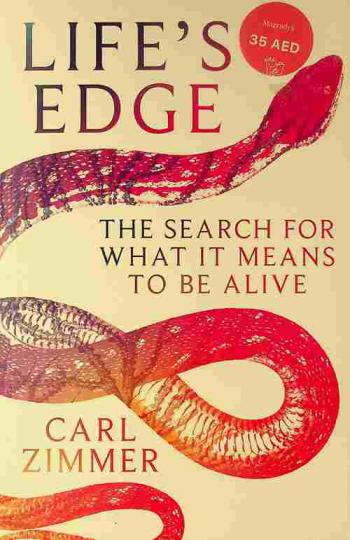
Life's edge : the search for what it means to be alive
Carl Zimmer investigates one of the biggest questions of all: What is life? The answer seems obvious until you try to seriously answer it. Is the apple sitting on your kitchen counter alive, or is only the apple tree it came from deserving of the word? If we can't answer that question here on earth, how will we know when and if we discover alien life on other worlds? The question hangs over some of society's most charged conflicts - whether a fertilized egg is a living person, for example, and when we ought to declare a person legally dead. Zimmer journeys through the strange experiments that have attempted to re-create life. Literally hundreds of definitions of what that should look like now exist, but none has yet emerged as an obvious winner. Lists of what living things have in common do not add up to a theory of life. It's never clear why some items on the list are essential and others not. Coronaviruses have altered the course of history, and yet many scientists maintain they are not alive. Chemists are creating droplets that can swarm, sense their environment, and multiply. Have they made life in the lab?

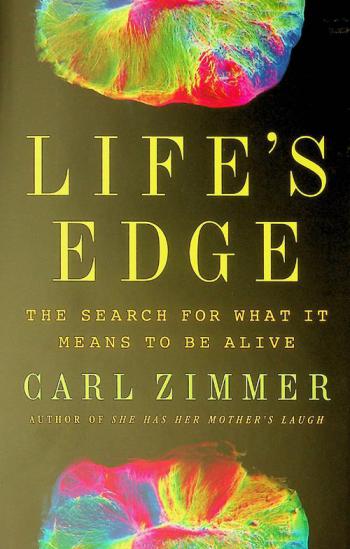
Life's edge : the search for what it means to be alive
\"We all assume we know what life is, but the more scientists learn about the living world-from protocells to brains, from zygotes to pandemic viruses-the harder they find it is to locate life's edge\"-- Provided by publisher.

Virus : an illustrated guide to 101 incredible microbes
\"This stunningly illustrated book provides a rare window into the amazing, varied, and often beautiful world of viruses. Contrary to popular belief, not all viruses are bad for you. In fact, several are beneficial to their hosts, and many are crucial to the health of our planet. 'Virus' offers an unprecedented look at 101 incredible microbes that infect all branches of life on Earth--from humans and other animals to insects, plants, fungi, and bacteria. Featuring hundreds of breathtaking color images throughout, this guide begins with a lively and informative introduction to virology\"-- Provided by publisher.
BOOK

The oldest living things in the world
\"The Oldest Living Things in the World is an epic journey through time and space. Over the past decade, artist Rachel Sussman has researched, worked with biologists, and traveled the world to photograph continuously living organisms that are 2,000 years old and older. Spanning from Antarctica to Greenland, the Mojave Desert to the Australian Outback, the result is a stunning and unique visual collection of ancient organisms unlike anything that has been created in the arts or sciences before, insightfully and accessibly narrated by Sussman along the way...Alongside the photographs, Sussman relays fascinating -- and sometimes harrowing -- tales of her global adventures tracking down her subjects and shares insights from the scientists who research them. The oldest living things in the world are a record and celebration of the past, a call to action in the present, and a barometer of our future.\" -- Publisher's description.
Book