
Catalogue Search | MBRL


Are you sure you want to remove the book from the shelf?

{{itemTitle}}
18
result(s) for
"Zipes, Jack, 1937- author"
Sort by:

Tales of wonder : retelling fairy tales through picture postcards
\"The most familiar fairy tales call to mind certain images: Little Red Riding Hood, Puss in Boots, Snow White, Cinderella, Rapunzel, Sleeping Beauty. Yet these visions often merely reflect illustrations encountered in classic tellings of the tales. The postcards gathered here by one of the world's foremost scholars of folk and fairy tales tell another story--of the remarkable range of interpretations and reimaginings these tales have inspired, captured, and conveyed picture by picture in this singular form. A pictorial history of fairy-tale postcards from the late nineteenth century to the present, Tales of Wonder presents a fascinating look at how key scenes of fairy tales have been rendered over time, suggesting a rethinking and reliving of the tales through the years. Drawn from the author's collection of more than three thousand fairy-tale postcards from around the world, these five hundred beautiful illustrations reproduce oil paintings, watercolors, photographs, ink drawings, and silhouettes--all evincing the myriad ways popular artists and their audiences have reimagined these tales. After an introduction and general history of fairy tales in postcards, the book features Jack Zipes's own translations of the most classical fairy tales in Europe and the United States, including versions by Charles Perrault and by Brothers Grimm. The fairy tale is not just once upon a time: it is, as fairy-tale postcard, a particular if not peculiar expression of a time, created by talented artists and innovative publishing companies. Tales of Wonder tells this intriguing history of the postcards as well as providing new perspectives on familiar stories\"-- Provided by publisher.
Book

The Enchanted Screen
The Enchanted Screen: The Unknown History of Fairy-Tale Films offers readers a long overdue, comprehensive look at the rich history of fairy tales and their influence on film, complete with the inclusion of an extensive filmography compiled by the author. With this book, Jack Zipes not only looks at the extensive, illustrious life of fairy tales and cinema, but he also reminds us that, decades before Walt Disney made his mark on the genre, fairy tales were central to the birth of cinema as a medium, as they offered cheap, copyright-free material that could easily engage audiences not only though their familiarity but also through their dazzling special effects. Since the story of fairy tales on film stretches far beyond Disney, this book, therefore, discusses a broad range of films silent, English and non-English, animation, live-action, puppetry, woodcut, montage (Jim Henson), cartoon, and digital. Zipes, thus, gives his readers an in depth look into the special relationship between fairy tales and cinema, and guides us through this vast array of films by tracing the adaptations of major fairy tales like \"Little Red Riding Hood,\" \"Cinderella,\" \"Snow White,\" \"Peter Pan,\" and many more, from their earliest cinematic appearances to today. Full of insight into some of our most beloved films and stories, and boldly illustrated with numerous film stills, The Enchanted Screen , is essential reading for film buffs and fans of the fairy tale alike.
\"Jack Zipes takes us beyond Disney and DreamWorks to the many films that draw on fairy-tale sorcery for their cinematic power. With fierce analytic energy, encyclopedic inclusiveness, and imaginative verve, he enlivens an expansive history that reaches back to Georges Méliès's enchantments and ends with the complex grotesqueries of Pan's Labyrinth and Little Otik .\" Maria Tatar, Harvard University
\" The Enchanted Screen is a labor of love and a major work of scholarship, encyclopedic in reach and rich in sustained and detailed thinking. The ‘unknown history’ of fairy-tale film is lucky to have found such a skilled and dedicated narrator.\" Stephen Benson, University of East Anglia Norwich
\"Last year, Zipes (emer., Univ. of Minnesota) contributed a foreword for Fairy Tale Films: Visions of Ambiguity (CH, Mar'11, 48-3760), a delightful collection edited by Pauline Greenhill and Sidney Eve Matrix. This year, Zipes presents an extensive, well-organized study of fairy tales in the film genre. Zipes's knowledge of films from a wide variety of cultures is admirable. In the silent era, fairy tales provided filmmakers worthy material free of copyright expense. From the 1930s on, the film industry was able to put old wine into new bottles with both color and sound, a la Walt Disney and filmmakers in other parts of the world. Taking a fresh approach to major films, Zipes avoides the heavy use of jargon and instead offers clear, direct commentary on the films themselves and their oral and literary sources ... Zipes gives the reader 10 pages of endnotes, 12 pages of bibliography, 38 pages of filmography, and a thorough index--all in fine print. The influence of this book will extend for decades. Summing Up: Essential. All readers.\" CHOICE, June 2011 (R. Blackwood, City Colleges of Chicago)
\"The true achievement of this book is its astute, perceptive, and thought-provoking discussion ... This intellectually stimulating book should be informative and enjoyable for a wide range of readers. At once a satisfying read and a valuable reference source, this is a solid and worthwhile scholarly effort.\" Mihaela Mihailova, Yale University ( The Historical Journal of Film, Radio and Television , 2011)
\"The subtitle of the book is The Unknown History of Fairy-Tale Films ; what Zipes has done in this book, as he has done in all his work, is to make that history known.\" -Children's Literature Association Quarterly
\"This colossal book offers a thorough and yet whimsical overview of the foundational role of fairy tales in filmmaking. Zipes, with his usual acerbic wit and inspiring expertise, takes readers on a journey through the historical facets of fairy-tale films, ranging from major studio productions to little-known art pieces. While the scope of Zipes' research and the acuity of his analysis alone are breathtaking, the passion with which Zipes writes about this subject impressed me deeply. The themes to which Zipes returns again and again in his interpretations - home, the uncanny, the family - provide powerful explanatory frames that help make his case that \"most fairy-tale films have deep roots in oral and literary tales and re-create them with great imaginative and artistic power\" (xi). Indeed, Zipes demonstrates this point and in so doing, provides the rest of us (fairy-tale scholars, film scholars, and scholars in adjacent disciplines) with an essential companion for research, teaching, and entertainment.\" Jeana Jorgensen, Journal of Folklore Research
Preface
Acknowledgments
Prologue
Part I
1. Filmic Adaptation and Appropriation of the Fairy Tale
2. De-Disneyfying Disney: Notes on the Development of the Fairy-Tale Film
3. Georges Méliès: Pioneer of the Fairy-Tale Film and the Art of the Ridiculous
4. Animated Fairy-tale Cartoons: Celebrating the Carnival Art of the Ridiculous
5. Animated Feature Fairy-Tale Films
Part II
6. Cracking the Magic Mirror: Re-Presentations of Snow White
7. The Trials and Tribulations of Little Red Riding Hood Revisited and Reviewed
8. Bluebeard's Original Sin and the Rise of Serial Killing, Mass Murder, and Fascism
9. The Triumph of the Underdog: Cinderella’s Legacy
10. Abusing and Abandoning Children: \"Hansel and Gretel,\" \"Tom Thumb,\" \"The Pied Piper,\" \"Donkey-Skin,\" and \"The Juniper Tree\"
11. Choosing the Right Mate: Why Beasts and Frogs Make for Ideal Husbands
12. Andersen’s Cinematic Legacy: Trivialization and Innovation
Part III
13. Adapting Fairy-Tale Novels
14. Between Slave Language and Utopian Optimism: Neglected Fairy-Tale Films of Central and Eastern Europe
15. Fairy-Tale Films in Dark Times: Breaking Molds, Seeing the World Anew
Bibliography
Filmography
Jack Zipes is Professor Emeritus of German and Comparative Literature at the University of Minnesota. An acclaimed translator and scholar of children's literature and culture, his most recent books include Relentless Progress: The Reconfiguration of Children's Literature, Fairy Tales, and Storytelling; The Collected Sicilian Folk and Fairy Tales of Giuseppe Pitré; Why Fairy Tales Stick; Hans Christian Andersen: The Misunderstood Storyteller, Beautiful Angiola; and The Robber with the Witch's Head , all published by Routledge.
eBook


The irresistible fairy tale
If there is one genre that has captured the imagination of people in all walks of life throughout the world, it is the fairy tale. Yet we still have great difficulty understanding how it originated, evolved, and spread--or why so many people cannot resist its appeal, no matter how it changes or what form it takes. In this book, renowned fairy-tale expert Jack Zipes presents a provocative new theory about why fairy tales were created and retold--and why they became such an indelible and infinitely adaptable part of cultures around the world.
Drawing on cognitive science, evolutionary theory, anthropology, psychology, literary theory, and other fields, Zipes presents a nuanced argument about how fairy tales originated in ancient oral cultures, how they evolved through the rise of literary culture and print, and how, in our own time, they continue to change through their adaptation in an ever-growing variety of media. In making his case, Zipes considers a wide range of fascinating examples, including fairy tales told, collected, and written by women in the nineteenth century; Catherine Breillat's film adaptation of Perrault's \"Bluebeard\"; and contemporary fairy-tale drawings, paintings, sculptures, and photographs that critique canonical print versions.
While we may never be able to fully explain fairy tales,The Irresistible Fairy Taleprovides a powerful theory of how and why they evolved--and why we still use them to make meaning of our lives.
eBook

Happily Ever After
First Published in 1997. Routledge is an imprint of Taylor & Francis, an informa company.
Jack Zipes is Professor of German at the University of Minnesota. He is the author of Fairy Tales and the Art of Subversion, Don't Bet on the Prince and Creative Storytelling , all published by Routledge.
eBook


FAIRY TALES and the ART of SUBVERSION
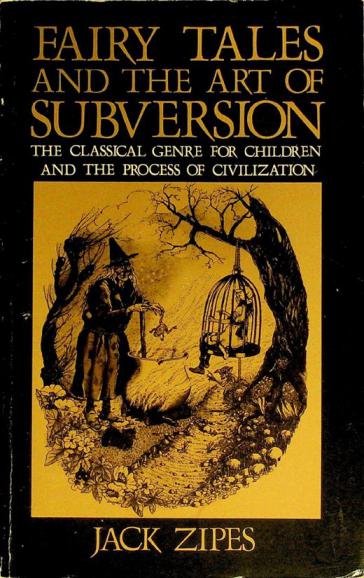
The fairy tale may be one of the most important cultural and social influences on children's lives. But until Fairy Tales and the Art of Subversion, little attention had been paid to the ways in which the writers and collectors of tales used traditional forms and genres in order to shape children's lives - their behavior, values, and relationship to society. As Jack Zipes convincingly shows, fairy tales have always been a powerful discourse, capable of being used to shape or destabilize attitudes and behavior within culture.For this new edition, the author has revised the work throughout and added a new introduction bringing this classic title up to date.
eBook

Japanese tales of Lafcadio Hearn
\"Lafcadio Hearn (1850-1904) was one of the nineteenth century's best-known writers, his name celebrated alongside those of Mark Twain and Robert Louis Stevenson. Born in Greece and raised in Ireland, Hearn was a true prodigy and world traveler. He worked as a reporter in Cincinnati, New Orleans, and the West Indies before heading to Japan in 1890 on a commission from Harper's. There, he married a Japanese woman from a samurai family, changed his name to Koizumi Yakumo, and became a Japanese subject. An avid collector of traditional Japanese tales, legends, and myths, Hearn taught literature and wrote his own tales for both Japanese and Western audiences. Japanese Tales of Lafcadio Hearn brings together twenty-eight of Hearn's strangest and most entertaining stories in one elegant volume\"--Back cover.
BOOK
