
Catalogue Search | MBRL


Are you sure you want to remove the book from the shelf?

{{itemTitle}}
128
result(s) for
"Zorrilla, Francisco"
Sort by:

Plastic-Degrading Potential across the Global Microbiome Correlates with Recent Pollution Trends
Utilization of synthetic biology approaches to enhance current plastic degradation processes is of crucial importance, as natural plastic degradation processes are very slow. For instance, the predicted lifetime of a polyethylene terephthalate (PET) bottle under ambient conditions ranges from 16 to 48 years. Biodegradation is a plausible route toward sustainable management of the millions of tons of plastic waste that have accumulated in terrestrial and marine environments. However, the global diversity of plastic-degrading enzymes remains poorly understood. Taking advantage of global environmental DNA sampling projects, here we constructed hidden Markov models from experimentally verified enzymes and mined ocean and soil metagenomes to assess the global potential of microorganisms to degrade plastics. By controlling for false positives using gut microbiome data, we compiled a catalogue of over 30,000 nonredundant enzyme homologues with the potential to degrade 10 different plastic types. While differences between the ocean and soil microbiomes likely reflect the base compositions of these environments, we find that ocean enzyme abundance increases with depth as a response to plastic pollution and not merely taxonomic composition. By obtaining further pollution measurements, we observed that the abundance of the uncovered enzymes in both ocean and soil habitats significantly correlates with marine and country-specific plastic pollution trends. Our study thus uncovers the earth microbiome's potential to degrade plastics, providing evidence of a measurable effect of plastic pollution on the global microbial ecology as well as a useful resource for further applied research. IMPORTANCE Utilization of synthetic biology approaches to enhance current plastic degradation processes is of crucial importance, as natural plastic degradation processes are very slow. For instance, the predicted lifetime of a polyethylene terephthalate (PET) bottle under ambient conditions ranges from 16 to 48 years. Moreover, although there is still unexplored diversity in microbial communities, synergistic degradation of plastics by microorganisms holds great potential to revolutionize the management of global plastic waste. To this end, the methods and data on novel plastic-degrading enzymes presented here can help researchers by (i) providing further information about the taxonomic diversity of such enzymes as well as understanding of the mechanisms and steps involved in the biological breakdown of plastics, (ii) pointing toward the areas with increased availability of novel enzymes, and (iii) giving a basis for further application in industrial plastic waste biodegradation. Importantly, our findings provide evidence of a measurable effect of plastic pollution on the global microbial ecology.
Journal Article

Microbial interactions shape cheese flavour formation
Cheese fermentation and flavour formation are the result of complex biochemical reactions driven by the activity of multiple microorganisms. Here, we studied the roles of microbial interactions in flavour formation in a year-long Cheddar cheese making process, using a commercial starter culture containing
Streptococcus thermophilus
and
Lactococcus
strains. By using an experimental strategy whereby certain strains were left out from the starter culture, we show that
S. thermophilus
has a crucial role in boosting
Lactococcus
growth and shaping flavour compound profile. Controlled milk fermentations with systematic exclusion of single
Lactococcus
strains, combined with genomics, genome-scale metabolic modelling, and metatranscriptomics, indicated that
S. thermophilus
proteolytic activity relieves nitrogen limitation for
Lactococcus
and boosts de novo nucleotide biosynthesis. While
S. thermophilus
had large contribution to the flavour profile,
Lactococcus cremoris
also played a role by limiting diacetyl and acetoin formation, which otherwise results in an off-flavour when in excess. This off-flavour control could be attributed to the metabolic re-routing of citrate by
L. cremoris
from diacetyl and acetoin towards
α
-ketoglutarate. Further, closely related
Lactococcus lactis
strains exhibited different interaction patterns with
S. thermophilus
, highlighting the significance of strain specificity in cheese making. Our results highlight the crucial roles of competitive and cooperative microbial interactions in shaping cheese flavour profile.
Cheese fermentation and flavour formation are the result of complex biochemical reactions driven by the activity of multiple microorganisms. Here, the authors identify microbial interactions as a mechanism underlying flavour formation in Cheddar cheese.
Journal Article

Parallel Simplex, an Alternative to Classical Experimentation: A Case Study
Experimentation is a strong methodology that improves and optimizes processes. Nevertheless, in many cases, real-life dynamics of production demands and other restrictions inhibit the use of these methodologies because their use implies stopping production, generating scrap, jeopardizing demand accomplishments, and other problems. Proposed here is an alternative methodology to search for the best process variable levels and optimize the response of the process without the need to stop production. This algorithm is based on the principles of the Variable Simplex developed by Nelder and Mead and the continuous iterative process of EVOPS developed by Box, which is then modified as a simplex by Spendley. It is named parallel simplex because it searches for the best response with three independent Simplexes searching for the same response at the same time. The algorithm was designed for three simplexes of two input variables each. The case study documented shows that it is efficient and effective.
Journal Article
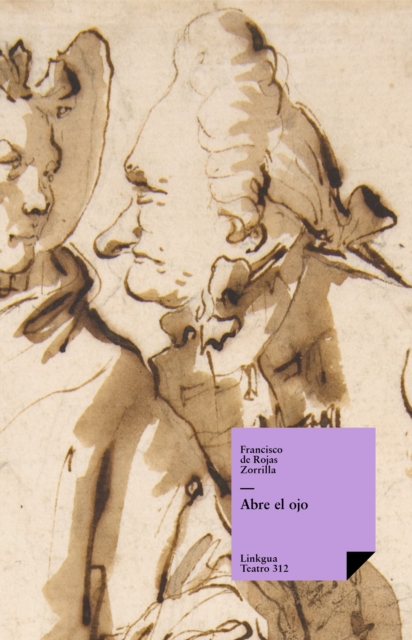
Abre el ojo
Francisco de Rojas Zorrilla (Toledo, 1607-Madrid, 1648). España. Hijo de un militar toledano de origen judío, nació el 4 de octubre de 1607. Estudió en Salamanca y luego se trasladó a Madrid, donde vivió el resto de su vida. Fue uno de los poetas más encumbrados de la corte de Felipe IV. Y en 1645 obtuvo, por intervención del rey, el hábito de Santiago. Empezó a escribir en 1632, junto a Pérez Montalbán y Calderón de la Barca, la tragedia El monstruo de la fortuna. Más tarde colaboró también con Vélez de Guevara, Mira de Amescua y otros autores. Felipe IV protegió a Rojas y pronto las comedias.
eBook

Ecological dynamics of Enterobacteriaceae in the human gut microbiome across global populations
Gut bacteria from the Enterobacteriaceae family are a major cause of opportunistic infections worldwide. Given their prevalence among healthy human gut microbiomes, interspecies interactions may play a role in modulating infection resistance. Here we uncover global ecological patterns linked to Enterobacteriaceae colonization and abundance by leveraging a large-scale dataset of 12,238 public human gut metagenomes spanning 45 countries. Machine learning analyses identified a robust gut microbiome signature associated with Enterobacteriaceae colonization status, consistent across health states and geographic locations. We classified 172 gut microbial species as co-colonizers and 135 as co-excluders, revealing a genus-wide signal of colonization resistance within
Faecalibacterium
and strain-specific co-colonization patterns of the underexplored
Faecalimonas phoceensis
. Co-exclusion is linked to functions involved in short-chain fatty acid production, iron metabolism and quorum sensing, while co-colonization is linked to greater functional diversity and metabolic resemblance to Enterobacteriaceae. Our work underscores the critical role of the intestinal environment in the colonization success of gut-associated opportunistic pathogens with implications for developing non-antibiotic therapeutic strategies.
Assessing more than 12,000 metagenomic samples from across the world using computational approaches, the authors determined interactions between species that co-colonize or co-exclude Enterobacteriaceae in terms of functional pathways and metabolites in healthy human gut microbiomes.
Journal Article
Microbial communities form rich extracellular metabolomes that foster metabolic interactions and promote drug tolerance
Microbial communities are composed of cells of varying metabolic capacity, and regularly include auxotrophs that lack essential metabolic pathways. Through analysis of auxotrophs for amino acid biosynthesis pathways in microbiome data derived from >12,000 natural microbial communities obtained as part of the Earth Microbiome Project (EMP), and study of auxotrophic–prototrophic interactions in self-establishing metabolically cooperating yeast communities (SeMeCos), we reveal a metabolically imprinted mechanism that links the presence of auxotrophs to an increase in metabolic interactions and gains in antimicrobial drug tolerance. As a consequence of the metabolic adaptations necessary to uptake specific metabolites, auxotrophs obtain altered metabolic flux distributions, export more metabolites and, in this way, enrich community environments in metabolites. Moreover, increased efflux activities reduce intracellular drug concentrations, allowing cells to grow in the presence of drug levels above minimal inhibitory concentrations. For example, we show that the antifungal action of azoles is greatly diminished in yeast cells that uptake metabolites from a metabolically enriched environment. Our results hence provide a mechanism that explains why cells are more robust to drug exposure when they interact metabolically.
Using microbiome data analysis and a self-establishing metabolically cooperating yeast community model, the authors show that the presence of auxotrophs in a microbial community increases metabolic interactions between cells and fosters antimicrobial drug tolerance.
Journal Article
Microbial interactions shape cheese flavour formation
Cheese fermentation and flavour formation are the result of complex biochemical reactions driven by the activity of multiple microorganisms. Here, we studied the roles of microbial interactions in flavour formation in a year-long Cheddar cheese making process, using a commercial starter culture containing Streptococcus thermophilus and Lactococcus strains. By using an experimental strategy whereby certain strains were left out from the starter culture, we show that S. thermophilus has a crucial role in boosting Lactococcus growth and shaping flavour compound profile. Controlled milk fermentations with systematic exclusion of single Lactococcus strains, combined with genomics, genome-scale metabolic modelling, and metatranscriptomics, indicated that S. thermophilus proteolytic activity relieves nitrogen limitation for Lactococcus and boosts de novo nucleotide biosynthesis. While S. thermophilus had large contribution to the flavour profile, Lactococcus cremoris also played a role by limiting diacetyl and acetoin formation, which otherwise results in an off-flavour when in excess. This off-flavour control could be attributed to the metabolic re-routing of citrate by L. cremoris from diacetyl and acetoin towards α-ketoglutarate. Further, closely related Lactococcus lactis strains exhibited different interaction patterns with S. thermophilus, highlighting the significance of strain specificity in cheese making. Our results highlight the crucial roles of competitive and cooperative microbial interactions in shaping cheese flavour profile.
Journal Article

Fibre Glass Reuse by Optimizing a Spraying Process
Objective: The objective of this study is to investigate the appropriate operating parameters of a fiberglass sprinkling process for domestic water heaters in order to evaluate the feasibility of reusing this material since its classification has changed from non-hazardous to hazardous due to government regulations. Theoretical Framework: One of the main limitations when using the classical design of experiments is the availability of the process to be studied, since generally the workloads/demands do not allow it. In the theoretical framework, a new proposal is presented, based on direct search algorithms, which seeks to enhance the strengths of these algorithms and minimize their weaknesses. Method: The methodology adopted for this research involves the application of a hybrid direct search algorithm that combines concepts from Taguchi's cross-array, Montgomery-Myers dual response, and Nelder and Mead's simplex algorithm. This is done to evaluate the feasibility of reusing fiberglass with different process parameters. Results and Discussion: The results showed that it was possible to adjust the operating parameters of the process so that the glass fiber could be reused. This resulted in a significant cost reduction for the company, as the waste was reclassified as hazardous and disposal costs increased dramatically. Of course, the environmental impact is a major consideration, given that most of these processes do not recycle this material. Research Implications: First, the development of this research allowed to find the best combinations of parameters for different combinations of virgin/recycled material, allowing to dramatically reduce the volume of material to be disposed, impacting the environment and disposal costs for the company. It also served as field evidence of the validity and efficiency of the proposed Armentum algorithm. Originality/Value: Although there are many studies in the literature that try to minimize the disadvantages of direct search algorithms, such as non-convergence and the high number of iterations, through different combinations/innovations of the original algorithm of Nelder and Mead, the results are actually relative, since these applications are developed with simulations with test functions. The case presented here has several original features: The combination of concepts such as Taguchi's cross array, the consideration of Montgomery's dual response together with Nelder and Mead's algorithm has generated a new and original proposal, called Armentum, which in the case presented has demonstrated efficiency and reliability.
Journal Article
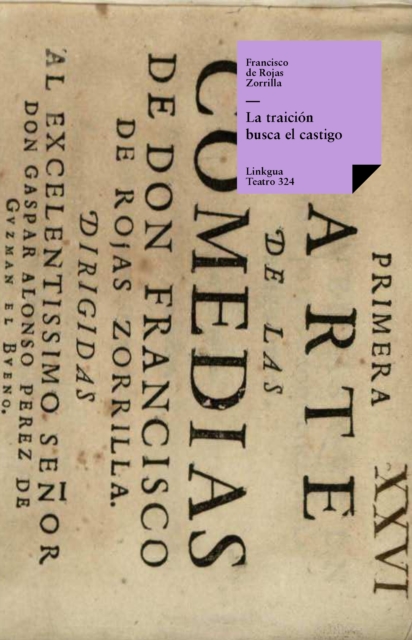
La Traición Busca el Castigo
La traición busca el castigo de Francisco de Rojas Zorrilla es una obra que se encuentra en la intersección entre la comedia de capa y espada y el drama de honor. Es una muestra del afán experimental que caracteriza al autor, quien trata de explorar los límites de estos dos géneros populares en el teatro del Siglo de Oro español.El argumento de la obra gira en torno a la traición y la búsqueda de justicia, culminando en un desenlace sorprendente en el que don Juan apuñala erróneamente a don Andrés en la oscuridad. Lo sorprendente es que don Andrés, lejos de acusar a don Juan, confiesa ser el culpable, manifestando así la idea de que \"la traición busca su castigo\".En la Jornada primera, el diálogo entre don Andrés y Mojicón establece el tono y el conflicto principal de la obra. Don Andrés se muestra como un hombre impulsado por sus emociones, dispuesto a actuar sin considerar las consecuencias. Mojicón, por su parte, intenta ser la voz de la razón, aunque no siempre es escuchado. Este intercambio inicial pone de manifiesto las tensiones entre la pasión y la razón, la impulsividad y el consejo sabio, temas recurrentes en la obra.Lo que hace a La traición busca el castigo una obra particularmente fascinante es su compleja estructura moral. Don Andrés acepta la responsabilidad por un acto que no cometió, lo que plantea preguntas interesantes sobre la naturaleza del honor y la justicia. ¿Es más honorable aceptar un castigo no merecido por un acto de traición, o denunciar al verdadero culpable? La obra no ofrece respuestas fáciles, lo que aumenta su complejidad y profundidad.El lenguaje de la obra es otro de sus puntos fuertes. Rojas Zorrilla utiliza un diálogo agudo y lleno de matices para explorar los complejos estados emocionales y morales de sus personajes. Esto añade una capa de sofisticación a la obra, permitiendo que el público aprecie las
complejidades del honor y la traición desde múltiples perspectivas.La traición busca el castigo es una obra rica en temática y complejidad moral. Su intrincada trama y personajes multifacéticos la convierten en una adición valiosa al canon del teatro del Siglo de Oro español. Es una obra que desafía las convenciones de género y ofrece una visión matizada de temas como el honor, la traición y la justicia, haciéndola relevante incluso hoy en día.
eBook

La traición busca el castigo
Francisco de Rojas Zorrilla (Toledo, 1607-Madrid, 1648). España. Hijo de un militar toledano de origen judío, nació el 4 de octubre de 1607. Estudió en Salamanca y luego se trasladó a Madrid, donde vivió el resto de su vida. Fue uno de los poetas más encumbrados de la corte de Felipe IV. Y en 1645 obtuvo, por intervención del rey, el hábito de Santiago. Empezó a escribir en 1632, junto a Pérez Montalbán y Calderón de la Barca, la tragedia El monstruo de la fortuna. Más tarde colaboró también con Vélez de Guevara, Mira de Amescua y otros autores. Felipe IV protegió a Rojas y pronto las comedias.
eBook