
Catalogue Search | MBRL


Are you sure you want to remove the book from the shelf?

{{itemTitle}}
47
result(s) for
"Zuidema, Jason"
Sort by:
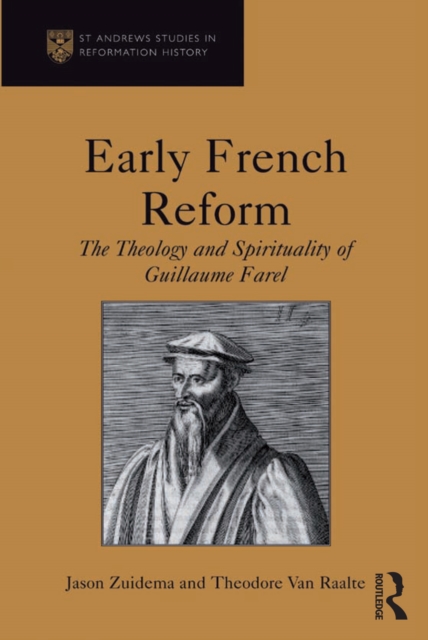
Early French Reform
Guillaume Farel (1489-1565) was one of the key figures in the early Genevan reformation, but his legacy has become largely overshadowed by towering figure of Calvin. Seeking to contribute to a better understanding of the French-speaking reform movement, this volume offers a rich portrait of Farel's early thought by way of interpretive essays and translations of primary source texts. The translations of the second half of the volume are some of the first widely-accessible full-length translations of Farel's work into English.
eBook

The History of French-Speaking Protestantism in Quebec
Although French-speaking Canadians have largely been Roman Catholic, there has been a small, but significant Protestant minority among them for much of their history. Several important studies on these Protestants have appeared in French or in short articles in English, but there is no broader survey in English. Based on significant archival study, a fresh reading of printed texts and the work of a generation of historians, this collection of essays brings together the work of leading scholars in the field to bring reasoned perspective on various narratives of the history of this often forgotten religious minority. This collection highlights international and inter-confessional networks, the various stages of external and internal mission, the periods of growth and decline, and the cultural and political heritage of these Protestants.
eBook

The Laity, the World and the Legacy of Vatican II on the Consecrated Life
[...]when we study the changes in Benedictine life in our era we are not positing that change is something new, per se, but rather that there are particular developments in this generation that were not necessarily common in previous generations. The important Chapter 6 of Lumen Gentium and the short text of Perfectae Caritatis, the Decree on the Adaptation and Renewal of Religious Life, proclaimed near the end of the council on 28 October 1965, argued that the life of the evangelical counsels of chastity, poverty and obedience were not some \"intermediate state\" between lay and clerical, but one which was part of both and led to a special bond with Christ and the Church.5 Lumen Gentium makes it clear that this life is not a flight from service to world: \"Let no one think that religious have become strangers to their fellowmen or useless citizens of this earthly city by their consecration.
Journal Article

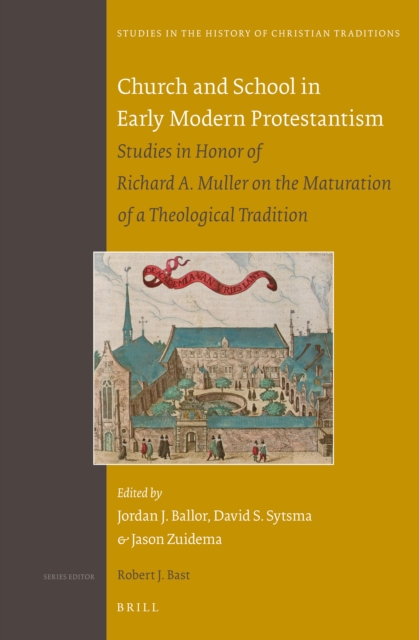
Church and school in early modern Protestantism electronic resource : studies in honor of Richard A. Muller on the maturation of a theological tradition / edited by Jordan J. Ballor, David S. Sytsma, Jason Zuidema
A great deal of scholarship has too often juxtaposed scholasticism and piety, resulting in misunderstandings of the relationship between Protestant churches of the early modern era and the theology taught in their schools. But more recent scholarship, especially conducted by Richard A. Muller over the last number of decades, has remapped the lines of continuity and discontinuity in the relation of church and school. This research has produced a more methodologically nuanced and historically accurate representation of church and school in early modern Protestantism. Written by leading scholars of early modern Protestant theology and history and based on research using the most relevant original sources, this collection seeks to broaden our understanding of how and why clergy were educated to serve the church.Contributors include: Yuzo Adhinarta, Willem van Asselt, Irena Backus, Jordan J. Ballor, J. Mark Beach, Andreas Beck, Joel R. Beeke, Lyle D. Bierma, Raymond A. Blacketer, James E. Bradley, Dariusz M. Brycko, Amy Nelson Burnett, Emidio Campi, Heber Carlos de Campos Jr, Kiven Choy, R. Scott Clark, Paul Fields, John V. Fesko, Paul Fields, W. Robert Godfrey, Alan Gomes, Albert Gootjes, Chad Gunnoe, Aza Goudriaan, Fred P. Hall, Byung-Soo (Paul) Han, Nathan A. Jacobs, Frank A. James III, Martin Klauber, Henry Knapp, Robert Kolb, Mark J. Larson, Brian J. Lee, Karin Maag, Benjamin T.G. Mayes, Andrew M. McGinnis, Paul Mpindi, Adriaan C. Neele, Godfried Quaedtvlieg, Sebastian Rehnman, Todd Rester, Gregory D. Schuringa, Herman Selderhuis, Donald Sinnema, Keith Stanglin, David Steinmetz, David Sytsma, Yudha Thianto, John L. Thompson, Carl Trueman, Theodore G. Van Raalte, Cornelis Venema, Timothy Wengert, Reita Yazawa, Jeongmo Yoo, and Jason Zuidema.
eBook

'The Reason for which This Work was Written and Had to be Revised and Why it Was Lengthened' (appended to 1542 Summaire)' 1
By his holy grace, the Lord God himself makes us know how to please him. He makes light come upon his own and gives grace and blessings to them according to his good pleasure and in great goodness and mercy.
Book Chapter

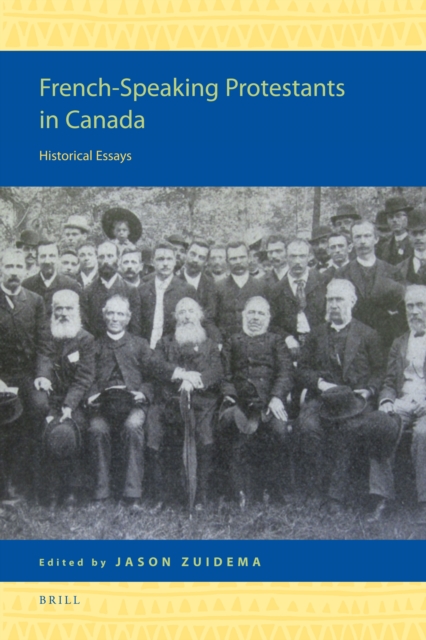
French-speaking Protestants in Canada : historical essays
Although French-speaking Canadians have largely been Roman Catholic, there has been a small, but significant Protestant minority among them. This collection of essays brings together the work of leading scholars in the field to bring historical perspective on this often misunderstood or forgotten religious minority.
eBook
Farel's Summaire
Farel introduces his booklet with a description of prayer as 'one of the most noble fruits' produced by faith when that faith has regard only for the kindness, mercy and benevolence of God. 'Prayer' is here placed in parallel with the, 'lifting up of the spirit and understanding to God'. The nature of sources on prayer especially published prayers it is unlikely that there was any great discrepancy between norm and practice, since the advocated action was being carried out in the very act of advocating it. The expression verbosiores preces literally means more abundantly-worded prayers but one must not think that Farel is opposing long prayers as such. Farel's prayer early in the letter speaks of coming to the reading of scripture with one's heart cast upon Jesus in humble prayer for the Spirit. He ties the Spirit and word together, and specifies the engagement of the heart in both the reading of scripture and the uttering of prayer.
Book Chapter
A Summary and Brief Exposition (1529/34)
Maniere et fasson was not entirely original to Guillaume Farel but derives in large part from the Bernese liturgy of 1529. Bruno Burki writes that it is an adaptation of the Bernese liturgy of 1529. The vital importance of the document lies in its being the first Reformed liturgy for the French speaking churches. Farel's prolific scripture referencing in this document suggests that he wanted people to have confidence that the forms rested on the authority of scripture. As to the use of Farel's forms in Geneva, Farel preached in the Church of the Rive in Geneva in 1534, and on Easter Sunday that year he administered the Lord's Supper to more than 400 persons in the Convent of Rive. The holy baptism of Jesus is invisible, internal and in the soul when the Holy Spirit is given. From the beginning holy marriage was instituted and ordained by God.
Book Chapter