
Catalogue Search | MBRL


Are you sure you want to remove the book from the shelf?

{{itemTitle}}
25
result(s) for
"de Camargo, Olaf Kraus"
Sort by:

The Rights of People With Disabilities in Policy Development Comment on \How Did Governments Address the Needs of People With Disabilities During the COVID-19 Pandemic? An Analysis of 14 Countries’ Policies Based on the UN Convention on the Rights of Persons With Disabilities\
Shikako et al analysis highlights that needs of persons with disability (PwD) were often overlooked, with policies primarily focused on general population health measures rather than specific accommodations for PwD. This commentary suggests adopting universal design principles in policy development to ensure inclusivity and advocate for maintaining services essential for PwD even during crises. It emphasizes the importance of involving PwD in policy-making processes and enhancing data collection for better policy analysis and concludes with recommendations for creating more inclusive policies, stressing the need for international collaboration and the integration of PwD needs into all policy levels.
Journal Article
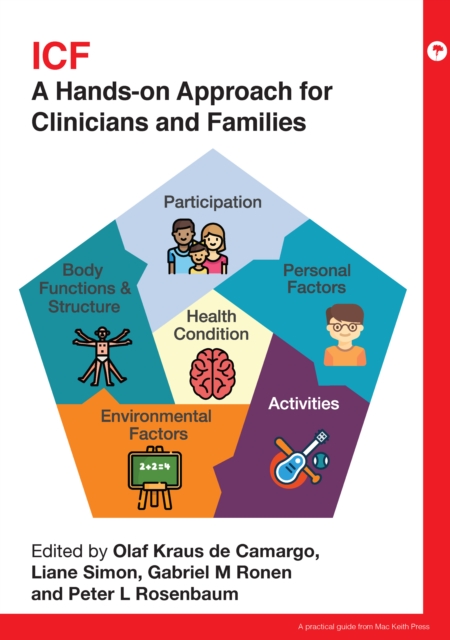
ICF : a hands-on approach for clinicians and families
This accessible handbook introduces the World Health Organisation's International Classification of Functioning, Disability and Health (ICF) to professionals working with children with disabilities and their families.It contains an overview of the elements of the ICF but focusses on practical applications, including how the ICF framework can be used with children, families and carers to formulate health and management goals.The Appendices contain case studies for individuals and interdisciplinary teams to work through and discuss, alongside other resources.
eBook

Knowledge Exchange and Discovery in the Age of Social Media: The Journey From Inception to Establishment of a Parent-Led Web-Based Research Advisory Community for Childhood Disability
Efforts to involve parents and families in all aspects of research, from initiating the question through to dissemination and knowledge exchange, are increasing. While social media as a method for health communication has shown numerous benefits, including increasing accessibility, interactions with others, and access to health care information, little work has been published on the use of social media to enhance research partnerships.
Our objective was to describe the development and evaluation of a Web-based research advisory community, hosted on Facebook and connecting a diverse group of parents of special needs children with researchers at CanChild Centre for Childhood Disability Research. The goal of this community is to work together and exchange knowledge in order to improve research and the lives of children and their families.
The Web-based Parents Participating in Research (PPR) advisory community was a secret Facebook group launched in June 2014 and run by 2 parent moderators who worked in consultation with CanChild. We evaluated its success using Facebook statistics of engagement and activity (eg, number of posts, number of comments) between June 2014 and April 2015, and a Web-based survey of members.
The PPR community had 96 participants (2 parent moderators, 13 researchers, and 81 family members) as of April 1, 2015. Over 9 months, 432 original posts were made: 155 (35.9%) by moderators, 197 (45.6%) by parents, and 80 (18.5%) by researchers. Posts had a median of 3 likes (range 0-24) and 4 comments (range 0-113). Members, rather than moderators, generated 64% (277/432) of posts. The survey had a 51% response rate (49/96 members), with 40 (82%) being parent members and 9 (18%) being researchers. The initial purpose of the group was to be an advisory to CanChild, and 76% (28/37) of parents and all the researchers (9/9) identified having an impact on childhood disability research as their reason for participating. A total of 58% (23/40) of parents and 56% (5/9) of researchers indicated they felt safe to share sensitive or personal information. While researchers shared evidence-based resources and consulted with families to get guidance on specific issues, there was an unexpected benefit of gaining an understanding of what issues were important to families in their daily lives. Parents felt a sense of belonging to this community where they could share their stories but also wanted more researcher participation and clarity on the purpose of the group.
The PPR community grew from inception to an established community with active engagement and knowledge exchange. Both parents and researchers described valuable experiences. Researchers should consider social media as a means of engaging families in all phases of research to ensure that research and its outcomes are meaningful to those who need it most.
Journal Article

Impact of lockdown and school closure on children’s health and well-being during the first wave of COVID-19: a narrative review
BackgroundIn the context of containment measures against the COVID-19 pandemic, the aims were to examine the impact of lockdown and school closures on childs’ and adolescents’ health and well-being and social inequalities in health.MethodsLiterature review by searching five databases until November 2020. We included quantitative peer-reviewed studies reporting health and well-being outcomes in children (0–18 years) related to closure measures\" impact due to COVID-19. A pair of authors assessed the risk of bias of included studies. A descriptive and narrative synthesis was carried out.FindingsTwenty-two studies, including high-income, middle-income and low-income countries, fulfilled our search criteria and were judged not to have an increased risk of bias. Studies from Australia, Spain and China showed an increase in depressive symptoms and decrease in life satisfaction. A decrease in physical activity and increase in unhealthy food consumption were shown in studies from two countries. There was a decrease in the number of visits to the emergency department in four countries, an increase in child mortality in Cameroon and a decrease by over 50% of immunisations administered in Pakistan. A significant drop of 39% in child protection medical examination referrals during 2020 compared with the previous years was found in the UK, a decrease in allegations of child abuse and neglect by almost one-third due to school closures in Florida, and an increase in the number of children with physical child abuse trauma was found in one centre in the USA.InterpretationFrom available reports, pandemic school closure and lockdown have adverse effects on child health and well-being in the short and probably long term. We urge governments to take the negative public health consequences into account before adopting restrictive measures in childhood.
Journal Article
Viewpoint: taking a strengths-based approach to developmental disability: the F-words for child development
The strengths model can be seen as an operationalisation of an earlier concept of ‘client-centredness’ as described by Carl Rogers in the 1950s and 1960s.4 Client-centred approaches in child health became known as ‘family-centred’ as children are always seen in the company of family members.5 Family-centred services are characterised by the following principles: In the 1970s, George Engel described the limitations of the traditional medical model in the following way: “Thus, while the physician’s obligation to any patient is to establish the clinical diagnosis (es), this is not an end in itself but is the physician’s way of indicating those aspects of the patient’s illness which he knows and is able to identify according to experience and convention. 6 This understanding led Engel to the proposition of the biopsychosocial model, integrating the medical and social model into one holistic view of health.7 It would take another 30 years until that type of thinking began to be adopted more broadly and informed the creation of the WHO’s International Classification of Functioning, Disability and Health (ICF) framework in 2001.8 Despite the benefits of the holistic perspective provided by the biopsychosocial model and the substantial evidence accumulated over the last decades of its usefulness in explaining a wide range of health conditions, the scientific discourse often persists in a debate of medical vs social models of health.9 The ICF allows to describe a person in their context, expanding beyond the biomedical domains such as body functions and structures by adding descriptions of their activities and participation and how environmental factors may act as barriers or facilitators, considering the unique personal characteristics of everyone.10 As the wording of the categories of the ICF is neutral, it makes it possible to describe both strengths and weaknesses (impairments, limitations and restrictions). To better prepare health professionals to assume a collaborative role when engaging with children and families, changes to the health curriculum by embedding the ICF into the teaching have been proposed.11 An example of how this approach is valued by parents is the large number of tools that have been codeveloped by parents and caregivers to facilitate the communication about the goals and needs of the families and their children.12 More recently, the concept of the ‘F-words lens’ was published.13 14 It offers a way of identifying the best ‘ingredients’ for therapies that match the goals identified by the child and their family, always with the main purpose of improving their participation in their chosen activities.
Journal Article

Training Intervention and Program of Support for Fostering the Adoption of Family-Centered Telehealth in Pediatric Rehabilitation: Protocol for a Multimethod, Prospective, Hybrid Type 3 Implementation-Effectiveness Study
Children with disability face long wait times for rehabilitation services. Before the COVID-19 pandemic, telehealth adoption was low across pediatric rehabilitation. Owing to the COVID-19 pandemic restrictions, pediatric therapists were asked to rapidly shift to telehealth, often with minimal training. To facilitate the behavior changes necessary for telehealth adoption, provision of appropriate evidence-based training and support is required. However, evidence to support the effective implementation of such training is lacking. The successful real-world implementation of a training intervention and program of support (TIPS) targeting pediatric therapists to enhance the adoption of family-centered telerehabilitation (FCT) requires the evaluation of both implementation and effectiveness.
This study aimed to evaluate TIPS implementation in different pediatric rehabilitation settings and assess TIPS effectiveness, as it relates to therapists' adoption, service wait times, families' perception of service quality, and costs.
This 4-year, pan-Canadian study involves managers, pediatric occupational therapists, physiotherapists, speech-language pathologists, and families from 20 sites in 8 provincial jurisdictions. It will use a multimethod, prospective, hybrid type 3 implementation-effectiveness design. An interrupted time series will assess TIPS implementation. TIPS will comprise a 1-month training intervention with self-paced learning modules and a webinar, followed by an 11-month support program, including monthly site meetings and access to a virtual community of practice. Longitudinal mixed modeling will be used to analyze indicators of therapists' adoption of and fidelity to FCT collected at 10 time points. To identify barriers and facilitators to adoption and fidelity, qualitative data will be collected during implementation and analyzed using a deductive-inductive thematic approach. To evaluate effectiveness, a quasi-experimental pretest-posttest design will use questionnaires to evaluate TIPS effectiveness at service, therapist, and family levels. Generalized linear mixed effects models will be used in data analysis. Manager, therapist, and family interviews will be conducted after implementation and analyzed using reflective thematic analysis. Finally, cost data will be gathered to calculate public system and societal costs.
Ethics approval has been obtained from 2 jurisdictions (February 2022 and July 2022); approval is pending in the others. In total, 20 sites have been recruited, and data collection is anticipated to start in September 2022 and is projected to be completed by September 2024. Data analysis will occur concurrently with data collection, with results disseminated throughout the study period.
This study will generate knowledge about the effectiveness of TIPS targeting pediatric therapists to enhance FCT adoption in pediatric rehabilitation settings, identify facilitators for and barriers to adoption, and document the impact of telehealth adoption on therapists, services, and families. The study knowledge gained will refine the training intervention, enhance intervention uptake, and support the integration of telehealth as a consistent pediatric rehabilitation service option for families of children with disabilities.
ClinicalTrials.gov NCT05312827; https://clinicaltrials.gov/ct2/show/NCT05312827.
PRR1-10.2196/40218.
Journal Article

Person-reported perspectives on support availability for people with disabilities during the COVID-19 pandemic in Quebec
ObjectivesTo identify the perception of the availability of community support and the support needs of autistic people and people with disabilities, from their own perspectives and from those of their caregivers at the time of the COVID-19 pandemic in Quebec, to assess the association between the available support and the perceived stress levels to evaluate the role of perceived social support as a potential buffer of this association.MethodsA total of 315 respondents participated in a 4-min online survey across the province of Quebec by snowball sampling. Community support was defined as availability of adapted healthcare, adapted information, adapted educational services and community services.ResultsThe community support and services during the COVID-19 pandemic were not available or were not sufficiently adapted to their needs. About 40% of autistic people or people with disabilities and 44% of their caregivers perceived their days as being quite stressful or extremely stressful. This is twice the rate of that of the general population in non-pandemic time. Nevertheless, social supports can play a mediating role in attenuating the effects of the absence of adapted services on the stress level of this vulnerable population.ConclusionThe non-availability of adapted services was related to an increase in the stress level in this population. Our study adds that other than social support, adapted healthcare/tele-healthcare and in-home support services could reduce the impact of the pandemic on the stress level of autistic people and people with disabilities. Adapted educational services and necessary equipment for online education for people without resources could reduce the impact on the stress level in caregivers. People with disabilities and their caregivers are one of the most vulnerable groups in our society. Public health measures of containment and mitigation need to consider more their specific needs.
Journal Article

Child health, inclusive education and development
Since 2000, targeted reduction in mortality of children younger than 5 years has been the cornerstone of global child health policy. This policy was expanded with the sustainable development goals (SDGs) to include targeted reduction in neonatal mortality, which accounted for 41% (4 million/9.8 million) of child deaths in 2000.1,2 The United Nations (UN) Inter-agency Group for Child Mortality Estimation, led by the United Nations Children’s Fund (UNICEF), is entrusted with tracking progress on the neonatal and under-five mortality targets until 2030.2 According to the latest report of the inter-agency group published in 2021, neonatal mortality rate declined by 11% (from 19 to 17 deaths per 1000 livebirths) and under-five mortality rate declined by 14% (from 43 to 37 deaths per 1000 livebirths) in 2020 – 5 years after the launch of the SDGs. Many countries are on track to achieving the targets of 12 neonatal deaths and 25 child deaths per 1000 livebirths by 2030.
Journal Article