
Catalogue Search | MBRL


Are you sure you want to remove the book from the shelf?

{{itemTitle}}
41
result(s) for
"de Munck, Victor C."
Sort by:

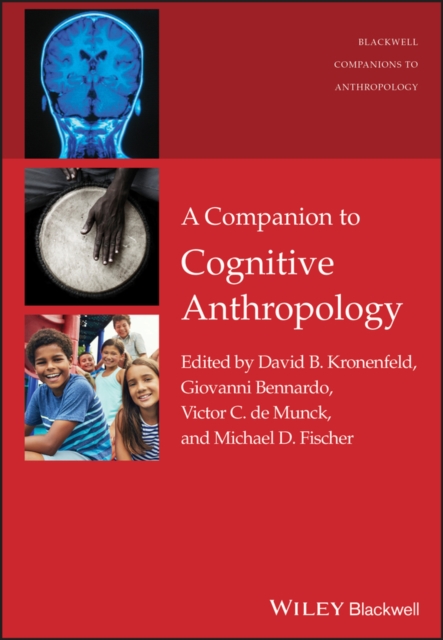
A companion to cognitive anthropology
A Companion to Cognitive Anthropology offers a comprehensive overview of the development of cognitive anthropology from its inception to the present day and presents recent findings in the areas of theory, methodology, and field research in twenty-nine key essays by leading scholars.Demonstrates the importance of cognitive anthropology as an early constituent of the cognitive sciences Examines how culturally shared and complex cognitive systems work, how they are structured, how they differ from one culture to another, how they are learned and passed onExplains how cultural (or collective) vs. individual knowledge distinguishes cognitive anthropology from cognitive psychologyExamines recent theories and methods for studying cognition in real-world scenariosContains twenty-nine key essays by leading names in the field.
eBook

The modern Lithuanian kinship system
Lists of kin terms were elicited from four different generational-status samples: children, young adults, parents, and grandparents. Lists were compared in terms of frequency counts of terms and their respective saliencies. Saliency was measured using Smith's S, which combines frequency and the rank of terms in a list. Using primarily saliency, we are able to synthesize genealogical and cultural theories for analysing kinship. Genealogy was found to be an important variable, but variations across generations could only be accounted for by relying on cultural factors.
Journal Article

Using Theory to Explain Ethnographic Descriptions of Change: Strain Stress and Identity Systems in a Sri Lankan Village
It is argued that the relationship between nomothetic theories and ethnography has been neglected to the detriment of both. Two nomothetic theories are described and synthesized. One authored by Beals and Siegel on internal strains (e.g., leisure versus labor; economics versus education) and external Stressors (e.g., environment, demographics, epidemics) as they affect sociocultural change and increase conflict. The other, by Harrison White, describes the coercive force identity forms exert on their members. These two theories are synthesized and applied to understanding three ethnographic fields of research in a Sri Lankan village: swidden cultivation practices; political leadership structures, and the increasing ambivalence locals have towards kinship, considering it both a burden and a blessing. Nomothetic theory is supported by this study and, in turn, is shown to provide a framework for analyzing the ethnographic materials.
Journal Article

Disciplining Culture
Anthropology has an ambivalent relationship with its core disciplinary concept: culture. Beyond the rather vague but important notion that culture is shared and learned, there is little agreement about how to define and identify something as culture(al). In order to move beyond the “mush stage” of defining culture, we offer a disciplinary framework for considering how culture can be a collective that is individually held and used. Our emphasis is predominantly on the shared aspect of culture and the sociocognitive mechanisms that allow us to know something is shared and how this second-order knowing frames our actions. We posit that while culture does not actually exist, humans nonetheless take it to exist. We rely on researchers from anthropology, cognitive sciences, and sociology to show how culture can possess a causal force even though as a collective symbol system it has no agency in itself. We furthermore propose that cultural models are potentially the basic units of culture.
Journal Article
Lietuvos giminystės kultūrinis aspektas ir koncepcija: laisvojo sąrašo metodo pagrįstumas reprezentatyviam giminystės modeliui sudaryti
The article presents a detailed and methodologically systematic description of the Lithuanian kinship system. A study of kinship relationships was conducted in order to describe the formal and pragmatic structure of the modern kinship system as it is conceptualized by different generations of Lithuanians. We show how this system both remains a formal system, but the salience of kin types changes across different generations. The authors of the article are aware that there are many formal methods of kinship analysis, but a semi-formal research method that priviledges a pragmatic ‘bottom’s up’ approach is used in order th analyse kinship as an interpersonal and dynamic rather than static system. Our free list methodology was chosen because of its emic perspective that allows for comparative etic (i.e. statistical) cross-generational analysis.The results of our research show that Lithuanian kinship systems are not only holistic, but also holographic, and the main structure with its attendant terminology is flexible and adaptive to the requirements of different generational concerns such as courtship, mating, parenting and being grandparents. The results confirm a premise of the anthropological sciences – that thoughts are expressed in language and language (as thoughts or concepts) in turn shapes behaviour. This idea is given credence and supported by our study: the observed approach to change is a non-linguistic result, i.e. it is determined by behaviours, experiences that fall into the linguistic category, and shapes them not according to an imaginary monolithic configuration, but according to individual experience and relationships. Based on the data, it can be concluded that they reflect different collective conceptualizations of kinship – both blood-related and marital kinship. The study found that different behavioural requirements create assumptions for emphasizing appropriate social relations; it is particularly noticeable that the displacement of certain kinship names in the periphery is associated with a corresponding absence of kinship relations. The results also motivate a subsequent study that would look at testing the behavioural systems between kin that are indicated by this study.
Journal Article

The Cultural Aspect and Concept of Lithuanian Kinship: Validity of Free List Method for Creating a Representative Kinship Model
The article presents a detailed and methodologically systematic description of the Lithuanian kinship system. A study of kinship relationships was conducted in order to describe the formal and pragmatic structure of the modern kinship system as it is conceptualized by different generations of Lithuanians. We show how this system both remains a formal system, but the salience of kin types changes across different generations. The authors of the article are aware that there are many formal methods of kinship analysis, but a semi-formal research method that priviledges a pragmatic ‘bottom’s up’ approach is used in order th analyse kinship as an interpersonal and dynamic rather than static system. Our free list methodology was chosen because of its emic perspective that allows for comparative etic (i.e. statistical) cross-generational analysis.The results of our research show that Lithuanian kinship systems are not only holistic, but also holographic, and the main structure with its attendant terminology is flexible and adaptive to the requirements of different generational concerns such as courtship, mating, parenting and being grandparents. The results confirm a premise of the anthropological sciences – that thoughts are expressed in language and language (as thoughts or concepts) in turn shapes behaviour. This idea is given credence and supported by our study: the observed approach to change is a non-linguistic result, i.e. it is determined by behaviours, experiences that fall into the linguistic category, and shapes them not according to an imaginary monolithic configuration, but according to individual experience and relationships. Based on the data, it can be concluded that they reflect different collective conceptualizations of kinship – both blood-related and marital kinship. The study found that different behavioural requirements create assumptions for emphasizing appropriate social relations; it is particularly noticeable that the displacement of certain kinship names in the periphery is associated with a corresponding absence of kinship relations. The results also motivate a subsequent study that would look at testing the behavioural systems between kin that are indicated by this study.
Journal Article


love and marriage in a Sri Lankan Muslim community: toward a reevaluation of Dravidian marriage practices
I argue that structural and transactional models of Dravidian marriage practices cannot adequately account for the variation in mate selection in situations of arranged marriage practices exhibited among the Sri Lankan Muslims of Kutali. The inadequacy of these models is an outcome of three interrelated problems: (1) the assumption of a normative model for marriage; (2) a dichotomous conceptualization of marriage practices that divides them into love and arranged marriage categories; and (3) the absence of romantic love as a valid motivation for mate selection. In this article I show that villagers use a polythetic model for marriage in which core symbols of marriage category types are manipulated to serve as figure or ground depending on situational contingencies. Second, I show that love can be accommodated to an arranged marriage model. [arranged marriages, love marriages, Sri Lanka, love, core symbols, foreground, background]
Journal Article

Macedonia
A bloody rebellion by Albanian guerrillas demanding equal rights in Macedonia has killed and wounded thousands of people and led to fears that the crisis will spread. In this book, Phillips discusses the front line fighting as well as behind-the-scenes diplomacy in Skopje.
eBook