
Catalogue Search | MBRL


Are you sure you want to remove the book from the shelf?

{{itemTitle}}
347
result(s) for
"trita parsi"
Sort by:
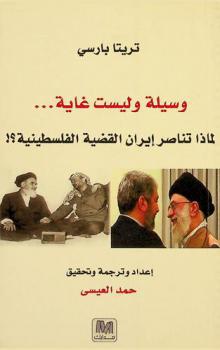

Losing an enemy : Obama, Iran, and the triumph of diplomacy
The definitive book on President Obama's historic nuclear deal with Iran from the U.S. foreign policy expert and acclaimed author of Treacherous Alliance.
In Losing an Enemy, Middle East policy expert Trita Parsi examines President Obama's strategy toward Iran's nuclear program and reveals how the historic agreement of 2015 broke the persistent stalemate in negotiations that had blocked earlier efforts. The Joint Comprehensive Plan of Action, commonly known as the Iran nuclear deal, accomplished two major feats in one stroke: it averted the threat of war with Iran and prevented the possibility of an Iranian nuclear bomb.
Parsi advised the Obama White House throughout the talks and had access to decision-makers and diplomats on the U.S. and Iranian sides alike. With his unique insight, he examines every facet of a triumph that could become as important and consequential as Nixon's rapprochement with China. Drawing from more than seventy-five in-depth interviews with key decision-makers, including Iran's Foreign Minister Javad Zarif and U.S. Secretary of State John Kerry, this is the first authoritative account of President Obama's signature foreign policy achievement.
\"A detailed and gripping account of the 22 months of negotiations over Iran's nuclear program that resulted in the 2015 deal.\"—John Waterbury, Foreign Affairs
eBook
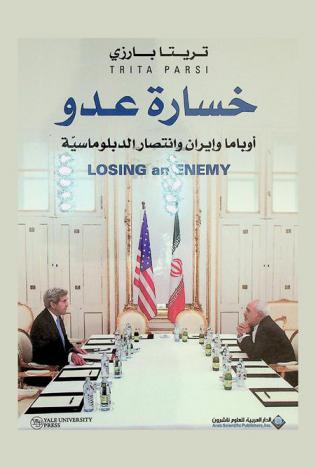
خسارة عدو : أوباما وإيران وانتصار الدبلوماسية
يعتبر هذا الكتاب توثيق شبه شامل لمسيرة المفاوضات بين الغرب، ممثلا في مجموعة خمسة زائد واحد (الأعضاء الدائمون في مجلس الأمن + ألمانيا) وإيران على مدى 22 شهرا عبر اجتماعات تقطعت أحيانا وتواترت في أحيان أخرى، لكنها شهدت زخما وجدية بعد انتخاب الرئيس الإيراني حسن روحاني، وبعد أن فتح العمانيون قناة اتصال مباشر مع المرشد الإيراني الأعلى.انتهت المفاوضات بتوقيع الاتفاق الذي التزمت إيران بموجبه بالتخلص من مخزونها من اليورانيوم منخفض التخصيب وتقليص برنامجها عبر تحديد عدد أجهزة الطرد المركزي، ثم السماح بتفتيش منشآتها النووية. ووفقا لرأي المؤلف فإن ثمة عوامل عدة ساعدت في التوصل إلى الاتفاق، أبرزها رغبة الرئيس الأمريكي السابق باراك أوباما التخفف من أعباء الشرق الأوسط، الذي بدأ يفقد أهميته الاستراتيجية، والتوجه نحو شرق آسيا.
Book

A Single Roll of the Dice
Have the diplomatic efforts of the Obama administration toward Iran failed? Was the Bush administration's emphasis on military intervention, refusal to negotiate, and pursuit of regime change a better approach? How can the United States best address the ongoing turmoil in Tehran? This book provides a definitive and comprehensive analysis of the Obama administration's early diplomatic outreach to Iran and discusses the best way to move toward more positive relations between the two discordant states.
Trita Parsi, a Middle East foreign policy expert with extensive Capitol Hill and United Nations experience, interviewed 70 high-ranking officials from the U.S., Iran, Europe, Israel, Saudi Arabia, Turkey, and Brazil-including the top American and Iranian negotiators-for this book. Parsi uncovers the previously unknown story of American and Iranian negotiations during Obama's early years as president, the calculations behind the two nations' dealings, and the real reasons for their current stalemate. Contrary to prevailing opinion, Parsi contends that diplomacy has not been fully tried. For various reasons, Obama's diplomacy ended up being a single roll of the dice. It had to work either immediately-or not at all. Persistence and perseverance are keys to any negotiation. Neither Iran nor the U.S. had them in 2009.
eBook
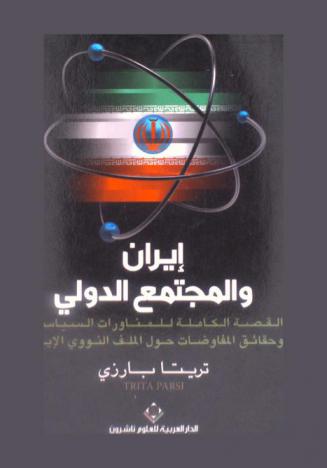
إيران والمجتمع الدولي : القصة الكاملة للمناورات السياسية وحقائق المفاوضات حول الملف النووي الإيراني
يطرح هذا الكتاب قضية راهنة وهي خيارات واشنطن بخصوص إيران فيما يتعلق بالملف النووي الإيراني فهل ستكون سياسة مواجهة أم احتواء وخاصة بعد التحولات التي تشهدها المنطقة العربية في أعقاب ثورات الربيع العربي وعليه يتمحور هذا الكتاب حول السياسة الخارجية وتحديدا حول كيفية تعامل إدارة أوباما مع التحديات العديدة للدبلوماسية مع إيران.
BOOK

Treacherous Alliance
In this era of superheated rhetoric and vitriolic exchanges between the leaders of Iran and Israel, the threat of nuclear violence looms. But the real roots of the enmity between the two nations mystify Washington policymakers, and no promising pathways to peace have emerged. This book traces the shifting relations among Israel, Iran, and the United States from 1948 to the present, uncovering for the first time the details of secret alliances, treacherous acts, and unsavory political maneuverings that have undermined Middle Eastern stability and disrupted U.S. foreign policy initiatives in the region.
Trita Parsi, a U.S. foreign policy expert with more than a decade of experience, is the only writer who has had access to senior American, Iranian, and Israeli decision makers. He dissects the complicated triangular relations of their countries, arguing that America's hope for stability in Iraq and for peace in Israel is futile without a correct understanding of the Israeli-Iranian rivalry.
Parsi's behind-the-scenes revelations about Middle East events will surprise even the most knowledgeable readers: Iran's prime minister asks Israel to assassinate Khomeini, Israel reaches out to Saddam Hussein after the Gulf War, the United States foils Iran's plan to withdraw support from Hamas and Hezbollah, and more. This book not only revises our understanding of the Middle East's recent past, it also spells out a course for the future. In today's belligerent world, few topics, if any, could be more important.
eBook
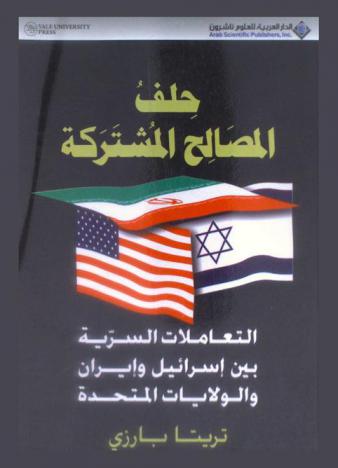
حلف المصالح المشتركة : التعاملات السرية بين إسرائيل وإيران والولايات المتحدة
يتحدث الكتاب أن في عصر الخطاب الساخن وتبادل الاتهامات اللاذعة بين قادة إيران وإسرائيل ويلوح في الأفق خطر التصعيد النووي لكن جذور العدوان يبن البلدين تحير صناع السياسة في واشنطن وعلما بأنه لم تظهر أية مسارات واعدة تشير إلى إمكانية التوصل إلى السلام بينهما ويتابع هذا الكتاب التحول في العلاقات بين إسرائيل وإيران والولايات المتحدة في العام 1948 ولغاية يومنا الحاضر بحيث يغطي لأول مرة تفاصيل التحالفات السرية والمناورات السياسية الدنيئة التي زعزعت الاستقرار في المنطقة وعرقلت مبادرات السياسة الخارجية الأميركية فيها.
BOOK

Europe Just Made War With Iran More Likely
France, Germany and the UK (E3) have announced they will trigger snapback sanctions on Iran at the United Nations. This will launch a 30-day process that will likely culminate in the full reinstatement of all U.N. sanctions lifted under the 2015 nuclear deal. The move will carry four major consequences. First, the U.N. Security Council will formally adopt the demand--pushed by Israel--that Iran cease all uranium enrichment. Israel designed this demand to sabotage nuclear diplomacy and edge the conflict toward war. Next, a U.N. arms embargo on Iran will return, potentially curbing Tehran's ability to rebuild deterrence against future Israeli or American strikes, provided Russia and China treat the snapback as legitimate and enforce it. Third, Iran's already fragile economy will deteriorate further; its currency has already taken a hit. And finally, far from advancing diplomacy, the measure risks accelerating escalation.
Journal Article
Trump's Narrow Iran Window Is Closing
Punishing Iran was not on Donald Trump's mind when he entered the White House in January. Rather, he had gone out of his way to declare his desire for a deal by avoiding insulting rhetoric, disavowing regime change, and declaring nuclear weapons as his only red line. Similar signals came from Iran. Direct talks with Trump was Tehran's new line. Yet this unique window of opportunity is closing fast, mainly because Trump isn't paying attention. Iran policy is once again falling into the hands of the neocons who sabotaged Trump's hope to reach a deal with Iran during his first term--with war lurking around the corner.
Journal Article
Biden Worked \Tirelessly Around the Clock\–to Prevent a Ceasefire
There is little doubt that President-elect Donald Trump's posture vis-a-vis Israel is a key reason why a ceasefire in Gaza has finally been achieved. According to a diplomat briefed on the matter, this was \"the first time there has been real pressure on the Israeli side to accept a deal.\" This means that for 15 months, Israel has dropped American bombs on children in tents, on refugees sheltering in schools, and on patients seeking help in hospitals without President Joe Biden exerting any \"real pressure\" on Israel to stop. And once the mere posture of pressure was exerted on Israel by an envoy representing a man who isn't even president yet, lo and behold, a ceasefire was secured. All these senseless deaths, all the American credibility lost, all the Biden voters who stayed home in protest on Nov 5 could have been avoided.
Journal Article