
Catalogue Search | MBRL


Are you sure you want to remove the book from the shelf?

{{itemTitle}}
17
result(s) for
"États-Unis -- Relations extérieures -- Amérique latine"
Sort by:

Allende’s Chile and the Inter-American Cold War
Fidel Castro described Salvador Allende's democratic election as president of Chile in 1970 as the most important revolutionary triumph in Latin America after the Cuban revolution. Yet celebrations were short lived. In Washington, the Nixon administration vowed to destroy Allende's left-wing government while Chilean opposition forces mobilized against him. The result was a battle for Chile that ended in 1973 with a right-wing military coup and a brutal dictatorship lasting nearly twenty years.Tanya Harmer argues that this battle was part of a dynamic inter-American Cold War struggle to determine Latin America's future, shaped more by the contest between Cuba, Chile, the United States, and Brazil than by a conflict between Moscow and Washington. Drawing on firsthand interviews and recently declassified documents from archives in North America, Europe, and South America--including Chile's Foreign Ministry Archive--Harmer provides the most comprehensive account to date of Cuban involvement in Latin America in the early 1970s, Chilean foreign relations during Allende's presidency, Brazil's support for counterrevolution in the Southern Cone, and the Nixon administration's Latin American policies. The Cold War in the Americas, Harmer reveals, is best understood as a multidimensional struggle, involving peoples and ideas from across the hemisphere.
eBook

\Our Hemisphere\?
An accessible course book on U.S.-Latin American
relations \"Our Hemisphere\"? uncovers the range,
depth, and veracity of the United States' relationship with the
Americas. Using short historical vignettes, Britta and Russell
Crandall chart the course of inter‑American relations from 1776 to
the present, highlighting the roles that individuals and groups of
soldiers, intellectuals, private citizens, and politicians have had
in shaping U.S. policy toward Latin America in the postcolonial,
Cold War, and post-Cold War eras. The United States is usually and
correctly seen as pursuing a monolithic, hegemonic agenda in Latin
America, wielding political, economic, and military muscle to force
Latin American countries to do its bidding, but the Crandalls
reveal unexpected yet salient regional interactions where Latin
Americans have exercised their own power with their northern and
very powerful neighbor. Moreover, they show that Washington's
relationship with the region has relied, in addition to the usual
heavy‑handedness, on cooperation and mutual respect since the
beginning of the relationship.
eBook

America and the Americas
In this completely revised and updated edition of America and the Americas, Lester D. Langley covers the long period from the colonial era into the twenty-first century, providing an interpretive introduction to the history of U.S. relations with Latin America, the Caribbean, and Canada. Langley draws on the other books in the series to provide a more richly detailed and informed account of the role and place of the United States in the hemisphere. In the process, he explains how the United States, in appropriating the values and symbolism identified with \"America,\" has attained a special place in the minds and estimation of other hemispheric peoples. Discussing the formal structures and diplomatic postures underlying U.S. policy making, Langley examines the political, economic, and cultural currents that often have frustrated inter-American progress and accord. Most important, the greater attention given to U.S. relations with Canada in this edition provides a broader and deeper understanding of the often controversial role of the nation in the hemisphere and, particularly, in North America. Commencing with the French-British struggle for supremacy in North America in the French and Indian War, Langley frames the story of the American experience in the Western Hemisphere through four distinct eras. In the first era, from the 1760s to the 1860s, the fundamental character of U.S. policy in the hemisphere and American values about other nations and peoples of the Americas took form. In the second era, from the 1870s to the 1930s, the United States fashioned a continental and then a Caribbean empire. From the mid-1930s to the early 1960s, the paramount issues of the inter-American experience related to the global crisis. In the final part of the book, Langley details the efforts of the United States to carry out its political and economic agenda in the hemisphere from the early 1960s to the onset of the twenty-first century, only to be frustrated by governments determined to follow an independent course. Over more than 250 years of encounter, however, the peoples of the Americas have created human bonds and cultural exchanges that stand in sharp contrast to the formal and often conflictive hemisphere crafted by governments.
eBook
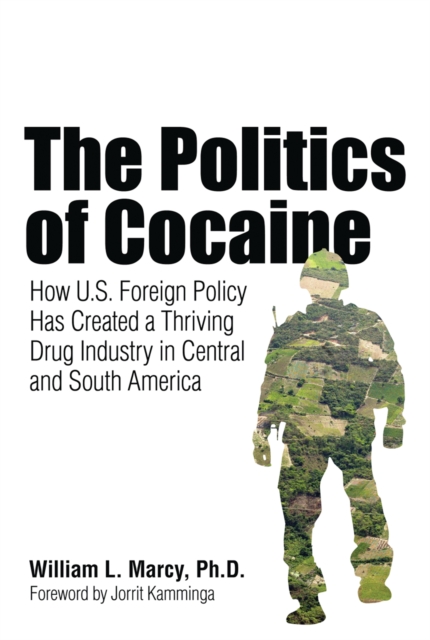
The Politics of Cocaine
Drawing on declassified documents and painstaking research, this exploration of the economic drug trade of Central and South America fills in historical gaps and provides a new and controversial analysis of a complex and seemingly unsolvable problem. Viewing the problem through the lens of United States policy, the author puts forth the theory that, through the conflation of the Cold War and the war on drugs, the United States helped establish and strengthen the drug trade as the area's economic base. This authoritative and timely polemic traces the counternarcotics stance of the 1970's through George W. Bush's administration through a wealth of information and unflinching directness, asserting that the drug war will continue with no end in sight.
eBook
China, the United States, and the future of Latin America
Provides insight into U.S. and Chinese involvement in aid, trade, direct investment and strategic ties in Latin America In recent years, China has become the largest trading partner for more than half the countries in Latin America, and demonstrated major commitments in aid and direct investment in various parts of the region. China has also made a number of strategic commitments to countries like Nicaragua, Cuba, and Venezuela which have long-standing policies opposing U.S. influence in the region. China, the United States, and the Future of Latin America posits that this activity is a direct challenge to the role of the U.S. in Latin America and the Caribbean. Part of a three-volume series analyzing U.S.-China relations in parts of the world where neither country is dominant, this volume analyzes the interactions between the U.S., China, and Latin America. The book series has so far considered the differences in operating styles between China and the U.S. in Central Asia and Southeast Asia. This third volume unpacks the implications of competing U.S. and Chinese interests in countries such as Brazil and Argentina, and China's commitments in Nicaragua and Venezuela. This volume draws upon a variety of policy experts, focusing on the viewpoints of South American and Caribbean scholars as well as scholars from outside states. China's new global reach and its ambitions, as well as the U.S. response, are analyzed in detail.A nuanced examination of current complexities and future implications, China, the United States and the Future of Latin America provides readers with varied perspectives on the changing economic and strategic picture in Latin America and the Caribbean.
eBook

The Latin American Literary Boom and U.S. Nationalism during the Cold War
During the 1960s and 1970s, when writers such as Julio Cortazar,
Carlos Fuentes, Gabriel Garcia Marquez, and Mario Vargas Llosa
entered the international literary mainstream, Cold War cultural
politics played an active role in disseminating their work in the
United States. Deborah Cohn documents how U.S. universities, book
and journal publishers, philanthropic organizations, cultural
centers, and authors coordinated their efforts to bring Latin
American literature to a U.S. reading public during this period,
when interest in the region was heightened by the Cuban Revolution.
She also traces the connections between the endeavors of private
organizations and official foreign policy goals.
The high level of interest in Latin America paradoxically led
the U.S. government to restrict these authors' physical presence in
the United States through the McCarranWalter Act's immigration
blacklist, even as cultural organizations cultivated the exchange
of ideas with writers and sought to market translations of their
work for the U.S. market.
eBook
Between Compliance and Conflict
This book examines the responses to U.S. power in the two areas of the world where U.S. primacy was first successfully consolidated: East Asia and Latin America. The U.S. has faced no comparably powerful challengers to the exercise of its power in Latin America for much of the past century. It established its primacy over much of East Asia in the aftermath of WW II and extended its influence in the late 1970's and after the end of the Vietnam War through its entente with China to balance the Soviet Union. By contrast, the U.S. has always encountered rivals and challengers in Europe, has attempted unsuccessfully thus far to impose its primacy in the Middle East, and has paid only intermittent attention to South Asia and Africa. The essays in this volume will explore three important themes 1.) How do region-wide economic trends and arrangements sustain or modify U.S. influence in the region? 2.) How do rising powers in these regions (Japan, China, Brazil) reshape their policies to cope with the U.S. and 3.) How do new (South Korea) and old (Cuba) challengers to U.S. power shape their policies to account for the unrivaled exercise of U.S. power. This collection will place the United States at the hub of relations with countries in East Asia and Latin America and examine the new policies and new styles of engagement that are employed to address the prolonged U.S. interest in these areas-approaches from which the rest of the world might learn.
eBook

The New Development Politics
James Petras addresses problems of far-reaching human significance. His essays cover a very wide range of topics, among them significant aspects of the economic life of the rich societies that are commonly overlooked; critical analysis of theoretical work and the general role of intellectuals; and close description of ongoing popular struggles, based on his direct experience and intimate knowledge. Particularly valuable, and rare, are his insights into the role of the peasantry in the emerging world system - and furthermore, into how organization and activism of peasant movements interacts with other popular forces that are of great importance and should be much better known and understood.
Noam Chomsky, Institute Professor; Professor of Linguistics, Linguistic Theory, Syntax, Semantics, Philosophy of Language, MIT Linguistics
eBook
Observing our Hermanos de Armas
This study analyzes the effectiveness of the U.S. military attaché corps in Latin America from the end of World War II to the Johnson administration.
eBook

The Obama Administration and the Americas: Agenda for Change
The Obama administration inherits a daunting set of domestic and international policy challenges. It would be tempting to put Latin America and the Caribbean on the back burner, for their nations pose no imminent security threat nor do they seem at first blush critical to the most pressing problems of U.S. foreign policy. The Obama Administration and the Americas, however, argues that the new administration should focus early and strategically on Latin America. Our neighbors to the south impact daily on the lives of U.S. citizens, on issues such as energy, narcotics, immigration, trade, and jobs. And these are the countries most likely to partner with Washington on the basis of shared values, culture, and interests. Recognized experts from Latin America, the United States, and Europe suggest in this timely volume that the United States should seize an early opportunity to engage Latin America, recognizing the region's diversity but also its shared concerns and aspirations. The consolidation of stable democracies and rule of law in Latin America has long been an expressed goal of both parties in Washington, but the backlash from Iraq, the global financial crisis, and other recent experiences may discourage the use of U.S. influence and assistance to nurture democratic governance. The authors emphasize case-by-case, sophisticated, and multilateral approaches to dealing with such hard cases as Bolivia, Colombia, Cuba, Haiti, Mexico, and Venezuela.
eBook