
Catalogue Search | MBRL


Are you sure you want to remove the book from the shelf?

{{itemTitle}}
24
result(s) for
"États-Unis Politique et gouvernement 1963-1969."
Sort by:

An unfinished love story : a personal history of the 1960s
The Pulitzer Prize-winning historian reflects on her 42-year marriage with Dick Goodwin, one of the shining stars of John F. Kennedy's New Frontier and the journey of going through the letters, diaries, documents and memorabilia he saved over the years.
Book
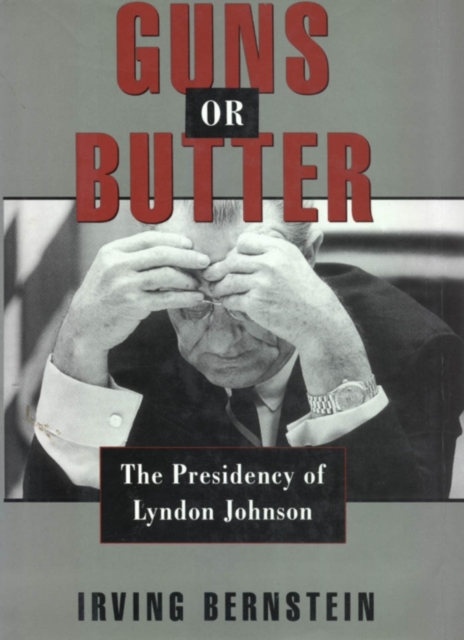
Guns or butter : the presidency of Lyndon Johnson
The presidency of Lyndon Johnson was a pivotal moment in twentieth-century American history. From the decisive social programs of the Great Society, to the triumph of the Civil and Voting Rights Acts, to the catastrophe of the Vietnam War and domestic unrest, it was an era of dramatic accomplishment and wrenching tragedy. In Guns or Butter, renowned historian Irving Bernstein brings those five climactic years of the sixties vividly to life, from the moment Lee Harvey Oswald aimed a rifle from the window of the Texas School Depository to the tense ballot-counting that put Richard Nixon in the White House in 1968. Bernstein's book is a narrative masterpiece, filled with sharply drawn character sketches and swiftly moving accounts of events that range from deals cut in the Senate cloakroom, to police charging after protesters on the streets of Selma, to Vietcong commandos bursting into the American embassy in Saigon. We see Johnson ordering aides Bill Moyers and Richard Goodwin to strip and join him for a skinny-dip in the White House pool, where they formulate the Great Society. And we see a tired, distracted president pacing in his bathrobe around a table model of the besieged Khe Sanh garrison, examining aerial photographs and casualty reports. Equally important, Bernstein offers a deft assessment of Johnson's successes and failures, from his legislative programs to his futile pursuit of the war in Vietnam to his failure to boost Hubert Humphrey's presidential campaign in 1968. The author not only retells the maneuvering that brought the president's plans into law, he also analyzes and explains their impact, from the Voting Rights Act to Medicare. The Great Society, Bernstein concludes, was a triumph, but Johnson's attempt to have both guns and butter, to pursue massive domestic initiatives together with a bitter undeclared war, led to runaway
inflation that ultimately undermined his presidency. From the dark moments after Kennedy's assassination in 1963, to the heady days of legislative victories of 1965, to the bloody crescendo of riots, assassinations, and military battles in 1968, Johnson's administration was a defining moment in modern American history. In Guns or Butter, Irving Bernstein brilliantly captures both the events and the meaning of those momentous years. Aside from its historical value, this book has major current significance. The legislative program Newt Gingrich and his Republican colleagues introduced in 1995 was designed to repeal the Great Society. Before doing so, members of Congress and the interested public should understand Lyndon Johnson's vision and the legislation that was enacted during the sixties. Guns or Butter provides that critical information.
eBook
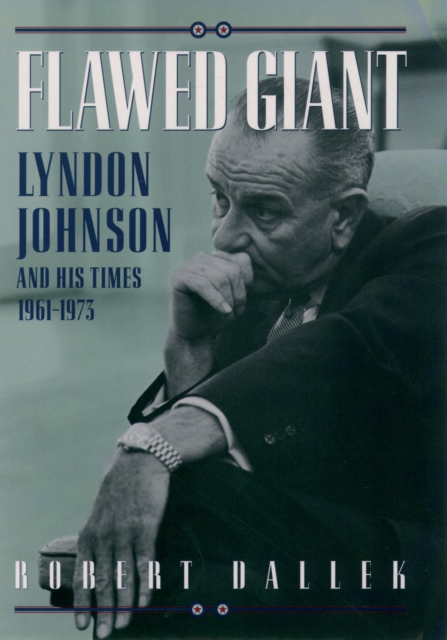
Flawed giant : Lyndon Johnson and his times, 1961-1973
Flawed Giant--the monumental concluding volume to Robert Dallek's biography of Lyndon Baines Johnson--provides the most through, engrossing account ever published of Johnson's years in the national spotlight.
eBook

Into the quagmire : Lyndon Johnson and the escalation of the Vietnam War
Even as Lyndon Johnson celebrated his electoral triumph in November, 1964, he and his advisers began the process that led to eight years of war and the destruction of his administration. This vivid, fast-paced narrative describes the critical nine months in which Johnson committed the nation to supporting a government in South Vietnam which almost no one believed could survive. Amid a sharp debate among his advisers, LBJ almost avoided the catastrophic decision, until a determination to stand tall (and to outflank his conservative domestic opposition) led him--and the U.S.--into the quagmire.
eBook

JFK, LBJ, and the Democratic Party
JFK, LBJ, and the Democratic Party is a richly detailed, comprehensive, and provocative account of presidential party leadership in the turbulent 1960s. Using many primary sources, including resources from presidential libraries, state and national archival material, public opinion polls, and numerous interviews, Sean J. Savage reveals for the first time the influence of Presidents John F. Kennedy and Lyndon B. Johnson on the chairmanship, operations, structure, and finances of the Democratic National Committee. Savage further enriches his account with telephone conversations recently released from the Kennedy and Johnson presidential libraries, along with rare photos of JFK and LBJ.
eBook

American Maelstrom : the 1968 election and the politics of division
American Maelstrom captures the full drama of the 1968 watershed election, taking us to the source of the politics of division.
eBook

Younger Than That Now
Retrospectives of the 1960s routinely include the face of youth rebellion: long-haired students occupying campus buildings, young men burning draft cards, hippies dancing at Woodstock. In Younger Than That Now, Holly V. Scott explores how the idea of \"youth\" served as a tactic in the political and social activism of these years. In the early part of that decade, young white activists began to learn from the civil rights movement's defiance of racism. They examined their own lives and concluded that campus rules and the draft were repression as well. As a group, they were ripe for revolution, and their age gave them a unique perspective for understanding and protesting against injustice. In short, young people began to use their youth as a political strategy.
Some in the New Left were dubious of this strategy and asked how it might damage long-term progress. Young feminists and people of color were particularly quick to question the idea that age alone was enough to sustain a movement. And the media often presented young people as impulsive and naive, undermining their political legitimacy. In tracing how \"youth\" took on multiple meanings as the 1960s progressed, Scott demonstrates the power of this idea to both promote and hinder social change.
eBook
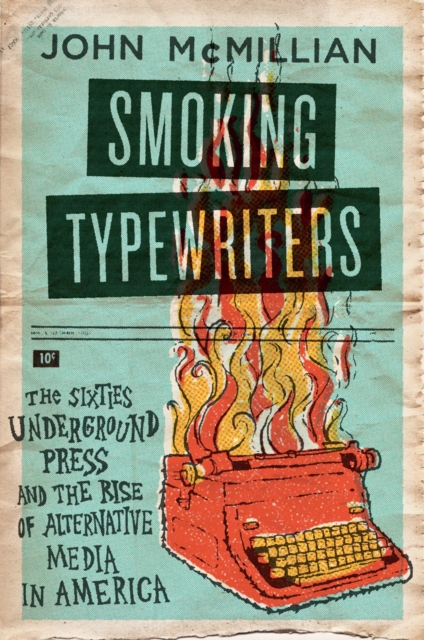
Smoking typewriters : the Sixties underground press and the rise of alternative media in America
What caused the New Left rebellion of the 1960s? In Smoking Typewriters, historian John McMillian argues that the \"underground press\" contributed to the New Left's growth and cultural organization in crucial, overlooked ways.
eBook
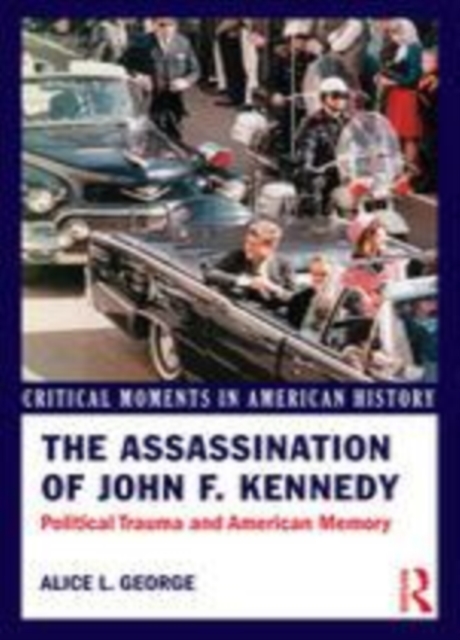
The Assassination of John F. Kennedy
On November 22nd, 1963 the assassination of President John F. Kennedy set into motion a series of events that irrevocably changed American politics and culture. The media frenzy spawned by the controversy surrounding the death of JFK has since given way to a powerful public memory that continues to shape the way we understand politics, the 1960s, and the nation.
In The Assassination of John F. Kennedy: Political Trauma and American Memory, Alice George traces the events of Kennedy's assassination and Lyndon B. Johnson's subsequent ascension to the presidency. Covering both the political shifts of the time and the cultural fallout of the national tragedy, this book introduces students of the twenty-first century to both an iconic event and to the context in which that event was heralded as iconic. Drawing on newspaper articles, political speeches, letters, and diaries, George critically re-examines the event of JFK's death and its persistent political and cultural legacy.
eBook
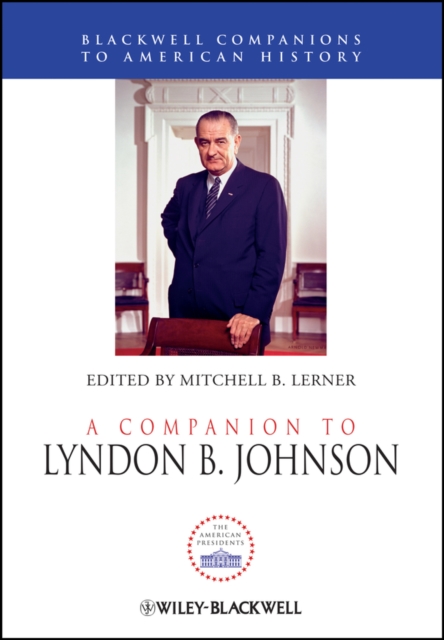
A Companion to Lyndon B. Johnson
This companion offers an overview of Lyndon B. Johnson's life, presidency, and legacy, as well as a detailed look at the central arguments and scholarly debates from his term in office. * Explores the legacy of Johnson and the historical significance of his years as president * Covers the full range of topics, from the social and civil rights reforms of the Great Society to the increased American involvement in Vietnam * Incorporates the dramatic new evidence that has come to light through the release of around 8,000 phone conversations and meetings that Johnson secretly recorded as President
eBook