
Catalogue Search | MBRL


Are you sure you want to remove the book from the shelf?

{{itemTitle}}
1,107
result(s) for
"Übersetzung"
Sort by:

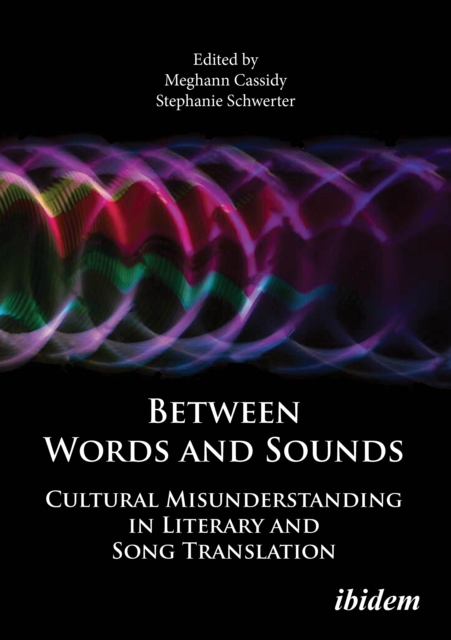
Between Words and Sounds
This volume’s aim is to shed new light on cultural misunderstanding, examining both the obstacles and outcomes it can entail. In the field of literary and song translation in particular, cultural misunderstanding can engender compound and wide-ranging effects. Occurrences can lead to ambiguity, the distortion of source texts or the spread of false or potentially harmful cultural images. Still, these misunderstandings can also be fruitful, dynamic phenomena with highly creative potential. Following an interdisciplinary approach, the volume’s chapters navigate thorny yet fertile instances of cultural misunderstanding, including song translation for Polish national television, the “exportation” of anglophone pop songs to Germany and France, Bob Dylan in French, Spanish, or Portuguese, Rimbaud’s poems translated into Norwegian, American Broadway musicals staged in Chinese, or the translation of Iranian novels into French. The volume’s contributors approach their subject matter from different academic backgrounds in music, literature, translation studies and linguistics.
eBook


Die exegetische Bedeutung einer numerischen Inkongruenz von Subjekt und Verb. Das Beispiel λαός in Lk 20,19
Die numerische Inkongruenz zwischen einem Subjekt im Singular und einem Verb im Plural, die für das Nomen λαός häufig belegt ist, wird bei der Deutung von Lk 20,19 gemeinhin nicht berücksichtigt. Wenn diese numerische Inkongruenz der Übersetzung bzw. dem Textverständnis zugrunde gelegt wird, hat dies grundsätzlichen Einfluss darauf, wie das Handeln der beteiligten Personen bzw. Personengruppen verstanden wird.
Journal Article


Mechanisms and microbial structure of partial denitrification with high nitrite accumulation
Nitrite (NO₂ ⁻-N) accumulation in denitrification can provide the substrate for anammox, an efficient and cost-saving process for nitrogen removal from wastewater. This batch-mode study aimed at achieving high NO₂ ⁻-N accumulation over long-term operation with the acetate as sole organic carbon source and elucidating the mechanisms of NO₂ ⁻-N accumulation. The results showed that the specific nitrate (NO₃ ⁻-N) reduction rate (59.61 mg N VSS⁻¹ h⁻¹ at NO₃ ⁻-N of 20 mg/L) was much higher than specific NO₂ ⁻-N reduction rate (7.30 mg N VSS⁻¹ h⁻¹ at NO₃ ⁻-N of 20 mg/L), and the NO₂ ⁻-N accumulation proceeded well at the NO₃ ⁻-N to NO₂ ⁻-N transformation ratio (NTR) as high as 90 %. NO₂ ⁻-N accumulation was barely affected by the ratio of chemical oxygen demand (COD) to NO₃ ⁻-N concentration (C/N). With the addition of NO₃ ⁻-N, NO₂ ⁻-N accumulation occurred and the specific NO₂ ⁻-N reduction rate declined to a much lower level compared with the value in the absence of NO₃ ⁻-N. This indicated that the denitrifying bacteria in the system preferred to use NO₃ ⁻-N as electron acceptor rather than use NO₂ ⁻-N. In addition, the Illumina high-throughput sequencing analysis revealed that the genus of Thauera bacteria was dominant in the denitrifying community with high NO₂ ⁻-N accumulation and account for 67.25 % of total microorganism. This bacterium might be functional for high NO₂ ⁻-N accumulation in the presence of NO₃ ⁻-N.
Journal Article

Zur Übersetzung juristischer Termini in deutschen und polnischen Klageanträg
The present paper aimed at suggesting Polish and German equivalents of legal terms used in the petitions of suits in both languages. First the methods of translating legal terms given in the literature were presented. According to them came the catalogue of the mentioned Polish and German legal terms with the argumentation for the choice of the suggested equivalents both in Polish and German. The assumed principle was, that in the case of two different legal systems, one should, if possible, avoid translating legal terms of the source language with the parallel legal terms of the target language. The discussed legal terms and their equivalents were juxtaposed in a table as a summary.
Journal Article

Discourse of Court Interpreting
This book explores the intricacies of court interpreting through a thorough analysis of the authentic discourse of the English-speaking participants, the Spanish-speaking witnesses and the interpreters. Written by a practitioner, educator and researcher, the book presents the reader with real issues that most court interpreters face during their work and shows through the results of careful research studies that interpreter's choices can have varying degrees of influence on the triadic exchange. It aims to raise the practitioners' awareness of the significance of their choices and attempts to provide a theoretical basis for interpreters to make informed decisions rather than intuitive ones. It also suggests solutions for common problems. The book highlights the complexities of court interpreting and argues for thorough training for practicing interpreters to improve their performance as well as for better understanding of their task from the legal profession. Although the data is drawn from Spanish-English cases, the main results can be extended to any language combination. The book is written in a clear, accessible language and is aimed at practicing interpreters, students and educators of interpreting, linguists and legal professionals.
eBook

Translation in cross-language international business research: Beyond equivalence
In this paper, we problematise the way translation has been treated in international business (IB) research. We start by conducting an interpretive content analysis of both qualitative and quantitative cross-language studies published in four core IB journals over the course of a decade. Our analysis shows the dominance of a technicist view of translation associated with the equivalence paradigm. In contrast, we advocate a shift to a more contextualised approach informed by theoretical developments in translation studies. More specifically, we focus on two theoretical perspectives–skopos theory and cultural politics-which offer related but distinct approaches to rethinking equivalence. We conclude by advocating that the translation process be reframed as a process of intercultural interaction, rather than a lexical transfer of meaning. This reconceptualisation would, we argue, open up what is currently a \"black box\" in most IB studies. The contextualised approach that we offer has the potential not just to enrich the findings of studies, but also provide insights that are of multidisciplinary relevance.
Journal Article

Translating Childhoods
Though the dynamics of immigrant family life has gained attention from scholars, little is known about the younger generation, often considered \"invisible.\"Translating Childhoods, a unique contribution to the study of immigrant youth, brings children to the forefront by exploring the \"work\" they perform as language and culture brokers, and the impact of this largely unseen contribution.
Skilled in two vernaculars, children shoulder basic and more complicated verbal exchanges for non-English speaking adults. Readers hear, through children's own words, what it means be \"in the middle\" or the \"keys to communication\" that adults otherwise would lack. Drawing from ethnographic data and research in three immigrant communities, Marjorie Faulstich Orellana's study expands the definition of child labor by assessing children's roles as translators as part of a cost equation in an era of global restructuring and considers how sociocultural learning and development is shaped as a result of children's contributions as translators.
eBook