
Catalogue Search | MBRL


Are you sure you want to remove the book from the shelf?

{{itemTitle}}
367
result(s) for
"âEgypte."
Sort by:

The Arabic Freud : psychoanalysis and Islam in modern Egypt
The first in-depth look at how postwar thinkers in Egypt mapped the intersections between Islamic discourses and psychoanalytic thought. In 1945, psychologist Yusuf Murad introduced an Arabic term borrowed from the medieval Sufi philosopher and mystic Ibn `Arabi-al-la-shu`ur-as a translation for Sigmund Freud's concept of the unconscious. By the late 1950s, Freud's Interpretation of Dreams had been translated into Arabic for an eager Egyptian public. In The Arabic Freud, Omnia El Shakry challenges the notion of a strict divide between psychoanalysis and Islam by tracing how postwar thinkers in Egypt blended psychoanalytic theories with concepts from classical Islamic thought in a creative encounter of ethical engagement. Drawing on scholarly writings as well as popular literature on self-healing, El Shakry provides the first in-depth examination of psychoanalysis in Egypt and reveals how a new science of psychology-or \"science of the soul,\" as it came to be called-was inextricably linked to Islam and mysticism. She explores how Freudian ideas of the unconscious were crucial to the formation of modern discourses of subjectivity in areas as diverse as psychology, Islamic philosophy, and the law. Founding figures of Egyptian psychoanalysis, she shows, debated the temporality of the psyche, mystical states, the sexual drive, and the Oedipus complex, while offering startling insights into the nature of psychic life, ethics, and eros.
BOOK

Helwan: Einblicke in eine Nekropole der Stadt Memphis
Die frühzeitliche Nekropole von Helwan eriaubt einzigartige Einblicke in das Leben und Sterben der Bewohner der Stadt Memphis zur Zeit der pharaonischen Staatsentstehung. Forscher der Universität Wien untersuchen ihre Hinterlassenschaften und liefern detaillierte Informationen über das urbane Leben in der Hauptstadt, ohne überhaupt zu wissen, wo sich genau diese Stadt befand.
Journal Article

Die Wiege der Sonne: Die Badari-und Naqada I—Ill-Kulturen des prädynastischen Ägypten
Lange Zeit glaubte man, die altägyptische Hochkultur sei um 3100 v. Chr. aus einer Art historischem Vakuum entstanden. Tatsächlich, so zeigen archäologische Befunde, hatte sie ihre Vorläufer in den um den geistigkulturellen Mittelpunkt Abydos belegten Kulturen der Prädynastik. Deren eigene Wurzein führen noch mehr als 2000 Jahre weiter in die Vorgeschichte zu den frühesten Ursprüngen der altägyptischen Religion und Gesellschaftsstrukturen zurück.
Journal Article
Nar(-mer): Ein frühzeitliches Königsleben
Es war eine jener viel gerühmten Stemstunden der Ägyptologie, als J. E. Quibell und seine Arbeiter 1897 imTempelareal der Siedlung von Hierakonpolis im Süden Ägyptens auf einen der Schlüsselfunde der ägyptischen Vor- und Frühgeschichte stießen: Die Prunkpalette König Nar(-mer)s. Sie gilt auch heute noch als eine der schönsten und wichtigsten ihrer Art. Doch was wissen wir jenseits seiner Prunkpalette von diesem Mann und seiner Regierungszeit?
Journal Article
Verlorene Vielfalt: Die Archäologie des Nildeltas in prädynastischer Zeit
In den ältesten schriftlich fixierten religiösen Texten der Menschheit, den Pyramidentexten, spielen die Städte des Deltas, deren Ursprünge tief in die Vorgeschichte Ägyptens hineinreichen, eine bedeutende, wenn auch oft etwas mysteriöse Rolle. Gab es ein vorgeschichtliches Deltareich, das sich den «Eroberern» aus Oberägypten zu Beginn der historischen Zeit entgegenstellte? Im Folgenden wird eine kleine Einführung in die Archäologie des prädynastischen Nildeltas gegeben. Dabei wird deutlich, dass solche romantisierenden Darstellungen keine Basis haben. Trotzdem ist die Erforschung der prädynastischen unterägyptischen Kulturen faszinierend und wird zukünftig noch für viele unerwartete Entdeckungen sorgen, die unser Bild von der Entstehung der ägyptischen Hochkultur bereichem und verändem werden.
Journal Article
Die Königsnekropole in Abydos: Zur Entstehung des pharaonischen Königtums
Die frühzeitliche Königsnekropole in Abydos – Umm el-Qaab – ist einer der wichtigsten Fundorte Ägyptens. Hier wurden über 1000 Jahre, d.h. von der Vorgeschichte bis zum Ende der 2. Dynastie, Eliten und die ersten Könige Ägyptens mit ihrem Hofstaat begraben. Diese Gräber erlauben detaillierte Einblicke in die Entstehung des Pharaonischen Königtums.
Journal Article
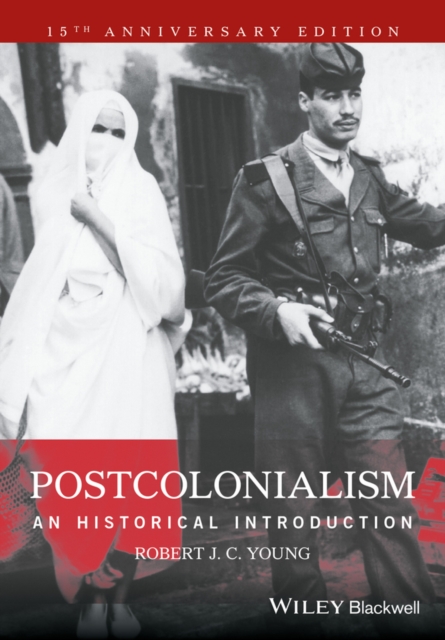
Postcolonialism
This seminal work—now available in a 15th anniversary edition with a new preface—is a thorough introduction to the historical and theoretical origins of postcolonial theory.
* Provides a clearly written and wide-ranging account of postcolonialism, empire, imperialism, and colonialism, written by one of the leading scholars on the topic
* Details the history of anti-colonial movements and their leaders around the world, from Europe and Latin America to Africa and Asia
* Analyzes the ways in which freedom struggles contributed to postcolonial discourse by producing fundamental ideas about the relationship between non-western and western societies and cultures
* Offers an engaging yet accessible style that will appeal to scholars as well as introductory students
eBook
Cleopatra
A feminist reinterpretation of the myths surrounding
Cleopatra casts new light on the Egyptian queen and her
legacy \"A thoughtful, sympathetic portrait of a
legendary historical figure.\"- Kirkus Reviews The
siren passionately in love with Mark Antony, the seductress who
allegedly rolled out of a carpet she had herself smuggled in to see
Caesar, Cleopatra is a figure shrouded in myth. Beyond the legends
immortalized by Plutarch, Shakespeare, George Bernard Shaw, and
others, there are no journals or letters written by Cleopatra
herself. All we have to tell her story are words written by others.
What has it meant for our understanding of Cleopatra to have had
her story told by writers who had a political agenda, authors who
distrusted her motives, and historians who believed she was a liar?
Francine Prose delves into ancient Greek and Roman literary
sources, as well as modern representations of Cleopatra in art,
theater, and film, to challenge past narratives driven by
orientalism and misogyny and offer a new interpretation of
Cleopatra's history through the lens of our current era.
eBook
Biografie und Lebensalter
Anthropologie wird manifest, wenn es um Biografie und Lebensalter geht. So verwundert es nicht, wenn Fragen konkreter Lebensführung, ihrer materialen und sozialen Grundlagen sowie die Biografie neben dem Alten Testament auch in der Altorientalistik und der Ägyptologie intensiv diskutiert werden. Der vorliegende Band versammelt neben je einem ägyptologischen und hethitologischen Exempel alttestamentliche Beiträge zur Rechtsanthropologie, zur Ethik sowie ausgewählten Literaturbereichen des Alten Testaments inkl. Ben Sirach, in denen Aspekte von Biografie und Lebensalter mit ihren Hinweisen auf die materiale, soziale und theologische Verfasstheit des Menschen dargestellt werden.
Mit Beiträgen von Michaela Bauks, Achim Berens, Andrea Beyer, Birgit Cristiansen, Georg Fischer SJ, Susanne Gillmayr-Bucher, Rainer Kessler, Andreas Kunz-Lübcke, Hans-Peter Mathys, Ludwig Morenz, Jürgen van Oorschot, Eckard Otto, Nancy Rahn, Frank Ueberschaer und Andreas Wagner.
[Biography and Age]
Anthropology becomes manifest when it comes to biography and age. Thus, it is not surprising that questions of concrete lifestyles, their material and social foundations as well as biography are intensively discussed not only in the Old Testament but also in Ancient Oriental Studies and Egyptology. In addition to one Egyptological and one Hittitological example each, this volume brings together Old Testament contributions on legal anthropology, ethics and selected literary areas of the Old Testament, including Ben Sirach, in which aspects of biography and age are presented with their references to the material, social and theological constitution of human.
eBook