
Catalogue Search | MBRL


Are you sure you want to remove the book from the shelf?

{{itemTitle}}
3,805
result(s) for
"ética"
Sort by:

Summoning compassion to address the challenges of conservation
Conservation practice is informed by science, but it also reflects ethical beliefs about how humanity ought to value and interact with Earth's biota. As human activities continue to drive extinctions and diminish critical life-sustaining ecosystem processes, achieving conservation goals becomes increasingly urgent. However, the determination to react decisively can drive conservationists to handle complex challenges without due deliberation, particularly when wildlife individuals are sacrificedfor the so-called greater good of wildlife collectives (populations, species, ecosystems). With growing recognition of the widespread sentience and sapience of many nonhuman animals, standard conservation practices that categorically prioritize collectives without due consideration for the well-being of individuals are ethically untenable. Here we highlight 3 overarching ethical orientations characterizing current and historical practices in conservation that suppress compassion: instrumentalism, collectivism, and nativism. We examine how establishing a commitment to compassion could reorient conservation in more ethically expansive directions that incorporate recognition of the intrinsic value of wildlife, the sentience of nonhuman animals, and the values of novel ecosystems, introduced species, and their members. A compassionate conservation approach allays practices that intentionally and unnecessarily harm wildlife individuals, while aligning with critical conservation goals. Although the urgency of achieving effective outcomes for solving major conservation problems may enhance the appeal of quick and harsh measures, the costs are too high. Continuing to justify moral indifference when causing the suffering of wildlife individuals, particularly those who possess sophisticated capacities for emotion, consciousness, and sociality, risks estranging conservation practice from prevailing, and appropriate, social values. As conservationists and compassionate beings, we must demonstrate concern for both the long-term persistence of collectives and the well-being of individuals by prioritizing strategies that do both. La práctica de la conservación recibe información por parte de la ciencia, pero también refleja las creencias éticas sobre cómo la humanidad debe de valorar e interactuar con la biota de la Tierra. Conforme las actividades humanas continúan causando las extinciones y disminuyendo los procesos ambientales de suma importancia para el soporte de la vida, alcanzar los objetivos de conservación se vuelve cada vez más urgente. Sin embargo, la determinación para reaccionar de manera decisiva puede llevar a los conservacionistas a tratar con retos complejos sin la deliberación apropiada, particularmente cuando se sacrifican ejemplares faunísticospor el llamado bien mayor de los colectivos faunísticos (poblaciones, especies, ecosistemas). Con el creciente reconocimiento de la gran sensibilidad y sapiencia de muchos animales no humanos, las prácticas estandarizadas de conservación que priorizan categóricamente los colectivos sin la consideración debida para el bienestar de los individuos son insostenibles éticamente. En este artículo resaltamos tres orientaciones dominantes que caracterizan las prácticas actuales e históricas dentro de la conservación que suprimen la compasión: el instrumentalismo, el colectivismo y el nativismo. Examinamos cómo el establecimiento de un compromiso con la compasión puede reorientar a la conservación hacia direcciones más expansivas éticamente que incorporen el reconocimiento del valor intrínseco de la fauna, la sensibilidad de los animales no humanos y los valores de los ecosistemas novedosos, las especies introducidas y sus integrantes. Una estrategia compasiva de conservación apacigua lasprácticas que dañan intencionalmente e innecesariamente a los ejemplares faunísticos, mientras se alinea con los objetivos críticos de conservación. Aunque la urgencia por alcanzar los resultados efectivos para la resolución de los problemas de conservación más importantes puede aumentar el atractivo de las medidas rápidas y rigurosas, los costos son muy elevados. Si se continúa justificando la indiferencia moral cuando se causa sufrimiento a los ejemplares faunísticos, particularmente a aquellos que poseen capacidades sofisticadas para las emociones, la conciencia, y la sociabilidad, se corre el riesgo de distanciar la práctica de la conservación de los valores sociales persistentes y apropiados. Como conservacionistas y seres compasivos, debemos mostrar preocupación tanto por la persistencia a largo plazo de los colectivos como por el bienestar de los individuos alpriorizar estrategias que permitan cumplir ambos objetivos. 保护实践建立在科学知识上,但也反映着人类如何看待地球上的生物并与之相处的伦理观念。随着人类 活动不断导致物种灭绝以及维持生命的重要生态系统过程减少,实现保护目标越来越迫在 睫。然而,果断行 动的决心可能使保护主义者在考虑不周的情况下处理复杂的挑故,特别是当面临野生生物 体要为所谓的集合 体麵ヽ物# 、生态系统> 的利益而牺牲个体利益的情况时。现在已有越来越多的人意识到 多非人动物也 普遍具有感知能力和智慧,因此对个体福祉不加考虑而优先保护集合体的传统标准的保护 践在伦理上是站不 住脚的。本文重点讨论了当下和历史上漠视个体福祉的保护实践中三种主要的伦理取向: 工 主义、集体主义 和本土主义。我们研究了同情心的投入如何将保护重新导向到更具有伦理价值的方向,它 含了对野生生物内 在价值、非人动物的感知能力以及新生生态系统、引入种及其成员的价值的认识。富有同 心的保护方法可 以减少有意或不必要地伤害野生生物个体的行为,同时也与关键保护目标一致。尽管取得 决重大保护问题的 有效成果的紧迫性加强了人们对采取快速、严厉的措施的诉求,但这样做的代价过高。继 为伤害野生动物个 体(特別是那些富有情感、意识、社会性的个体) 的道德冷漠开脱,就要承担使保护实践背离主流的、恰当的社 会价值观的风险。作为保护主义者和具有同情心的人类,我们必须同时关心集合体的长期 存和个体的福祉,采 取兼顾二者的保护策略。
Journal Article
LARA, F., DECKERS, J. (eds.). (2023). Ethics of Artificial Intelligence. Cham: Springer (The International Library of Ethics, Law and Technology, vol. 41). https://doi.org/10.1007/978-3-031-48135-2
Reseña de LARA, F., DECKERS, J. (eds.). (2023). Ethics of Artificial Intelligence. Cham: Springer (The International Library of Ethics, Law and Technology, vol. 41). https://doi.org/10.1007/978-3-031-48135-2
Journal Article

Science, Policy, and the Value-Free Ideal
The role of science in policymaking has gained unprecedented stature in the United States, raising questions about the place of science and scientific expertise in the democratic process. Some scientists have been given considerable epistemic authority in shaping policy on issues of great moral and cultural significance, and the politicizing of these issues has become highly contentious.
Since World War II, most philosophers of science have purported the concept that science should be \"value-free.\" InScience, Policy and the Value-Free Ideal,Heather E. Douglas argues that such an ideal is neither adequate nor desirable for science. She contends that the moral responsibilities of scientists require the consideration of values even at the heart of science. She lobbies for a new ideal in which values serve an essential function throughout scientific inquiry, but where the role values play is constrained at key points, thus protecting the integrity and objectivity of science. In this vein, Douglas outlines a system for the application of values to guide scientists through points of uncertainty fraught with moral valence.
Following a philosophical analysis of the historical background of science advising and the value-free ideal, Douglas defines how values should-and should not-function in science. She discusses the distinctive direct and indirect roles for values in reasoning, and outlines seven senses of objectivity, showing how each can be employed to determine the reliability of scientific claims. Douglas then uses these philosophical insights to clarify the distinction between junk science and sound science to be used in policymaking. In conclusion, she calls for greater openness on the values utilized in policymaking, and more public participation in the policymaking process, by suggesting various models for effective use of both the public and experts in key risk assessments.
eBook

Consideraciones éticas en la investigación etnográfica institucional
Artículo de revisión que responde al objetivo de identificar las principales consideraciones éticas que los investigadores han de contemplar en el desarrollo de una investigación etnográfica institucional. Se realizó una revisión del estado del arte, analizando 298 tesis de posgrado. Tras la aplicación de criterios de inclusión, exclusión y eliminación de duplicados, quedaron 14 documentos, los que conformaron la muestra final. Las consideraciones éticas identificadas se estructuraron en tres grupos “planificación y aspectos metodológicos”, “recolección de los datos” y “análisis, presentación de los resultados y manejo de los datos tras la finalización del estudio”. Los resultados identificados se asocian a la esencia distintiva de la etnografía institucional como enfoque incipiente, pues uno de los aspectos que se aprenden en dicha etnografía es el sentido de observar cómo las personas organizan las cosas, lo que está directamente asociado a la forma de recolección de los datos desarrollada por el investigador. Conclusión: se identificaron 22 consideraciones, siendo la recolección de los datos la que presentó más elementos descritos; se revela la importancia del anonimato de los informantes, terceros involucrados y de la misma institución donde se desarrolla el estudio, pues fue la principal consideración ética distintiva del enfoque incipiente.
Journal Article

Addressing moral injury in practice: suggestions for organisational, political and societal interventions
Moral injury has garnered increasing attention in recent decades, extending from the military to professions like healthcare and policing. Defined as psychological, social and spiritual suffering resulting from moral transgressions, moral injury is now recognised as a multidimensional phenomenon. A growing body of empirical and theoretical research is establishing a foundational understanding of its psychological, moral and contextual dimensions. Their findings underscore the need to broaden the understanding of moral injuries sustained in the workplace, as well as work-related mental health more generally, by incorporating ethics- and context-informed approaches. This applies to both research and practice. However, the actual practical implications of their findings remain unexplored.
This contribution makes a start in addressing the gap between emerging moral injury research and its practical implementation. It seeks to identify potential interventions and caution against approaches that may inadvertently exacerbate harm.
Drawing on recent interdisciplinary literature, this contribution synthesises key findings and translates them into practical recommendations. It proposes individual, organisational and wider societal levels of intervention, as such with particular attention to ethics-informed and context-sensitive strategies.
Research findings point to several promising interventions, including resilience training, ethics education, and moral case deliberation, targeted at both frontline practitioners and leadership. Organisational approaches such as Just Culture initiatives and practices of transformative recognition are also suggested. Conversely, the paper identifies potential pitfalls in popular responses such as the uncritical use of positive psychology or 'integritism', which may inadvertently reinforce moral distress.
Adequately addressing moral injury in high-impact professions requires a comprehensive, multi-level approach. Cross-disciplinary collaboration is likely to be beneficial, involving mental health professionals, ethicists, chaplains and organisational specialists, to address the various dimensions of moral injury. This contribution has offered several research-informed suggestions for interventions, which nevertheless require further theoretical development and empirical examination.
Journal Article

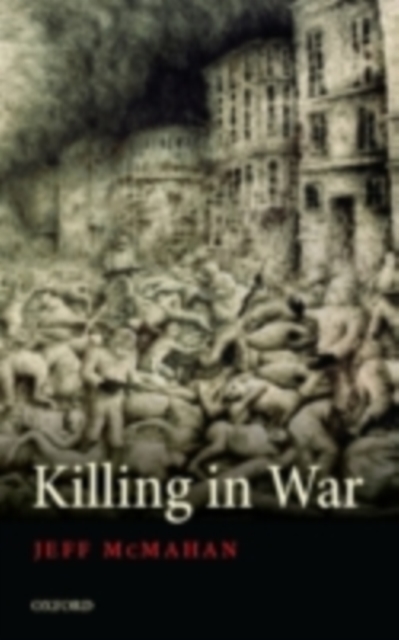
Killing in War
Killing a person is in general among the most seriously wrongful forms of action, yet most of us accept that it can be permissible to kill people on a large scale in war. Does morality become more permissive in a state of war? This book argues that conditions in war make no difference to what morality permits and that the justifications for killing people are the same in war as they are in other contexts, such as individual self-defence. This view is radically at odds with the traditional theory of the just war and has implications that challenge common sense views. It implies, for example, that it is wrong to fight in a war that is unjust because it lacks a just cause, that those who fight in a just war are not legitimate targets of attack, and that some civilians may, in principle if not in practice, be morally liable to suffer certain harms in war.
eBook
Review of FROST-ARNOLD, K. (2023) Who Should We Be Online? A Social Epistemology for the Internet New York: Oxford University Press
Reseña del libro Who Should We Be Online? A Social Epistemology for the Internet
Journal Article
Penttinen, E. y Kynsilehto, A. (2017). Gender and Mobility: A Critical Introduction. Rowman Littlefield. 218 pp
Reseña de: Penttinen, E. y Kynsilehto, A. (2017). Gender and Mobility: A Critical Introduction. Rowman & Littlefield. 218 pp.
Journal Article

The Protestant Ethic and the Spirit of Capitalism
Max Weber's best-known and most controversial work, The Protestant Ethic and the Spirit of Capitalism, first published in 1904, remains to this day a powerful and fascinating read. Weber's highly accessible style is just one of many reasons for his continuing popularity. The book contends that the Protestant ethic made possible and encouraged the development of capitalism in the West. Widely considered as the most informed work ever written on the social effects of advanced capitalism, The Protestant Ethic and the Spirit of Capitalism holds its own as one of the most significant books of the twentieth century. The book is one of those rare works of scholarship which no informed citizen can afford to ignore.
eBook